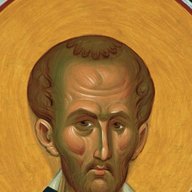
St. John ChrysostomHomily 19 on Acts · on Acts 9:1–2
And Saul, yet breathing out threatenings and slaughter against the disciples of the Lord, went unto the high priest, and desired of him letters to Damascus to the synagogues, that if he found any of this way, whether they were men or women, he might bring them bound unto Jerusalem. He fitly mentions Paul's zeal, and…
St. John ChrysostomHomily 19 on Acts · on Acts 9:1–2
Lo, this was fulfilled which was spoken by Christ, that they which kill you shall think they offer worship to God. He then in this wise did it, not as the Jews: God forbid! For that he did it through zeal, is manifest from his going abroad even to strange cities: whereas they would not have cared even for those in…
St. John ChrysostomHomily 19 on Acts · on Acts 9:1–2
But why went he to Damascus? It was a great city, a royal city: he was afraid lest that should be preoccupied. And observe his strong desire and ardor and, how strictly according to the Law he went to work: he goes not to the governor, but to the priest. That if he found any of this way: for so the believers were…
St. John ChrysostomHomily 19 on Acts · on Acts 9:1–2
And why did he not receive authority to have them punished there, but brings them to Jerusalem! He did these things here with more authority. And mark on what a peril he casts himself. He was not afraid lest he should take any harm, but yet he took others also with him, that if, it says, he found any of this way,…
And desired of him letters to Damascus to the synagogues, that if he found any of this way, whether they were men or women, he might bring them bound unto Jerusalem.
St. John ChrysostomHomily 19 on Acts · on Acts 9:3
And as he journeyed, he came near Damascus: and suddenly there shined round about him a light from heaven. Why not in Jerusalem? why not in Damascus? That there might be no opening for different persons to relate the occurrence in different ways, but that he alone should be the authentic narrator, he that went for…
St. John ChrysostomHomily 19 on Acts · on Acts 9:4
And he fell to the earth, and heard a voice saying unto him, Saul, Saul, why persecutest thou Me? Fell to the earth: for excess of light is wont to shock, because the eyes have their measure: it is said also that excess of sound makes people deaf and stunned as in a fit. But him it only blinded, and extinguished his…
St. John ChrysostomHomily 19 on Acts · on Acts 9:4
Saul, Saul, saith He, why persecutest thou me? And He tells him nothing: does not say, Believe, nor anything whatever of the kind: but expostulates with him, all but saying, What wrong, great or small, hast thou suffered from Me, that thou doest these things?
St. John ChrysostomHomily 19 on Acts · on Acts 9:5
And he said, Who art Thou Lord? thus in the first place confessing himself His servant. And the Lord said, I am Jesus, whom thou persecutest: think not thy warring is with men.
And he trembling and astonished said, Lord, what wilt thou have me to do? And the Lord said unto him, Arise, and go into the city, and it shall be told thee what thou must do.
St. John ChrysostomHomily 19 on Acts · on Acts 9:6
But arise, and go into the city, and it shall be told thee what thou must do. Observe, how He does not immediately add all, but first softens his mind. In the same way He called the disciples also a second time. It shall be told thee, etc.: He gives him good hopes, and intimates that he shall recover his sight also.
St. John ChrysostomHomily 19 on Acts · on Acts 9:6
Then he answers, Lord, what wilt Thou have me to do? that none may say that he played the hypocrite, he that was even eager for blood, and went to the priests, and flung himself upon such dangers, in persecuting and bringing to punishment even them that were in foreign parts-under these circumstances he now…
St. John ChrysostomHomily 19 on Acts · on Acts 9:7
And they which were with him heard the voice of Paul, but saw no person to whom he answered-for the Lord suffered them to be hearers of what was less important. Had they heard the other Voice, they would not have believed; but perceiving Paul answering some person, they marvelled.
St. John ChrysostomHomily 19 on Acts · on Acts 9:8
And Saul arose from the earth; and when his eyes were opened, he saw no man: but they led him by the hand, and brought him into Damascus-the spoils of the devil, his goods, as from some city, yea, some metropolis which has been taken. And the wonder of it is, the enemies and foes themselves brought him in, in the…
St. John ChrysostomHomily 20 on Acts · on Acts 9:8
Why did he not blind his eyes entirely? This was more wonderful, that, with his eyes open, he did not see: which was just his case in respect of the Law, until the Name of Jesus was put on him.
St. John ChrysostomHomily 19 on Acts · on Acts 9:9
And for three days he neither did eat nor drink, being blinded. What could equal this? To compensate the discouragement in the matter of Stephen, here is encouragement, in the bringing in of Paul: though that sadness had its consolation in the fact of Stephen's making such an end, yet it also received this further…
St. John ChrysostomHomily 19 on Acts · on Acts 9:9
But why did this take place not at the very first, but after these things? That it might be shown that Christ was indeed risen. This furious assailant of Christ, the man who would not believe in His death and resurrection, the persecutor of His disciples, how should this man have become a believer, had not the power…
St. John ChrysostomHomily 19 on Acts · on Acts 9:9
Be it so, that the other Apostles favored His pretensions: what say you to this man? Why then not immediately after His resurrection? That his hostility might be more clearly shown as open war. The man who is so frantic as even to shed blood and cast men into prisons, all at once believes! It was not enough that he…
St. John ChrysostomHomily 19 on Acts · on Acts 9:9
And he eat not, neither drank: he condemned himself for the past, he confessed, prayed, besought God. But should any say, This was the effect of compulsion: we answer, The same thing happened to Elymas: then how came it that he was not changed? What evidence could be more compulsory than the earthquake at the…
St. John ChrysostomHomily 19 on Acts · on Acts 9:9
Why did not the Jews believe when they were told of these things? That he spoke truth was manifest: for he would not have been changed, had this not happened; so that all were bound to believe. He was not inferior to them that preached the Resurrection, and was more credible, by being all at once converted. He had no…
St. John ChrysostomHomily 19 on Acts · on Acts 9:9
I ask the Jew: Say, by what was Paul converted? He saw so many signs, and was not converted: his teacher Gamaliel was converted, and he remained unconverted. Who convinced him-and not only convinced, but all at once inspired him with such ardent zeal? Wherefore was it, that he wished even to go into hell itself for…
St. John ChrysostomHomily 20 on Acts · on Acts 9:10–12
What may be the reason that He neither drew any one of high authority and importance, nor caused such to be forthcoming for the purpose of instructing Paul? It was, because it was not meet that he should be induced by men, but only by Christ Himself: as in fact this man taught him nothing, but merely baptized him;…
And the Lord said unto him, Arise, and go into the street which is called Straight, and enquire in the house of Judas for one called Saul, of Tarsus: for, behold, he prayeth,
St. John ChrysostomHomily 20 on Acts · on Acts 9:11
The Lord said not to him, Converse with him, and catechize him. For if, when He said, "He prayeth, and hath seen a man laying his hands upon him," He did not persuade him, much less had He said this. So that he shall not disbelieve thee, "he hath seen in a vision." Observe how in the former instance neither is Philip…
St. John ChrysostomHomily 20 on Acts · on Acts 9:13–14
In the same way Moses also is afraid: so that the words betokened that he was afraid, and shrunk from the task, not that he did not believe. He said, "I have heard from many concerning this man." What sayest thou? God speaketh, and thou hesitatest? They did not yet well know the power of Christ. "And here he hath…
St. John ChrysostomHomily 20 on Acts · on Acts 9:13–14
And let not any imagine, that Ananias speaks in unbelief of what was told him, as imagining that Christ was deceived: far from it! but affrighted and trembling, he did not even attend to what was said, at hearing the name of Paul. Moreover, the Lord does not tell that He has blinded him: at the mention of his name…
St. John ChrysostomHomily 20 on Acts · on Acts 9:15
Since He says, "a vessel of election," that thou mayest not imagine that God is to do all, He adds, "to bear My Name before Gentiles and kings, and the children of Israel." Ananias has heard what he most desired-that against the Jews also he will take his stand: this above all gave him courage. "For I," saith He,…
St. John ChrysostomHomily 48 on Acts · on Acts 9:15
Here he establishes two things: both that they are without excuse, since they persecuted him contrary to all likelihood or calculation of reason; and, that Christ was God, as prophesying things contrary to expectation, and as not looking to past things, but foreknowing the things to come. How then does He say, "He…
St. John ChrysostomHomily 20 on Acts · on Acts 9:15–16
"But the Lord said unto him, Go thy way: for he is a chosen vessel unto Me, to bear My name before the Gentiles, and kings, and the children of Israel: for I will show him how great things he must suffer for My name's sake." "Not only," saith He, "shall he be a believer, but even a teacher, and great boldness shall he…
St. John ChrysostomHomily 20 on Acts · on Acts 9:15–16
And justly he is called "a vessel" (or, instrument)-for reason shows that evil is not a physical quality: "a vessel of election" (or, chosen instrument), He saith; for we choose that which is approved. For there was indeed need of strength. Since He says, "a vessel of election," that thou mayest not imagine that God…
And Ananias went his way, and entered into the house; and putting his hands on him said, Brother Saul, the Lord, even Jesus, that appeared unto thee in the way as thou camest, hath sent me, that thou mightest receive thy sight, and be filled with the Holy Ghost.
St. John ChrysostomHomily 20 on Acts · on Acts 9:17
"And Ananias went, and entered into the house, and laid his hands upon him, and said, Brother Saul"-he straightway addresses him as a friend by that name-"Jesus, Who appeared unto thee in the way in which thou camest"-and yet Christ had not told him this, but he learnt it from the Spirit-"hath sent me unto thee, that…
St. John ChrysostomHomily 20 on Acts · on Acts 9:17
"Brother Saul, the Lord Jesus"-he saith not, "Who made thee blind," but, "Who appeared with thee in the way, hath sent me unto thee that thou mayest receive thy sight": observe this man also, how he utters nothing boastful, but just as Peter said in the case of the lame man, "Why look ye on us, as though by our own…
St. John ChrysostomHomily 20 on Acts · on Acts 9:18
"And immediately there fell from his eyes as it had been scales." Some say this was a sign of his blindness. Why did he not blind his eyes entirely? This was more wonderful, that, with his eyes open, he did not see: which was just his case in respect of the Law, until the Name of Jesus was put on him. With hands laid…
St. John ChrysostomHomily 20 on Acts · on Acts 9:19
"And he received sight forthwith, and arose, and was baptized. And having taken food, he recovered strength." He was faint, therefore, both from his journey and from his fear; both from hunger, and from dejection of mind. Wishing therefore to deepen his dejection, He made the man blind until the coming of Ananias:…
St. John ChrysostomHomily 20 on Acts · on Acts 9:19
And why saith it, "Having taken food, he was strengthened?" Because they that are in such case become relaxed: he had no heart to partake of food before, until he obtained the mighty gifts. It seems to me, that both Paul and Cornelius, at the very instant when the words were spoken, received the Spirit. And yet in…
St. John ChrysostomHomily 20 on Acts · on Acts 9:20
"And he was with the disciples which were at Damascus certain days. And straightway in the synagogues he preached Jesus, that He is the Son of God." See, straightway he was a teacher in the synagogues. He was not ashamed of the change, was not afraid while the very things in which he was glorious afore-time, the same…
St. John ChrysostomHomily 20 on Acts · on Acts 9:20
"And straightway in the synagogues he preached Jesus"-for he was accurate in the faith-"that this is the Son of God." He did not merely say, "that He is risen"-not this: no, nor "that He liveth": but what? immediately he strictly expounded the doctrine-"that this is the Son of God."
But all that heard him were amazed, and said; Is not this he that destroyed them which called on this name in Jerusalem, and came hither for that intent, that he might bring them bound unto the chief priests?
St. John ChrysostomHomily 20 on Acts · on Acts 9:21
"But all that heard him were amazed, and said: Is not this he that destroyed them which called on this name in Jerusalem, and came hither for that intent, that he might bring them bound unto the chief priests?" And with this very thing, he put all in fear: for, said they, Hither also is he come for this very thing.…
St. John ChrysostomHomily 20 on Acts · on Acts 9:22
"But Saul increased the more in strength, and confounded the Jews which dwelt at Damascus, proving that this is very Christ." As one learned in the Law, he stopped their mouths, and suffered them not to speak. They thought they were rid of disputation in such matters, in getting rid of Stephen, and they found another,…
St. John ChrysostomHomily 20 on Acts · on Acts 9:22
But Paul not only was not confounded by these things, nor hid his face for shame, but "increased the more in strength, and confounded the Jews," i.e. put them to silence, left them nothing to say for themselves, "proving, that this is very Christ." "Teaching," it says: for this man was a teacher.
St. John ChrysostomHomily 20 on Acts · on Acts 9:22
"Proving" it says: i.e. with mildness teaching. And observe, they did not say to him, Thou art he that destroyed: why art thou changed? for they were ashamed: but they said it to themselves. For he would have said to them, This very thing ought to teach you, as in fact he does thus plead in his speech before Agrippa.
St. John ChrysostomHomily 20 on Acts · on Acts 9:23
"And after that many days were fulfilled, the Jews took counsel to kill him." The Jews again resort to that valid argument of theirs, not now seeking false-accusers and false-witnesses; they cannot wait for these now: but what do they? They set about it by themselves. For as they see the affair on the increase, they…
St. John ChrysostomHomily 20 on Acts · on Acts 9:23
Therefore "after many days" this happens: viz. the Jews "took counsel to kill him. And their laying await was known of Saul." What does this mean? It is likely that for awhile he did not choose to depart thence, though many, perhaps, besought him; but when he learnt it, then he permitted his disciples: for he had…
St. John ChrysostomHomily 20 on Acts · on Acts 9:24
"But their laying await was known of Saul. And they watched the gates day and night to kill him." For this was more intolerable to them than the miracles which had taken place-than the five thousand, the three thousand, than everything, in short. And observe him, how he is delivered, not by miraculous grace, but by…
St. John ChrysostomHomily 20 on Acts · on Acts 9:25
"Then the disciples took him by night," that the affair might not be suspected, "and let him down by the wall in a basket." What then? having escaped such a danger, does he flee? By no means, but goes where he kindled them to greater rage.
St. John ChrysostomHomily 20 on Acts · on Acts 9:25
"Then the disciples," etc. Of this occurrence he says: "The ethnarch of Aretas the king kept the city of the Damascenes with a garrison, desiring to apprehend me." But observe the Writer here, that he does not tell the story ambitiously, and so as to show what an important person Paul was, saying, "For they stirred up…
St. John ChrysostomHomily 20 on Acts · on Acts 9:25
This is to be on fire, this to be fervent indeed! From that day forth he knew all the commands which the Apostles had heard: "Except a man take up his cross, and follow Me." The very fact that he had been slower to come than the rest made him more zealous: for "to whom much is forgiven" the same will love more, so…
St. John ChrysostomHomily 20 on Acts · on Acts 9:25
That he fled from Damascus, this was no cowardice: he preserved himself for the preaching. Had he been a coward, he would not have gone to Jerusalem, would not immediately have commenced teaching: he would have abated somewhat of his vehemence: for he had been taught by the fate of Stephen. He was no coward, but he…
And when Saul was come to Jerusalem, he assayed to join himself to the disciples: but they were all afraid of him, and believed not that he was a disciple.
St. John ChrysostomHomily 21 on Acts · on Acts 9:26
"Assayed," it says, "to join himself to the disciples." He did not come up to them unabashed, but with a subdued manner. "Disciples" they were all called at that time by reason of their great virtue, for there was the likeness of the disciples plainly to be seen.
St. John ChrysostomHomily 21 on Acts · on Acts 9:26
"He assayed," it says, "to join himself to the disciples. And they were afraid of him." By this again is shown the ardor of Paul's character: not only from the mouth of Ananias, and of those who wondered at him there, but also of those in Jerusalem: "they believed not that he was a disciple:" for truly that was beyond…
St. John ChrysostomHomily 21 on Acts · on Acts 9:26–27
One may well be much at a loss here to understand how it is that, whereas in the Epistle to the Galatians Paul says, "I went not to Jerusalem," but "into Arabia" and "to Damascus," and, "After three years I went up to Jerusalem," and "to see Peter" (Gal. i. 17), here the writer says the contrary. There, Paul says,…
But Barnabas took him, and brought him to the apostles, and declared unto them how he had seen the Lord in the way, and that he had spoken to him, and how he had preached boldly at Damascus in the name of Jesus.
St. John ChrysostomHomily 21 on Acts · on Acts 9:27
"But Barnabas" - "Son of Consolation" is his appellation, whence also he makes himself easy of access to the man: for "he was a kind man" (ch. xi. 24), exceedingly, and this is proved both by the present instance, and in the affair of John (Mark) - "having taken him, brought him to the Apostles, and related to them…
St. John ChrysostomHomily 21 on Acts · on Acts 9:27
"But they were all afraid of him." See how they feared the dangers, how the alarm was yet at its height in them. "But Barnabas," etc. - it seems to me that Barnabas was of old a friend of his - "and related," etc.: observe how Paul says nothing of all this himself: nor would he have brought it forward to the others,…
St. John ChrysostomHomily 21 on Acts · on Acts 9:28–29
"And he was with them coming in and going out at Jerusalem, and speaking boldly in the name of Jesus" (v. 28): these things were demonstrative of the former, and by his acts he made good what was spoken of him. "And he spake, and disputed with the Hellenists." (v. 29.) So then the disciples were afraid of him, and the…
St. John ChrysostomHomily 21 on Acts · on Acts 9:28–29
"And he was with them, coming in and going out at Jerusalem, and speaking boldly in the name of the Lord Jesus." This gave them all confidence. "But they went about to slay him: which when the brethren knew" etc. Do you observe how both there (at Damascus), and here, the rest take care for him, and provide for him the…
St. John ChrysostomHomily 21 on Acts · on Acts 9:29
"But they," it says, "went about to slay him:" a token, this, of his energy, and triumphant victory, and of their exceeding annoyance at what had happened. Thereupon, fearing lest the issue should be the same as in the case of Stephen, they sent him to Caesarea.
St. John ChrysostomHomily 21 on Acts · on Acts 9:30
For it says, "When the brethren were aware of this, they brought him down to Caesarea, and sent him forth to Tarsus," at the same time to preach, and likely to be more in safety, as being in his own country. But observe, I pray you, how far it is from being the case that everything is done by miraculous grace; how, on…
St. John ChrysostomHomily 21 on Acts · on Acts 9:30
"To Caesarea, and sent him forth to Tarsus:" so that, I suppose, he did not continue his journey by land, but sailed the rest of it. And this departure is Providentially ordered, that he might preach there also: and so likewise were the plots against him ordered by God's Providence, and his coming to Jerusalem, that…
Then had the churches rest throughout all Judaea and Galilee and Samaria, and were edified; and walking in the fear of the Lord, and in the comfort of the Holy Ghost, were multiplied.
St. John ChrysostomHomily 21 on Acts · on Acts 9:31
"Then, it says, the Church throughout all Judea and Galilee and Samaria had peace, being edified, and walking in the fear of the Lord, and abounded in the comfort of the Holy Ghost." He is about to relate that Peter goes down from Jerusalem, therefore that you may not impute this to fear, he first says this. For while…
St. John ChrysostomHomily 21 on Acts · on Acts 9:31
Paul departed, and there was peace: there is no war nor disturbance. Them, they respected most, as having often stood by them, and as being held in admiration by the multitude: but him, they despised, and were more savage against him. See, how great a war, and immediately, peace! See what that war effected. It…
St. John ChrysostomHomily 21 on Acts · on Acts 9:31
"So the Church throughout all Judea and Galilee and Samaria had peace" - i.e. it increased: and peace with itself, that peace which is peace indeed: for the war from without would have done them no harm - "they being edified, and walking in the fear of the Lord, and abounded in the consolation of the Holy Ghost." And…
St. John ChrysostomHomily 21 on Acts · on Acts 9:32
"And it came to pass, as Peter passed throughout all quarters, he came down also to the saints which dwelt at Lydda." Like the commander of an army, he went about, inspecting the ranks, what part was compact, what in good order, what needed his presence. See how on all occasions he goes about, foremost. When an…
St. John ChrysostomHomily 21 on Acts · on Acts 9:33–34
"And there he found a certain man named Aeneas, which had kept his bed eight years, and was sick of the palsy. And Peter said unto him, Aeneas, Jesus Christ maketh thee whole: arise, and make thy bed. And he arose immediately." And why did he not wait for the man's faith, and ask if he wished to be healed? In the…
St. John ChrysostomHomily 21 on Acts · on Acts 9:33–34
"Arise, and make thy bed:" he does well to give a proof of the miracle: for they not only released men of their diseases, but in giving the health they gave the strength also. Moreover, at that time they had given no proofs of their power, so that the man could not reasonably have been required to show his faith, as…
St. John ChrysostomHomily 21 on Acts · on Acts 9:33–34
"And Peter said unto him, Eneas," etc. But before discourse, before exhortations, he says to the lame man himself, "Jesus Christ maketh thee whole." This word he believed in any wise, and was made whole. Observe how unassuming he is: for he said not, "In the Name," but rather as a sign he narrates the miracle itself,…
St. John ChrysostomHomily 21 on Acts · on Acts 9:35
"And having seen him," it says, "all that dwelt in Lydda, and Saron, turned unto the Lord." Observe everywhere the signs taking place. But let us so believe them, as if we were now beholding them.
Now there was at Joppa a certain disciple named Tabitha, which by interpretation is called Dorcas: this woman was full of good works and almsdeeds which she did.
St. John ChrysostomHomily 21 on Acts · on Acts 9:36
"Now there was at Joppa a certain disciple named Tabitha, which by interpretation is called Dorcas: this woman was full of good works and alms-deeds which she did. And it came to pass in those days, that she was sick, and died: whom when they had washed, they laid her in an upper chamber. And forasmuch as Lydda was…
St. John ChrysostomHomily 21 on Acts · on Acts 9:36
It is not simply said, that Tabitha died, but that she died, having been in a state of weakness. And yet they did not call Peter until she died; then "they sent and told him not to delay to come unto them." Observe, they send and call him by others. And he comes: he did not think it a piece of disrespect, to be…
St. John ChrysostomHomily 21 on Acts · on Acts 9:36
It is not without a meaning that the Writer has informed us of the woman's name, but to show that the name she bore matched her character; as active and wakeful was she as an antelope. "She was full," it says, "of good works:" not only of alms, but "of good works," first, and then of this good work in particular.…
St. John ChrysostomHomily 21 on Acts · on Acts 9:36
"Now there was at Joppa a certain disciple named Tabitha, which by interpretation is called Dorcas: this woman was full of good works and alms-deeds which she did." Observe everywhere the signs taking place. But let us so believe them, as if we were now beholding them.
And forasmuch as Lydda was nigh to Joppa, and the disciples had heard that Peter was there, they sent unto him two men, desiring him that he would not delay to come to them.
St. John ChrysostomHomily 21 on Acts · on Acts 9:38
"Not to delay to come unto them:" for she was a disciple. And Peter arose, and went with them. And when he was come, they led him into the upper chamber. They do not beseech, but leave it to him to give her life.
Then Peter arose and went with them. When he was come, they brought him into the upper chamber: and all the widows stood by him weeping, and shewing the coats and garments which Dorcas made, while she was with them.
St. John ChrysostomHomily 21 on Acts · on Acts 9:39
See what a cheering inducement to alms is here! "And all the widows," it says, "stood round him weeping, and showing the coats and garments which Dorcas had made while she was with them." Peter went into the apartment, as one who took it calmly, but see what an accession came of it!
St. John ChrysostomHomily 21 on Acts · on Acts 9:39
"Having washed her," it says, "they laid her in an upper chamber:" that is, they did all that was right for the dead body. Then Peter having come, "knelt down, and prayed; and turning him to the body, said, Tabitha, arise." They did not perform all their miracles with the same ease. But this was profitable for them:…
But Peter put them all forth, and kneeled down, and prayed; and turning him to the body said, Tabitha, arise. And she opened her eyes: and when she saw Peter, she sat up.
St. John ChrysostomHomily 21 on Acts · on Acts 9:40
"But Peter put them all forth, and kneeled down, and prayed; and turning him to the body said, Tabitha, arise. And she opened her eyes: and when she saw Peter, she sat up." Why does he put them all out? That he may not be confused nor disturbed by their weeping. "And having knelt down, he prayed." Observe the…
St. John ChrysostomHomily 21 on Acts · on Acts 9:40
This is the first dead person that he raises. Observe how he, as it were, awakes her out of sleep: first she opened her eyes: then upon seeing Peter she sat up: then from his hand she received strength.
St. John ChrysostomHomily 21 on Acts · on Acts 9:40
Observe how he puts them all out, imitating his Master in this also. For where tears are - or rather, where miracles are, there tears ought not to be; not where such a mystery is celebrating.
St. John ChrysostomHomily 21 on Acts · on Acts 9:40
Say, if as we sit together, the Emperor were to send and invite some one of us to the palace, would it be right, I ask, to weep and mourn? Angels are present, commissioned from heaven and come from thence, sent from the King Himself to call their fellow servant, and say, dost thou weep? Knowest thou not what a mystery…
St. John ChrysostomHomily 21 on Acts · on Acts 9:41
"And he gave her his hand." So did Christ to the daughter of Jairus: "And (says the Evangelist) having taken her by the hand." Mark severally, first the life, then the strength brought into her, the one by the word, the other by his hand - "And he gave her his hand, and lifted her up, and when he had called the saints…
St. John ChrysostomHomily 21 on Acts · on Acts 9:43
"And it came to pass, that he tarried many days in Joppa with one Simon a tanner." Mark the unassuming conduct, mark the moderation of Peter, how he does not make his abode with this lady, or some other person of distinction, but with a tanner: by all his acts leading men to humility, neither suffering the mean to be…
Every note is a real passage, quoted word for word from a published English translation, with its source. Nothing here is summarised or written by us. Some verses have many notes and some have none, because the Fathers wrote more on some passages than others.
St. John Chrysostom, Homilies on Acts, Nicene and Post-Nicene Fathers, series 1, vol. 11 (1888–1889).
Scripture: the King James Version (1611); the Greek (tap Ελ) is the 1904 Patriarchal text of the Ecumenical Patriarchate.
All of these translations are in the public domain. The passages were matched to their verses by the Historical Christian Commentaries project, which also hosts the full texts we link to. The Fathers are a treasury of the Church's mind, and they are best read alongside the life of the Church: if a passage raises a question, bring it to your priest.