The Eastern Cross/Guides/What icons mean
How to read an icon
What Orthodox icons mean
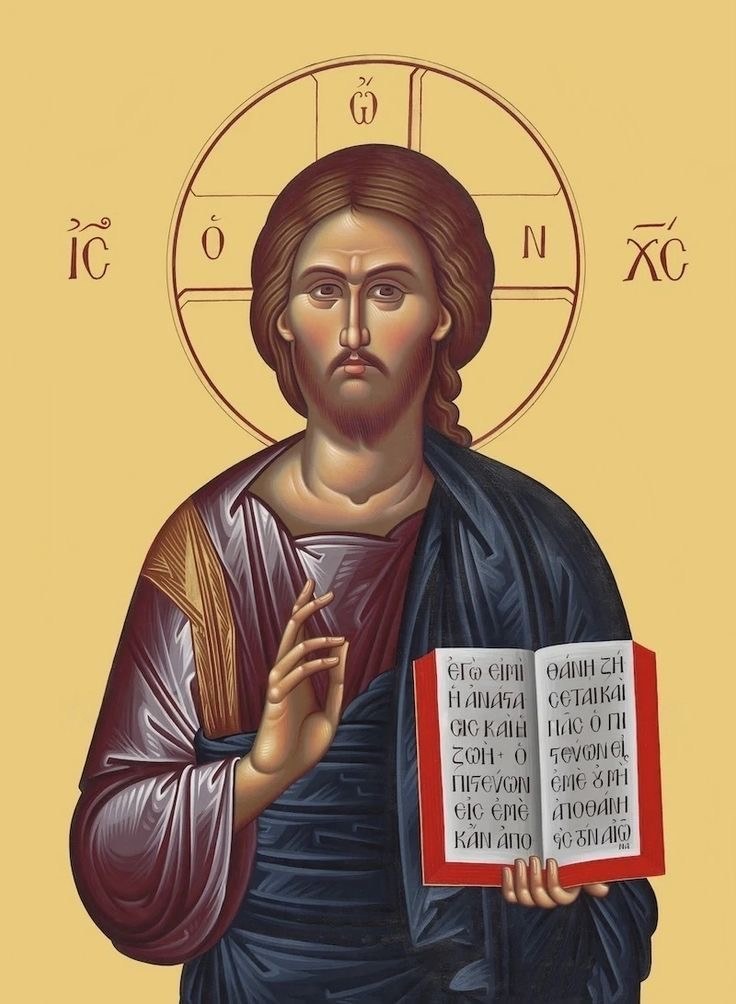
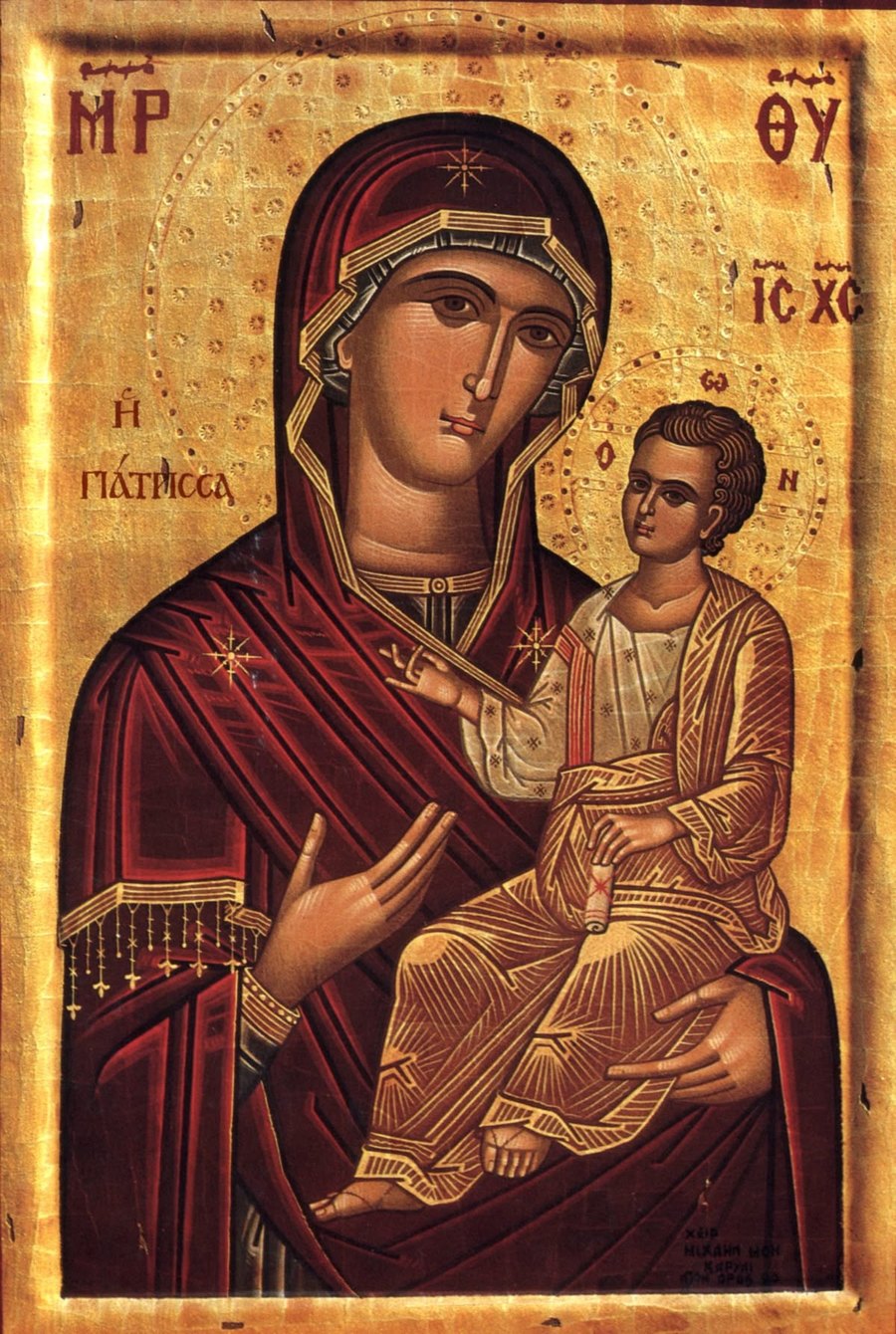
Every colour, letter and gesture in an icon means something. Tap through two of the best-known icons and you'll be able to read almost any icon you see.
I · Tap to read
Read an icon
Choose an icon, then tap the numbers.
II · The meaning
What an icon is
An icon (from the Greek eikōn, "image") is a holy image of Christ, the Theotokos, the angels, the saints or the feasts of the Church. Orthodox Christians call icons windows to heaven: through them we look at the people we pray to, and they look back at us.
Icons exist because God became man. The invisible God can't be drawn, but in Jesus Christ He took a human face that people saw and touched. Painting that face is a way of confessing that the Incarnation really happened.
"I do not worship matter. I worship the Creator of matter, who became matter for my sake."
St. John of Damascus, defending the icons in the 8th centuryIn the 8th and 9th centuries, emperors tried to destroy every icon. The Seventh Ecumenical Council, at Nicaea in 787, defended them, and in 843 the Empress Theodora brought them back to the churches for good. Orthodox Christians still celebrate that victory every year on the first Sunday of Lent, the Sunday of Orthodoxy.
III · Colour
The language of colour
Iconographers use colour as a language. Meanings vary a little between traditions and teachers, and these are the ones you'll hear most.
The light and glory of God, and of heaven. The background of most icons, and the halos of the saints.
Life, love, sacrifice and the blood of the martyrs. On Christ it often shows His divinity and kingship.
Heaven, mystery and humanity. Christ wears a blue cloak over red; the Theotokos wears blue under red.
Purity and the light of the Resurrection. Christ's clothes shine white in the Transfiguration and the Resurrection.
Life, growth and the earth renewed. It appears in landscapes and in the clothes of prophets and saints.
The earth, humility and the monastic life. Monastic saints wear dark, earthy robes.
Death, darkness and the depths: the cave of the Nativity, the tomb, and Hades broken open at the Resurrection.
IV · Who's who
Telling the saints apart
Every icon is labelled with a name, but you can often tell what kind of saint you're looking at before you read it.
- A cross in the handA martyr, who died for Christ.
- A Gospel and a stole with crossesA bishop, wearing the omophorion.
- A dark robe and hood, a scrollA monk or nun. The scroll often carries their own teaching.
- Armour, a spear or a swordA warrior saint, like George, Demetrios or Theodore.
- A box of medicine and a spoonAn unmercenary healer, like Panteleimon or Cosmas and Damian.
- An unrolled scrollA prophet, holding the words of his prophecy.
- A book or scroll, bare feetAn apostle.
- A crown and royal robesA royal saint, like Constantine and Helen or Vladimir.
You'll also notice that icons have no shadows, that buildings seem to open out toward you, and that figures are often tall and thin. These are deliberate. Icons show people and events filled with the light of God, so the light comes from within, and "reverse perspective" draws the icon's world out toward the person praying. Want to find out more about a saint? Look them up in our patron saint finder.
V · Familiar faces
Icons you'll see most
VI · In practice
How to venerate an icon
When Orthodox Christians enter a church, they light a candle and greet the icons with a kiss, the way you'd greet family. Here's how.
- Cross yourself and bowTwice is the usual custom, though once is fine.
- Kiss the iconOn the hand or the feet of Christ or the saint, or on the Gospel or scroll they hold. People avoid kissing the face.
- Cross yourself and bow againThen step aside for the next person.
If you're visiting and not Orthodox, you're welcome to venerate icons, or simply to stand and look. A respectful bow is always fine. Our guide to your first Divine Liturgy has more about what happens inside a church, and our prayer guide shows how to set up an icon corner at home.
VII · Questions
Questions
Isn't praying before icons idolatry?
Orthodox Christians worship God alone. They honour icons the way you might kiss the photograph of someone you love: the respect goes to the person shown. St. Basil wrote that "the honour paid to the image passes to its prototype", and the Seventh Ecumenical Council in 787 made the same distinction between worship, given to God, and veneration, given to icons.
If God can't be seen, how can He be painted?
The invisible God can't be pictured. In Christ He became visible: He was born, had a face and was seen and touched. St. John of Damascus put it this way: "I do not worship matter; I worship the Creator of matter, who became matter for my sake." Icons are a confession that the Incarnation really happened.
Why do icons look flat and strange?
On purpose. Icons don't try to look like a photograph of this world. They show people and events transfigured by God, so there are no shadows, the light comes from within, figures are often elongated, and buildings and furniture are drawn in "reverse perspective", opening out toward the viewer as if the icon's world were coming to meet us.
Why do people say icons are "written"?
In Greek the same verb, graphein, means both to write and to paint, and an icon is read like a text: every colour, gesture and inscription carries meaning. Both "written" and "painted" are fine in English.
How are icons made?
Traditionally with egg tempera, pigment mixed with egg yolk, on a wooden panel covered with gesso, with gold leaf for the background and halos. Iconographers follow the patterns handed down through the centuries, and many pray and fast while they work. A new icon is usually blessed in church.
Is a printed icon a real icon?
Yes. A mounted print, blessed or not, is a real icon and can be venerated. Most Orthodox homes have printed icons alongside a few hand-painted ones.
What do I do with an old or damaged icon?
An icon that can't be restored is never thrown in the trash. Bring it to your priest, who can have it burned reverently or buried.
VIII · Sources
Sources and further reading
Where this page's explanations come from.
The theology of icons
- St. John of Damascus, Three Treatises on the Divine Images (trans. Andrew Louth, St Vladimir's Seminary Press)The classic defence of icons, and the quotation on matter
- The Second Council of Nicaea (787)The council's definition of the veneration of icons
- St. Basil the Great, On the Holy Spirit, 18.45"The honour paid to the image passes to its prototype"
Reading icons
- Leonid Ouspensky and Vladimir Lossky, The Meaning of Icons (St Vladimir's Seminary Press)The meaning of each type of icon, the feasts and the saints
- Thomas Hopko, The Orthodox Faith: "The Church Building" (OCA)Where the icons go in a church, and why
- Timothy (Kallistos) Ware, The Orthodox Church (Penguin, new edition 2015)Iconoclasm, the Sunday of Orthodoxy and the place of icons in Orthodox life
Spotted an error? Tell us on our Discord and we'll fix it.
Ask us about an icon
Found an icon you can't read? Post it in The Eastern Cross, a Discord server for Orthodox Christians and people looking into Orthodoxy, and someone will tell you who it is and what it means.
Request EntryNext: How to pray · Find your patron saint