Brethren, if a man be overtaken in a fault, ye which are spiritual, restore such an one in the spirit of meekness; considering thyself, lest thou also be tempted.
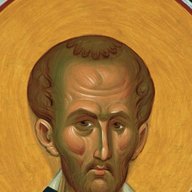
St. John ChrysostomHomily 6 on Galatians · on Galatians 6:1
Forasmuch as under cover of a rebuke they gratified their private feelings, and professing to do so for faults which had been committed, were advancing their own ambition, he says, "Brethren, if a man be overtaken." He said not if a man commit but if he be "overtaken" that is, if he be carried away. "Ye which are…
St. John ChrysostomHomily 6 on Galatians · on Galatians 6:2
"Bear ye one another's burdens." It being impossible for man to be without failings, he exhorts them not to scrutinize severely the offences of others, but even to bear their failings, that their own may in turn be borne by others. As, in the building of a house, all the stones hold not the same position, but one is…
For if a man think himself to be something, when he is nothing, he deceiveth himself.
εἰ γὰρ δοκεῖ τις εἶναί τι μηδὲν ὤν, ἑαυτὸν φρεναπατᾷ.
St. John ChrysostomHomily 6 on Galatians · on Galatians 6:3
"For if a man thinketh himself to be something, when he is nothing, he deceiveth himself." Here again he reflects on their arrogance. He that thinks himself to be something is nothing, and exhibits at the outset a proof of his worthlessness by such a disposition.
St. John ChrysostomHomily 6 on Galatians · on Galatians 6:4
"But let each man prove his own work." Here he shows that we ought to be scrutinizers of our lives, and this not lightly, but carefully to weigh our actions; as for example, if thou hast performed a good deed, consider whether it was not from vain glory, or through necessity, or malevolence, or with hypocrisy, or from…
St. John ChrysostomHomily 6 on Galatians · on Galatians 6:5
"For each man shall bear his own burden." He appears to state a reason prohibitory of boasting against another; but at the same time he corrects the boaster, so that he may no more entertain high thoughts of himself by bringing to his remembrance his own errors, and pressing upon his conscience the idea of a burden,…
St. John ChrysostomHomily 6 on Galatians · on Galatians 6:6
"But let him that is taught in the word communicate unto him that teacheth in all good things." Here he proceeds to discourse concerning Teachers, to the effect that they ought to be tended with great assiduity by their disciples. Now what is the reason that Christ so commanded? For this law, "that they which preach…
St. John ChrysostomHomily 6 on Galatians · on Galatians 6:7
And here he points out the difference between ambition of this kind, and in temporal affairs, by saying, "Be not deceived; God is not mocked; for whatsoever a man soweth, that shall he also reap. For he that soweth unto his own flesh shall of the flesh reap corruption; but he that soweth unto the Spirit shall of the…
St. John ChrysostomHomily 6 on Galatians · on Galatians 6:9–10
"And let us not be weary in well-doing; for in due season we shall reap, if we faint not. So then as we have opportunity, let us work that which is good toward all men, especially toward them that are of the household of faith." Lest any one should suppose that their Teachers were to be cared for and supported, but…
St. John ChrysostomHomily 6 on Galatians · on Galatians 6:11–12
"See with how large letters I have written unto you with mine own hand. As many as desire to make a fair show in the flesh, they compel you to be circumcised." Observe what grief posesses his blessed soul. As those who are oppressed with some sorrow, who have lost one of their own kindred, and suffered an unexpected…
As many as desire to make a fair shew in the flesh, they constrain you to be circumcised; only lest they should suffer persecution for the cross of Christ.
St. John ChrysostomHomily 6 on Galatians · on Galatians 6:12–13
"As many as desire to make a fair show in the flesh, they compel you to be circumcised; only that they may not be persecuted for the cross of Christ. For not even they who receive circumcision do themselves keep the Law; but they desire to have you circumcised, that they may glory in your flesh." Here he shows that…
St. John ChrysostomHomily 6 on Galatians · on Galatians 6:14
"But far be it from me to glory, save in the cross of our Lord Jesus Christ." Truly this symbol is thought despicable; but it is so in the world's reckoning, and among men; in Heaven and among the faithful it is the highest glory. Poverty too is despicable, but it is our boast; and to be cheaply thought of by the…
St. John ChrysostomHomily 6 on Galatians · on Galatians 6:15–16
"For neither is circumcision any thing, nor uncircumcision, but a new creature. And as many as shall walk by this rule, peace be upon them, and mercy, and upon the Israel of God." Observe the power of the Cross, to what a pitch it hath raised him! not only hath it put to death for him all mundane affairs, but hath set…
St. John ChrysostomHomily 6 on Galatians · on Galatians 6:17
"From henceforth let no man trouble me." This he says not as though he were wearied or overpowered; he who chose to do and suffer all for his disciples' sake; he who said, "Be instant in season, out of season;" (2 Tim. iv: 2.) he who said, "If peradventure God may give them repentance unto the knowledge of the truth,…
St. John ChrysostomHomily 6 on Galatians · on Galatians 6:18
"The grace of our Lord Jesus Christ be with your spirit, brethren. Amen." By this last word he hath sealed all that preceded it. He says not merely, "with you," as elsewhere, but, "with your spirit," thus withdrawing them from carnal things, and displaying throughout the beneficence of God, and reminding them of the…
Every note is a real passage, quoted word for word from a published English translation, with its source. Nothing here is summarised or written by us. Some verses have many notes and some have none, because the Fathers wrote more on some passages than others.
St. John Chrysostom, Homilies on Galatians, Nicene and Post-Nicene Fathers, series 1, vol. 13 (1888–1889).
Scripture: the King James Version (1611); the Greek (tap Ελ) is the 1904 Patriarchal text of the Ecumenical Patriarchate.
All of these translations are in the public domain. The passages were matched to their verses by the Historical Christian Commentaries project, which also hosts the full texts we link to. The Fathers are a treasury of the Church's mind, and they are best read alongside the life of the Church: if a passage raises a question, bring it to your priest.