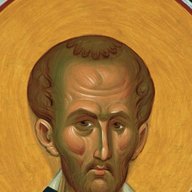
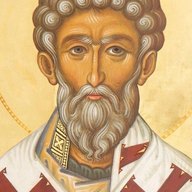
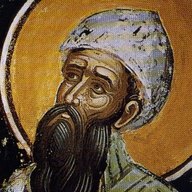
St. John ChrysostomHomily 21 on John · on John 2:1–2
I said before that He was best known in Galilee; therefore they invite Him to the marriage, and He comes; for He looked not to His own honor, but to our benefit. He who disdained not to "take upon Him the form of a servant" (Phil. ii. 7), would much less disdain to be present at the marriage of servants; He who sat…
The miracle indeed of our Lord Jesus Christ, whereby He made the water into wine, is not marvellous to those who know that it was God's doing. For He who made wine on that day at the marriage feast, in those six water-pots, which He commanded to be filled with water, the self-same does this every year in vines. For…
The Lord, on being invited, came to the marriage. What wonder if He came to that house to a marriage, having come into this world to a marriage? For, indeed, if He came not to a marriage, He has not here a bride. But what says the apostle? "I have espoused you to one husband, to present you a chaste virgin to Christ."…
When we see, therefore, such deeds wrought by Jesus God, why should we wonder at water being turned into wine by the man Jesus? For He was not made man in such manner that He lost His being God. Man was added to Him, God not lost to Him. This miracle was wrought by the same who made all those things. Let us not…
Blessed AugustineTractate 9 on John · on John 2:1–11
In the ancient times there was prophecy, and no times were left without the dispensation of prophecy. But the prophecy, since Christ was not understood therein, was water. For in water wine is in some manner latent. The apostle tells us what we are to understand by this water: "Even unto this day," saith he, "whilst…
St. Cyril of AlexandriaCommentary on John, Book 2 · on John 2:1
Galilee. Let him that loves learning again note well: for not in Jerusalem is the gathering, but without Judaea is the feast celebrated, as it were in the country of the Gentiles. For it is Galilee of the gentiles, as the prophet saith. It is I suppose altogether plain, that the synagogue of the Jews rejected the…
The Lord, in that He came to the marriage to which He was invited, wished, apart from the mystical signification, to assure us that marriage was His own institution. For there were to be those of whom the apostle spoke, "forbidding to marry," and asserting that marriage was an evil, and of the devil's institution:…
St. Cyril of AlexandriaCommentary on John, Book 2 · on John 2:2
For it was fitting that He, Who was renewing the very nature of man, and refashioning it all for the better, should not only impart His blessing to those already called into being, but also prepare before grace for those soon to be born, and make holy their entrance into being. Receive also yet a third reason. It had…
St. John ChrysostomHomily 21 on John · on John 2:3
Here it is worth while to enquire whence it came into His mother's mind to imagine anything great of her Son; for He had as yet done no miracle, since the Evangelist saith, "This beginning of miracles did Jesus in Cana of Galilee." Now if any say that this is not a sufficient proof that it was the "beginning of His…
St. John ChrysostomHomily 21 on John · on John 2:3
"How then," asks some one, "came it into the mind of His mother to imagine anything great of Him?" He was now beginning to reveal Himself, and was plainly discovered by the witness of John, and by what He had said to His disciples. And before all this, the Conception itself and all its attending circumstances had…
St. Cyril of AlexandriaCommentary on John, Book 2 · on John 2:3
Seasonably comes He at length, to the beginning of miracles, even if He seems to have been called to it without set purpose. For a marriage feast being held (it is clear that it was altogether holily), the mother of the Saviour is present, and Himself also being bidden comes together with His own disciples, to work…
St. John ChrysostomHomily 22 on John · on John 2:4
The words are not used in this place only, but in others also; for the same Evangelist says, "They could not lay hands on Him, because His hour was not yet come" (c. viii. 20); and again, "No man laid hands on Him, because His hour was not yet come" (c. vii. 30); and again, "The hour is come, glorify Thy Son." (c.…
St. John ChrysostomHomily 22 on John · on John 2:4
And His meaning is, that as yet He was not manifest to the many, nor had He even His whole company of disciples; Andrew followed Him, and next to him Philip, but no one else. And moreover, none of these, not even His mother nor His brethren, knew Him as they ought; for after His many miracles, the Evangelist says of…
St. John ChrysostomHomily 22 on John · on John 2:4
Why then after He had said, "Mine hour is not yet come," and given her a denial, did He what His mother desired? Chiefly it was, that they who opposed Him, and thought that He was subject to the "hour," might have sufficient proof that He was subject to no hour; for had He been so, how could He, before the proper…
St. John ChrysostomHomily 21 on John · on John 2:4
"How then," asks some one, "came it into the mind of His mother to imagine anything great of Him?" He was now beginning to reveal Himself, and was plainly discovered by the witness of John, and by what He had said to His disciples. And before all this, the Conception itself and all its attending circumstances had…
St. John ChrysostomHomily 21 on John · on John 2:4
To prove that He greatly respected His mother, hear Luke relate how He was "subject to" His parents (Luke ii. 51), and our own Evangelist declare how He had forethought for her at the very season of the Crucifixion. For where parents cause no impediment or hindrance in things belonging to God, it is our bounden duty…
It is because of an indubitable mystery that He appears not to acknowledge His mother, from whom as the Bridegroom He came forth, when He says to her, "Woman, what have I to do with thee? Mine hour is not yet come." What is this? Did He come to the marriage for the purpose of teaching men to treat their mothers with…
It is really a matter of such importance that some,-of whom the apostle, as we have mentioned before, has forewarned us to be on our guard, saying, "I fear, lest, as the serpent beguiled Eve by his subtilty, so also your minds should be corrupted from the simplicity and chastity which is in Christ,"-taking away from…
How doth the serpent possess? When a lie possesses. When falsehood possesses, then the serpent possesses; when truth possesses, then Christ possesses. For Himself has said, "I am the truth;" but of that other He said, "He stood not in the truth, because the truth is not him." And Christ is the truth in such wise that…
Why, then, said the Son to the mother, "Woman, what have I to do with thee? mine hour is not yet come?" Our Lord Jesus Christ was both God and man. According as He was God, He had not a mother; according as He was man, He had. She was the mother, then, of His flesh, of His humanity, of the weakness which for our sakes…
For while He was God and the Lord of heaven and earth, He came by a mother who was a woman. In that He was Lord of the world, Lord of heaven and earth, He was, of course, the Lord of Mary also; but in that wherein it is said, "Made of a woman, made under the law," He was Mary's son. The same both the Lord of Mary and…
Now as she was not the mother of His divine nature, whilst it was by His divinity the miracle she asked for would be wrought, therefore He answered her, "Woman, what have I to do with thee?" But think not that I deny thee to be my mother: "Mine hour is not yet come;" for in that hour I will acknowledge thee, when the…
Now then, if it seem good, brethren, those men being repulsed, and ever wandering in their own blindness, unless in humility they be healed, let us inquire why our Lord answered His mother in such a manner. He was in an extraordinary manner begotten of the Father without a mother, born of a mother without a father;…
If it was in the sense of the astrologers He said this, we have committed a sacrilege in burning their books. But if we have acted rightly, as was done in the times of the apostles, it was not according to their notion that the Lord said, "Mine hour is not yet come." For, say those vain-talkers and deceived seducers,…
Now then, brethren, we have answered the heretics. Let us now answer the astrologers. And how do they attempt to prove that Jesus was under fate? Because, say they, Himself said, "Mine hour is not yet come." Therefore we believe Him; and if He had said, "I have no hour," He would have excluded the astrologers: but…
Why then did He say, "Mine hour is not yet come?" Rather because, having it in His power when to die, He did not yet see it fit to use that power. Just as we, brethren, say, for example, "Now is the appointed hour for us to go out to celebrate the sacraments." If we go out before it is necessary, do we not act…
The hour then had not yet come, the fit time was not yet. Disciples had to be called, the kingdom of heaven to be proclaimed, the Lord's divinity to be shown forth in miracles, and His humanity in His very sympathy with mortal men. For He who hungered because He was man, fed so many thousands with five loaves because…
I ask you, O faithful Christians, Was the mother of Jesus there? Answer ye, She was. Whence know you? Answer, The Gospel says it. What answer made Jesus to His mother? Answer ye, "Woman, what have I to do with thee? mine hour is not yet come." And whence know you this? Answer, The Gospel says it. Let no man corrupt…
St. Cyril of AlexandriaCommentary on John, Book 2 · on John 2:4
Most excellently did the Saviour fashion for us this discourse also. For it behoved Him not to come hastily to action, nor to appear a Worker of miracles as though of His Own accord, but, being called, hardly to come thereto, and to grant the grace to the necessity rather than to the lookers on. But the issue of…
St. John ChrysostomHomily 22 on John · on John 2:5
Besides, even while saying to the Canaanitish woman, "It is not meet to take the children's bread, and to give it unto dogs" (Matt. xv. 26), He still gave the bread, as considering her perseverance; and though after his first reply, He said, "I am not sent save unto the lost sheep of the house of Israel," yet even…
St. Cyril of AlexandriaCommentary on John, Book 2 · on John 2:5
The woman having great influence to the performing of the miracle, prevailed, persuading the Lord, on account of what was fitting, as her Son. She begins the work by preparing the servants of the assembly to obey the things that should be enjoined.
St. John ChrysostomHomily 22 on John · on John 2:6
It is not without a reason that the Evangelist says, "After the manner of the purifying of the Jews," but in order that none of the unbelievers might suspect that lees having been left in the vessels, and water having been poured upon and mixed with them, a very weak wine had been made. Therefore he says, "after the…
But observe what Himself saith, "The things which were written in the law, and in the prophets, and in the Psalms concerning me." And we know that the law extends from the time of which we have record, that is, from the beginning of the world: "In the beginning God made the heaven and the earth." Thence down to the…
But what means this: "They contained two or three metretae apiece"? This phrase certainly conveys to us a mysterious meaning. For by "metretae" he means certain measures, as if he should say jars, flasks, or something of that sort. Metreta is the name of a measure, and takes its name from the word "measure." For…
But there is also another meaning that must not be passed over, and which I will declare: let every man choose which he likes best. We keep not back what is suggested to us. For it is the Lord's table, and the minister ought not to defraud the guests, especially when they hunger as you now do, so that your longing is…
St. John ChrysostomHomily 22 on John · on John 2:7
"And why was it, that He did not the miracle before they filled them, which would have been more marvelous by far? for it is one thing to change given matter to a different quality, and another to create matter out of nothing." The latter would indeed have been more wonderful, but would not have seemed so credible to…
St. John ChrysostomHomily 22 on John · on John 2:7
"But why," says one, "did not He Himself produce the water which He afterwards showed to be wine, instead of bidding the servants bring it?" For the very same reason; and also, that He might have those who drew it out to witness that what had been effected was no delusion since if any had been inclined to be…
St. Cyril of AlexandriaCommentary on John, Book 2 · on John 2:7
The ministers accomplish what is commanded, and by unspeakable might was the water changed into wine. For what is hard to Him Who can do all things? He that calleth into being things which are not, how will He weary, trans-ordering into what He will things already made? They marvel at the thing, as strange; for such…
When the ruler of the feast had tasted the water that was made wine, and knew not whence it was: (but the servants which drew the water knew;) the governor of the feast called the bridegroom,
St. John ChrysostomHomily 22 on John · on John 2:9
Here again some mock, saying, "this was an assembly of drunken men, the sense of the judges was spoilt, and not able to taste what was made, or to decide on what was done, so that they did not know whether what was made was water or wine: for that they were drunk," it is alleged, "the ruler himself has shown by what…
St. John ChrysostomHomily 22 on John · on John 2:9
"And when the ruler of the feast had tasted the water that was made wine, and knew not whence it was, (but the servants knew,) the governor of the feast called the bridegroom." "And why did he not call the servants? for so the miracle would have been revealed." Because Jesus had not Himself revealed what had been…
St. John ChrysostomHomily 22 on John · on John 2:9–10
Thus when he was about to heal the nobleman's son, the Evangelist has shown that it had already become more clearly known; for it was chiefly because the nobleman had become acquainted with the miracle that he called upon Him, as John incidentally shows when he says, "Jesus came into Cana of Galilee, where He made the…
And saith unto him, Every man at the beginning doth set forth good wine; and when men have well drunk, then that which is worse: but thou hast kept the good wine until now.
Blessed AugustineTractate 9 on John · on John 2:10
For the bridegroom in that marriage, to whom it was said, "Thou hast kept the good wine until now," represented the person of the Lord. For the good wine-namely, the gospel-Christ has kept until now.
St. John ChrysostomHomily 23 on John · on John 2:11
"This beginning of miracles did Jesus in Cana of Galilee." I told you the other day, that there are some who say that this is not the beginning. "For what," says one, "if 'Cana of Galilee' be added? This shows that this was 'the beginning' He made 'in Cana.'" But on these points I would not venture to assert anything…
St. Cyril of AlexandriaCommentary on John, Book 2 · on John 2:11
Many most excellent things were accomplished at once through the one first miracle. For honourable marriage was sanctified, the curse on women put away (for no more in sorrow shall they bring forth children, now Christ has blessed the very beginning of our birth), and the glory of our Saviour shone forth as the sun's…
St. John ChrysostomHomily 23 on John · on John 2:12–13
"After this He went down to Capernaum, He, and His mother, and His brethren, and His disciples; and they continued there not many days." Wherefore comes He with "His mother to Capernaum"? for He hath done no miracle there, and the inhabitants of that city were not of those who were rightminded towards Him, but of the…
Blessed AugustineTractate 10 on John · on John 2:12
"He went down," as the evangelist says, "to Capernaum, He, and His mother, and His brethren, and His disciples; and they continued there not many days." Behold He has a mother, and brethren, and disciples: whence He has a mother, thence brethren. For our Scripture is wont to call them brethren, not only that are…
Blessed AugustineTractate 10 on John · on John 2:12
But rather were those disciples brethren; for even those kinsmen would not be brethren were they not disciples: and to no advantage brethren, if they did not recognize their brother as their master. For in a certain place, when He was informed that His mother and His brethren were standing without, at the time He was…
Blessed AugustineTractate 10 on John · on John 2:13
What follows upon this? "And the Jews' passover was at hand; and He went up to Jerusalem." The narrator relates another matter, as it came to his recollection. "And He found in the temple those that sold oxen, and sheep, and doves, and the changers of money sitting: and when He had made, as it were, a scourge of small…
Blessed AugustineTractate 10 on John · on John 2:14
Well, who sell oxen? They who have dispensed to us the Holy Scriptures are understood to mean the oxen. The apostles were oxen, the prophets were oxen. Whence the apostle says: "Thou shalt not muzzle the mouth of the ox that treadeth out the corn. Doth God take care for oxen? Or saith He it for our sakes? Yea, for our…
Blessed AugustineTractate 10 on John · on John 2:14–16
These men, however, deceive the people by the very Scriptures, that they may receive honors and praises at their hand, and that men may not turn to the truth. But in that they deceive, by the very Scriptures, the people of whom they seek honors, they do in fact sell oxen: they sell sheep too; that is, the common…
St. Cyril of AlexandriaCommentary on John, Book 2 · on John 2:14
The Jews are again hereby too convicted of despising the laws given them, and making of no account the Mosaic writings, looking only to their own love of gain. For whereas the law commanded that they who were about to enter into the Divine temple should purify themselves in many ways; those who had the power of…
And when he had made a scourge of small cords, he drove them all out of the temple, and the sheep, and the oxen; and poured out the changers’ money, and overthrew the tables;
St. John ChrysostomHomily 23 on John · on John 2:15
"And wherefore," says one, "did Christ do this same, and use such severity against these men, a thing which He is nowhere else seen to do, even when insulted and reviled, and called by them 'Samaritan' and 'demoniac'? for He was not even satisfied with words only, but took a scourge, and so cast them out." Yes, but it…
St. John ChrysostomHomily 23 on John · on John 2:15
Since he was about to heal on the Sabbath day, and to do many such things which were thought by them transgressions of the Law, in order that He might not seem to do this as though He had come to be some rival God and opponent of His Father, He takes occasion hence to correct any such suspicion of theirs. For One who…
St. John ChrysostomHomily 23 on John · on John 2:15–16
They do not in this contradict each other, but show that he did this a second time, and that both these expressions were not used on the same occasion, but that He acted thus once at the beginning of His ministry, and again when He had come to the very time of His Passion. Therefore, (on the latter occasion,)…
Blessed AugustineTractate 10 on John · on John 2:15
Yet we say, brethren (for He did not spare those men: He who was to be scourged by them first scourged them), that He gave us a certain sign, in that He made a scourge of small cords, and with it lashed the unruly, who were making merchandise of God's temple. For indeed every man twists for himself a rope by his sins:…
St. Cyril of AlexandriaCommentary on John, Book 2 · on John 2:15
Reasonably is the Saviour indignant at the folly of the Jews. For it befitted to make the Divine Temple not an house of merchandise, but an house of prayer: for so it is written. But He shows His emotion not by mere words, but with stripes and a scourge thrusts He them forth of the sacred precincts, justly devising…
St. John ChrysostomHomily 23 on John · on John 2:16
Another Evangelist writes, that as He cast them out, He said, Make not my Father's house "a den of thieves," but this one, "(Make not My Father's house) an house of merchandise." They do not in this contradict each other, but show that he did this a second time, and that both these expressions were not used on the…
St. John ChrysostomHomily 23 on John · on John 2:16
And therefore not by His actions only, but by His words, He shows his agreement with the Father; for He saith not "the Holy House," but "My Father's House." See, He even calls Him, "Father," and they are not wroth; they thought He spoke in a general way: but when He went on and spoke more plainly, so as to set before…
Blessed AugustineTractate 10 on John · on John 2:16
However, to seek the mystery of the deed in the figure, who are they that sell oxen? Who are they that sell sheep and doves? They are they who seek their own in the Church, not the things which are Christ's. They account all a matter of sale, while they will not be redeemed: they have no wish to be bought, and yet…
St. Cyril of AlexandriaCommentary on John, Book 2 · on John 2:16
Take these things hence; make not My Father's House an house of merchandise. He commands as Lord, He leads by the hand to what is fitting, as teacher; and along with the punishment He sets before them the declaration of their offences, through shame thereof not suffering him that is censured to be angry. But it must…
St. Cyril of AlexandriaCommentary on John, Book 2 · on John 2:16
And found in the temple those that sold oxen and sheep, See again the whole scheme of the Dispensation to usward drawn out by two things. For with the Cananites, I mean those of Galilee, Christ both feasts and tarries, and them that bade Him, and hereby honoured Him, He made partakers of His Table; He both aids them…
St. John ChrysostomHomily 23 on John · on John 2:17
"They," His disciples, it says, "Remembered that it is written, The zeal of thine house hath eaten me up." But the Jews did not remember the Prophecy, and said, "What sign showest Thou unto us?" both grieving that their shameful traffic was cut off, and expecting by these means to stop Him, and also desiring to…
Blessed AugustineTractate 10 on John · on John 2:17
"Then the disciples remembered that it was written, The zeal of Thine house hath eaten me up:" because by this zeal of God's house, the Lord cast these men out of the temple. Brethren, let every Christian among the members of Christ be eaten up with zeal of God's house. Who is eaten up with zeal of God's house? He who…
St. John ChrysostomHomily 23 on John · on John 2:18–19
And what say they? "What sign showest Thou unto us, seeing that Thou doest these things?" Alas for their utter madness! Was there need of a sign before they could cease their evil doings, and free the house of God from such dishonor? and was it not the greatest sign of His Excellence that He had gotten such zeal for…
St. John ChrysostomHomily 23 on John · on John 2:18–19
Wherefore He will not give them a sign; and before, when they came and asked Him, He made them the same answer, "A wicked and adulterous generation seeketh after a sign; and there shall no sign be given unto it, but the sign of the prophet Jonas." Only then the answer was clear, now it is more ambiguous. This He doth…
Blessed AugustineTractate 10 on John · on John 2:18–21
"The Jews said unto Him, What sign showest thou unto us, seeing that thou doest these things?" And the Lord answered, "Destroy this temple, and in three days I will raise it up. Then said the Jews, Forty and six years was this temple in building, and dost thou say, In three days I will rear it up?" Flesh they were,…
St. Cyril of AlexandriaCommentary on John, Book 2 · on John 2:18
The multitude of the Jews are startled at the unwonted authority, and they who are over the temple are extremely vexed, deprived of their not easily counted gains. And they cannot convict Him of not having spoken most rightly in commanding them not to exhibit the Divine Temple as a house of merchandise. But they…
St. John ChrysostomHomily 23 on John · on John 2:19
But why doth He both there, and here, and everywhere, give this for a sign, at one time saying, "When ye have lifted up the Son of Man, then ye shall know that I Am"; at another, "There shall no sign be given you but the sign of the prophet Jonas"; and again in this place, "In three days I will raise it up"? Because…
Blessed AugustineTractate 10 on John · on John 2:19
Of Adam then is Christ's flesh: of Adam the temple which the Jews destroyed, and the Lord raised up in three days. For He raised His own flesh: see, that He was thus God equal with the Father. My brethren, the apostle says, "Who raised Him from the dead." Of whom says he this? Of the Father. "He became," saith he,…
St. Cyril of AlexandriaCommentary on John, Book 2 · on John 2:19
To them who of good purpose ask for good things, God very readily granteth them: but to them who come to Him, tempting Him, not only does He deny their ambition in respect of what they ask, but also charges them with wickedness. Thus the Pharisees demanding a sign in other parts of the Gospels the Saviour convicted…
St. John ChrysostomHomily 23 on John · on John 2:20
But at the time when this was spoken, the Jews were perplexed as to what it might mean, and cast about to discover, saying, "Forty and six years was this Temple in building, and wilt thou rear it up in three days?" "Forty and six years," they said, referring to the latter building, for the former was finished in…
Blessed AugustineTractate 10 on John · on John 2:20
But perhaps this is demanded of us, whether the fact that the temple was forty and six years in building may not have in it some mystery. There are, indeed, many things that may be said of this matter; but what may briefly be said, and easily understood, that we say meanwhile. Brethren, we have said yesterday, if I…
Blessed AugustineTractate 10 on John · on John 2:20
Now, what does the number Forty-six mean? Meanwhile, how Adam extends over the whole globe, you have already heard explained yesterday, by the four Greek letters of four Greek words. For if thou write the four words, one under the other, that is, the names of the four quarters of the world, of east, west, north, and…
St. Cyril of AlexandriaCommentary on John, Book 2 · on John 2:20
They mock at the sign, not understanding the depth of the Mystery, but seize on the disease of their own ignorance, as a reasonable excuse for not obeying Him, and considering the difficulty of the thing, they gave heed rather as to one speaking at random, than to one who was promising ought possible to be fulfilled,…
St. John ChrysostomHomily 23 on John · on John 2:21
Wherefore then did He not resolve the difficulty and say, "I speak not of that Temple, but of My flesh"? Why does the Evangelist, writing the Gospel at a later period, interpret the saying, and Jesus keep silence at the time? Why did He so keep silence? Because they would not have received His word; for if not even…
St. Cyril of AlexandriaCommentary on John, Book 2 · on John 2:21
Acceptable to the wise man is the word of wisdom, and the knowledge of discipline abideth more easily with men of understanding, and as in wax not too hard, the impression of seals is well made, so in the more tender hearts of men the Divine Word is readily infixed: wherefore the hard of heart is also called wicked.…
When therefore he was risen from the dead, his disciples remembered that he had said this unto them; and they believed the scripture, and the word which Jesus had said.
St. John ChrysostomHomily 23 on John · on John 2:22
Many such sayings He utters which were not intelligible to His immediate hearers, but which were to be so to those that should come after. And wherefore doth He this? In order that when the accomplishment of His prediction should have come to pass, He might be seen to have foreknown from the beginning what was to…
St. John ChrysostomHomily 23 on John · on John 2:22
The question still remains, "How was it that the disciples did not know that He must rise from the dead?" It was, because they had not been vouchsafed the gift of the Spirit; and therefore, though they constantly heard His discourses concerning the Resurrection, they understood them not, but reasoned with themselves…
St. John ChrysostomHomily 23 on John · on John 2:22
"But," says one, "if they were to hear from the Spirit, why needed they to accompany Christ when they would not retain His words?" Because the Spirit taught them not, but called to their mind what Christ had said before; and it contributes not a little to the glory of Christ, that they were referred to the remembrance…
St. John ChrysostomHomily 24 on John · on John 2:23–25
Of the men of that time some clung to their error, others laid hold on the truth, while of these last, some having retained it for a little while again fell off from it. Alluding to these, Christ compared them to seeds not deeply sown, but having their roots upon the surface of the earth; and He said that they should…
Blessed AugustineTractate 11 on John · on John 2:23–24
Behold, you have heard that when our Lord Jesus Christ "was in Jerusalem at the Passover, on the feast day, many believed in His name, seeing the signs which He did." "Many believed in His name;" and what follows? "But Jesus did not trust Himself to them." Now what does this mean, "They believed," or trusted, "in His…
Blessed AugustineTractate 11 on John · on John 2:23–24
Why, then, is it that they believed in His name, and yet Jesus did not trust Himself to them? Let us see what follows. "And there was a man of the Pharisees, Nicodemus by name, a ruler of the Jews: the same came to Him by night, and said unto Him, Rabbi, we know that Thou art a teacher come from God; for no man can do…
St. Cyril of AlexandriaCommentary on John, Book 2 · on John 2:23
Christ ceaseth not from saving and helping. For some He leads to Himself by wise words, the rest startling by God-befitting Power too, He taketh in His net to the faith, by the things which they see Him work persuaded to confess, that the Artificer of these so great wonders is of a truth God.
St. Cyril of AlexandriaCommentary on John, Book 2 · on John 2:24
Not firmly established is the judgment of new believers, nor is the mind firmly built upon fresh miracles. And how should they whose course of instruction was yet so to say green, be already rooted in piety? Therefore Christ doth not yet commit Himself to the novices, showing that a great thing and most worthy of love…
Blessed AugustineTractate 11 on John · on John 2:25
"Because He knew all men, and needed not that any should bear witness of man: for Himself knew what was in man." The artificer knew what was in His own work better than the work knew what was in itself. The Creator of man knew what was in man, which the created man himself knew not. Do we not prove this of Peter, that…
St. Cyril of AlexandriaCommentary on John, Book 2 · on John 2:25
Divine is this excellence too along with the rest which are in Christ, and in no one of created beings is it. For to Him Alone Who is truly God doth the Psalmist ascribe it, saying, He fashioneth their hearts alike, He considereth all their works. But if while God Alone understandeth what is in us, Christ…
Every note is a real passage, quoted word for word from a published English translation, with its source. Nothing here is summarised or written by us. Some verses have many notes and some have none, because the Fathers wrote more on some passages than others.
St. John Chrysostom, Homilies on the Gospel of John, Nicene and Post-Nicene Fathers, series 1, vol. 14 (1888–1889).
Blessed Augustine, Tractates on the Gospel of John, tr. John Gibb and James Innes, Nicene and Post-Nicene Fathers, series 1, vol. 7 (1888).
St. Cyril of Alexandria, Commentary on the Gospel according to S. John, tr. P. E. Pusey and T. Randell, Library of the Fathers (1874–1885).
Scripture: the King James Version (1611); the Greek (tap Ελ) is the 1904 Patriarchal text of the Ecumenical Patriarchate.
St. Cyril's Books 7 and 8 on John survive only in fragments.
All of these translations are in the public domain. The passages were matched to their verses by the Historical Christian Commentaries project, which also hosts the full texts we link to. The Fathers are a treasury of the Church's mind, and they are best read alongside the life of the Church: if a passage raises a question, bring it to your priest.