And as Jesus passed by, he saw a man which was blind from his birth.
Καὶ παράγων εἶδεν ἄνθρωπον τυφλὸν ἐκ γενετῆς.
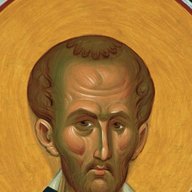
St. John ChrysostomHomily 56 on John · on John 9:1
"And as Jesus passed by, He saw a man which was blind from his birth." Being full of love for man, and caring for our salvation, and desiring to stop the mouths of the foolish, He omitteth nothing of His own part, though there be none to give heed. Wherefore here, when they would not receive His sublime sayings, but…
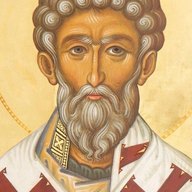
Blessed AugustineTractate 44 on John · on John 9:1
All, certainly, that was done by our Lord Jesus Christ, both works and words, are worthy of our astonishment and admiration: His works, because they are facts; His words, because they are signs. If we reflect, then, on what is signified by the deed here done, that blind man is the human race; for this blindness had…
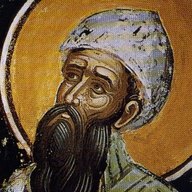
St. Cyril of AlexandriaCommentary on John, Book 6 · on John 9:1
While the Jews were raging against Him and now essaying to wound Him with stones, forthwith He goes forth of the temple that is among them, and takes Him away from the unholiness of His pursuers. And in passing by, straightway He seeth one blind from his birth, and setteth him as a token and that most clear that He…
St. John ChrysostomHomily 56 on John · on John 9:2
"Master, who did sin, this man, or his parents, that he was born blind?" A mistaken question, for how could he sin before he was born? and how, if his parents had sinned, would he have been punished? Whence then came they to put this question? Before, when He healed the paralytic, He said, "Behold, thou art made…
St. Cyril of AlexandriaCommentary on John, Book 6 · on John 9:2
That not from sins of the soul prior to birth do bodily sufferings befal any, nor yet does God bring the sins of their fathers upon any, punishing those who have nothing sinned, but brings righteous doom upon all. Being desirous (and not without good reason) that the mystery should be explained, or rather being…
St. John ChrysostomHomily 56 on John · on John 9:3
"Neither hath this man sinned, nor his parents." This He saith not as acquitting them of sins, for He saith not simply, "Neither hath this man sinned, nor his parents," but addeth, "that he should have been born blind" - "but that the Son of God should be glorified in him." "For both this man hath sinned and his…
St. John ChrysostomHomily 56 on John · on John 9:3
"That the glory of God should be made manifest," He saith. Lo, here again is another difficulty, if without this man's punishment, it was not possible that the glory of God should be shown. Certainly it is not said that it was impossible, for it was possible, but, "that it might be manifested even in this man."…
St. John ChrysostomHomily 56 on John · on John 9:3
But when He said, "That the glory of God might be manifested," He spake of Himself, not of the Father; His glory was already manifest. For since they had heard that God made man, taking the dust of the earth, so also Christ made clay. To have said, "I am He who took the dust of the earth, and made man," would have…
St. Cyril of AlexandriaCommentary on John, Book 6 · on John 9:3
That which lies before us is hard to explain and capable of causing much perplexity, so that it would be perhaps not unlearned to pass it over in silence, and because of its excessive difficulty to leave it. But when the Jewish doctrines have been refuted, lest another thing akin to them, like any root of bitterness…
St. John ChrysostomHomily 56 on John · on John 9:4
"I must work the works of Him that sent Me." That is, "I must manifest Myself, and do the things which may show that I do the same things with the Father"; not things "similar," but, "the same," an expression which marks greater unvaryingness, and which is used of those who do not differ ever so little. Who then after…
St. John ChrysostomHomily 56 on John · on John 9:4
"I must work while it is day." What mean these words? To what conclusion do they lead? To an important one. For what He saith is of this kind. "While it is day, while men may believe on Me, while this life lasteth, I must work." "The night cometh," that is, futurity, "when no man can work." He said not, "when I cannot…
Blessed AugustineTractate 44 on John · on John 9:4
"I must work the works of Him that sent me, while it is day." Recall to thy mind the way in which He gives universal glory to Him of whom He is: for that One has the Son who is of Him; He Himself has no One of whom He is. But wherefore, Lord, saidst Thou, "While it is day"? Hearken why He did so. "The night cometh…
St. Cyril of AlexandriaCommentary on John, Book 6 · on John 9:4
Lo here again in these words, plainly and reasonably, He rebukes in a similar manner the disciples, as if they had done something they ought not, and having left the high road, well-trodden and firm, had ventured on another which seemed not at all fit for them. For, why do ye ask, says He, things touching which it is…
As long as I am in the world, I am the light of the world.
ὅταν ἐν τῷ κόσμῳ ὦ, φῶς εἰμι τοῦ κόσμου.
St. John ChrysostomHomily 56 on John · on John 9:5
"As long as I am in the world, I am the Light of the world." As also He said to others, "Believe while the light is with you." Wherefore then did Paul call this life "night" and that other "day"? Not opposing Christ, but saying the same thing, if not in words yet in sense; for he also saith, "The night is far spent,…
Blessed AugustineTractate 44 on John · on John 9:5
What is that night wherein, when it comes, no one shall be able to work? Hear what the day is, and then thou wilt understand what the night is. But how shall we hear what the day is? Let Himself tell us: "As long as I am in this world, I am the light of the world." See, He Himself is the day. Let the blind man wash…
St. Cyril of AlexandriaCommentary on John, Book 6 · on John 9:5
Shall we then think that Christ is now not at all in the world, or do we believe that He, having ascended to heaven after His restoration to life from the dead, no longer dwells among those in this present life? And yet being very God, He fills and tends not only the heavens and what is beyond the firmament, but also…
St. John ChrysostomHomily 57 on John · on John 9:6–7
Those who intend to gain any advantage from what they read, must not pass by even any small portion of the words; and on this account we are bidden to "search" the Scriptures, because most of the words, although at first sight easy, appear to have in their depth much hidden meaning. For observe of what sort is the…
St. John ChrysostomHomily 57 on John · on John 9:6–7
But observe the mind of the blind man, obedient in everything. He said not, "If it is really the clay or the spittle which gives me eyes, what need of Siloam? Or if there be need of Siloam, what need of the clay? Why did he anoint me? Why bid me wash?" But he entertained no such thoughts, he held himself prepared for…
Blessed AugustineTractate 44 on John · on John 9:6
The Lord came: what did He do? He set forth a great mystery. "He spat on the ground," He made clay of His spittle; for the Word was made flesh. "And He anointed the eyes of the blind man." The anointing had taken place, and yet he saw not.
St. Cyril of AlexandriaCommentary on John, Book 6 · on John 9:6
Accepting the cure wrought upon this blind man as a type of the calling of the Gentiles, we will again tell the meaning of the mystery, summing it up in few words. First then because it was merely in passing, and after leaving the Jewish temple, that He saw the blind man: and again from this circumstance also, that…
Blessed AugustineTractate 44 on John · on John 9:7
He sent him to the pool which is called Siloam. But it was the evangelist's concern to call our attention to the name of this pool; and he adds, "Which is interpreted, Sent." You understand now who it is that was sent; for had He not been sent, none of us would have been set free from iniquity. Accordingly he washed…
St. John ChrysostomHomily 57 on John · on John 9:8–9
The strangeness of what had been brought to pass led them even to unbelief, though so much had been contrived that they might not disbelieve. They said, "Is not this he that sat and begged?" O the lovingkindness of God! Whither did He descend, when with great kindness He healed even beggars, and so silenced the Jews,…
Blessed AugustineTractate 44 on John · on John 9:8–9
"The neighbors therefore, and those who saw him previously, for he was a beggar, said, Is not this he who sat and begged? Some said, It is he: others, No; but he is like him." The opening of his eyes had altered his countenance. "He said, I am he." His voice utters its gratitude, that it might not be condemned as…
St. Cyril of AlexandriaCommentary on John, Book 6 · on John 9:9
Hard indeed to be believed are such surpassing wonders, and that [which exceeds man's experience], from whatever source it comes, finds the intellect to be intolerant of it, and is scarcely treated with honour when convincingly forced upon people's minds. For the attempt to investigate what is beyond the grasp of…
Therefore said they unto him, How were thine eyes opened?
ἔλεγον οὖν αὐτῷ· πῶς ἀνεῴχθησάν σου οἱ ὀφθαλμοί;
St. John ChrysostomHomily 57 on John · on John 9:10–11
"They said unto him, How were thine eyes opened? He answered and said, A man that is called Jesus." What sayest thou? Doth "a man" work such deeds? As yet he knew nothing great concerning Him. "A man that is called Jesus made clay, and anointed mine eyes." Observe how truthful he is. He saith not whence He made it,…
Blessed AugustineTractate 44 on John · on John 9:10–11
"Therefore said they unto him, How were thine eyes opened? He answered, The man who is called Jesus made clay, and anointed mine eyes, and said unto me, Go to the pool of Siloam, and wash: and I went and washed, and saw." See, he is become the herald of grace; see, he preaches the gospel; endowed with sight, he…
St. Cyril of AlexandriaCommentary on John, Book 6 · on John 9:10
With difficulty they consent to believe that he was the same man whom they had known aforetime, and abandoning their hesitation on this point, they ask how he had got rid of his blindness, and what was the manner of such an unhoped-for event. For it seems usual for those who are astonished to make careful inquiries…
He answered and said, A man that is called Jesus made clay, and anointed mine eyes, and said unto me, Go to the pool of Siloam, and wash: and I went and washed, and I received sight.
St. Cyril of AlexandriaCommentary on John, Book 6 · on John 9:11
He appears still to be ignorant that the Saviour is by nature God, for otherwise he would not have spoken of him so unworthily. He probably thought of Him and esteemed Him as a holy Man, forming this opinion perhaps from the somewhat indistinct rumour concerning Him that went about all Jerusalem, and was repeated…
St. John ChrysostomHomily 57 on John · on John 9:12
"They said unto him, Where is he? He said, I know not." They said, "Where is he?" having already murderous intentions against Him. But observe the modesty of Christ, how He continued not with those who were healed; because He neither desired to reap glory, nor to draw a multitude, nor to make a show of Himself.…
St. Cyril of AlexandriaCommentary on John, Book 6 · on John 9:12
Not from devout feelings do they inquire for Jesus, nor are they moved to inquire where and with whom He was uttering discourses, so that they might go and seek some profit from His doings; but being blinded in the eyes of their understanding, even much worse than he had formerly been in those of his body, they are…
Blessed AugustineTractate 44 on John · on John 9:13–16
"They brought to the Pharisees him who had been blind. And it was the Sabbath when Jesus made the clay, and opened his eyes. Then again the Pharisees also asked how he had received his sight. And he said unto them, He put clay upon mine eyes, and I washed, and do see. Therefore said some of the Pharisees;" not all,…
St. Cyril of AlexandriaCommentary on John, Book 6 · on John 9:13
They bring the man to the rulers, not that they might learn what had been done to him, and admire it; for it was not likely that men travailing with extreme envy against our Saviour Christ could ever be pleased by any such thing; but that they might publicly convict Jesus, as they thought, of a transgression of the…
St. Cyril of AlexandriaCommentary on John, Book 6 · on John 9:14
When the blessed Evangelist is making it manifest to us that they were immoderately vexed at the making of clay on the sabbath, he fitly hints at the absurdity of the thing, by adding: Now it was the sabbath on the day when Jesus made the clay.
St. Cyril of AlexandriaCommentary on John, Book 6 · on John 9:15
And he said unto them, He put clay upon mine eyes and I washed, and do see. They receive eagerly, as if it were a sort of food for their envy, his confession of the marvel, and gladly seize upon the excuse for their rage against Jesus. For the man who had been blind relates everything on this occasion very simply, and…
St. Cyril of AlexandriaCommentary on John, Book 6 · on John 9:15
Again therefore the Pharisees also asked him, How didst thou receive thy sight? They busy themselves about the manner of the healing, stirring up as it were the fire of malice which was in them to a greater heat, and ask unnecessary questions, not failing, as it seems to me, to recognize the miracle. For is it not…
St. Cyril of AlexandriaCommentary on John, Book 6 · on John 9:15
Here, it is as though the man is saying: I will prove to you that the power of the Healer was not exerted in vain. I will not deny the favor I received, for I now possess what I formerly longed for. I who was blind from birth and afflicted from the womb, having been anointed with clay, am healed, and I see. That is, I…
Therefore said some of the Pharisees, This man is not of God, because he keepeth not the sabbath day. Others said, How can a man that is a sinner do such miracles? And there was a division among them.
St. Cyril of AlexandriaCommentary on John, Book 6 · on John 9:16
But others said, How can a man that is a sinner do such signs? And there was a division among them. Even these still think too meanly, speaking and reckoning as of a mere man; only, being convinced by the marvellous deed, they give the palm to Christ rather than to the law; and, putting the proof afforded by the…
St. Cyril of AlexandriaCommentary on John, Book 6 · on John 9:16
Some therefore of the Pharisees said, This man is not from God, because he keepeth not the sabbath. In their folly they say He is not from God, Who has the power to work the works of God; and although they see the Son crowned with an equal measure of glory with the Almighty Father, they are not ashamed unreasonably to…
St. Cyril of AlexandriaCommentary on John, Book 6 · on John 9:16
The Jews admire the ancient hero Joshua who captured Jericho on the sabbath and commanded their forefathers to do such things as are customary for conquerors—and Joshua himself by no means observed the proper sabbath rest. Yet, those who admire Joshua persistently attack Christ. Their personal ill will toward Christ…
St. John ChrysostomHomily 58 on John · on John 9:17
We must go over the Scriptures not in a chance way or carelessly, but with all exactness, that we be not entangled. Since even now in this place one might with show of reason question, how, when they had asserted, "This man is not of God, because he keepeth not the Sabbath," they now say to the man, "What sayest thou…
Blessed AugustineTractate 44 on John · on John 9:17
"They say then unto the blind man again, What sayest thou of him who hath opened thine eyes?" What is thy feeling about him? what is thine opinion? what is thy judgment? They sought how to revile the man, that he might be cast out of the synagogue, but be found by Christ. But he steadfastly expressed what he felt. For…
St. Cyril of AlexandriaCommentary on John, Book 6 · on John 9:17
And he said, He is a prophet. They receive a sharp arrow into their hearts, who do not admit fair and just reasoning, and are eager to seek that only which gratifies their malice. For, as it is written, the crafty man shall not meet with prey. For their zealous design is upset, contrary to their expectation; and they…
St. Cyril of AlexandriaCommentary on John, Book 6 · on John 9:17
They say therefore unto the blind man again, What sayest thou of Him, in that He opened thine eyes? They imagine those who are disposed to judge fairly to be wandering in their wits, and they seem to me to have forgotten altogether Him Who says: Judge righteous judgment; and having been taken captive as it were in the…
But the Jews did not believe concerning him, that he had been blind, and received his sight, until they called the parents of him that had received his sight.
St. John ChrysostomHomily 58 on John · on John 9:18
"And they did not believe that he had been blind, and received his sight, until they had called his parents." Observe in how many ways they attempt to obscure and take away the miracle. But this is the nature of truth, by the very means by which it seems to be assailed by men, by these it becomes stronger, it shines…
St. John ChrysostomHomily 58 on John · on John 9:18
Being therefore entangled on every side, they afterwards betake themselves to something else more shameless and impudent. What is that? They "did not believe," It saith, "that he had been blind, and received his sight." How then did they charge Christ with not keeping the Sabbath? Plainly, as having believed. But why…
St. Cyril of AlexandriaCommentary on John, Book 6 · on John 9:18
The envy against the Healer which is hot within them does not allow them to believe what is acknowledged by all; and, swayed by the frenzy of madness, they of course care little for the discovery of truth, and speak falsely against Christ. First they applied pressure to the man himself, and now they are seen to be no…
St. John ChrysostomHomily 58 on John · on John 9:19
"Is this your son?" (and they said not, "who once was blind," but) "of whom ye say that he was born blind?" As if they were acting deceitfully, and plotting on behalf of Christ. O ye accursed, utterly accursed! What father would choose to invent such falsehoods against his child? For they almost say, "Whom ye have…
St. John ChrysostomHomily 58 on John · on John 9:20–21
Now when there were three questions asked, whether he was their son, whether he had been blind, and how he received his sight, the parents only acknowledged two of them, but do not add the third. And this came to pass for the sake of the truth, in order that none other save the man that was healed, who was also worthy…
St. Cyril of AlexandriaCommentary on John, Book 6 · on John 9:20
They acknowledge as true that which was in no wise doubtful and for which it was hardly likely they would suffer anything disagreeable; for they say that they recognise their own offspring, and do not deny what really was the case at his birth, but distinctly affirm that he was born with the affliction. Nevertheless…
These words spake his parents, because they feared the Jews: for the Jews had agreed already, that if any man did confess that he was Christ, he should be put out of the synagogue.
St. John ChrysostomHomily 58 on John · on John 9:22
"These words spake they, because they feared the Jews." Observe how the Evangelist again brings forward their opinion and thoughts. This I say, because of that speech which they before uttered, when they said, "He maketh Himself equal to God." For had that also been the opinion of the Jews but not the judgment of…
Blessed AugustineTractate 44 on John · on John 9:22
"But the Jews did not believe concerning him, that he had been blind, and received his sight, until they called the parents of him that had received his sight. And they asked them, saying, Is this your son, whom ye say was born blind? How then doth he now see? His parents answered and said, We know that this is our…
St. Cyril of AlexandriaCommentary on John, Book 6 · on John 9:22
Well and fitly does our Lord Jesus the Christ utter this woe at the heads of the Pharisees: Woe unto you lawyers! for ye took away the hey of knowledge: ye entered not in yourselves, and them that were entering in ye hindered. For again let the devout person consider if the beauty of truth will not correspond to these…
St. John ChrysostomHomily 58 on John · on John 9:24
"Give," saith one, "the glory to God." For to have said to the parents, "Deny that he is your son, and that he was born blind," would have seemed very ridiculous. And again, to have said this to himself would have been manifest shamelessness. Wherefore they say not so, but manage the matter in another way, saying,…
Blessed AugustineTractate 44 on John · on John 9:24–25
"Then again called they the man who had been blind, and said unto him, Give God the glory." What is that, "Give God the glory"? Deny what thou hast received. Such conduct is manifestly not to give God the glory, but rather to blaspheme Him. "Give God," they say, "the glory: we know that this man is a sinner. Then said…
St. Cyril of AlexandriaCommentary on John, Book 6 · on John 9:24
Being unable to stop the man from speaking well of Christ, they attempt to attain a similar end by another method, and proceed to entice him in a sort of coaxing way to fulfil their private aim. Trying by many arguments to make him forget Christ altogether, and not even mention Him as a Physician, they say most…
St. John ChrysostomHomily 58 on John · on John 9:25
"He answered and said, Whether he be a sinner or no, I know not; one thing I know, that, whereas I was blind, now I see." Surely the blind man was not terrified? That be far from him. How then doth he who said, "He is a Prophet", now say, "Whether he be a sinner, I know not"? He said so, not as being in such a state…
St. Cyril of AlexandriaCommentary on John, Book 6 · on John 9:25
The benefit which the man formerly blind had received from Christ appears to have been twofold: his understanding was in some way enlightened at the same time as his bodily eyes, and as he possesses the, light of the physical sun in his fleshly eyes, so the intellectual beam, I mean the illumination by the Spirit,…
St. John ChrysostomHomily 58 on John · on John 9:26–27
"What did he to thee? How opened he thine eyes?" What was his reply? Having conquered and cast them down, he no longer speaks to them submissly. As long as the matter needed enquiry and arguments he spake guardedly, while he supplied the proof; but when he had conquered and gained a splendid victory, he then takes…
Blessed AugustineTractate 44 on John · on John 9:26–27
"Then said they to him again, What did he to thee? how opened he thine eyes? He answered them, I have told you already, and ye did not hear: wherefore would ye hear it again?" See how bold one becomes who is filled with light; see how the blind was not afraid of the Jews his parents fear. To wit, they interrogated him…
St. Cyril of AlexandriaCommentary on John, Book 6 · on John 9:26
They again resort to questioning, and inquire about the manner of the Divine sign; not doing this out of good feeling or a laudable curiosity, but placing and reckoning the speaking well of Christ by any living being as baser than any villainy and worse than any wickedness, they stir up all these matters afresh;…
St. Cyril of AlexandriaCommentary on John, Book 6 · on John 9:27
Would ye also become His disciples? He has now confessed distinctly, and without any evasion, that he has been made a disciple, if not by argument yet in consequence of the marvellous deed; and has become a believer, accepting his miraculous sight in the place of instruction. For when he said to them: Would ye also…
St. Cyril of AlexandriaCommentary on John, Book 6 · on John 9:27
He answered them, I told yon even now, and ye did not hear: wherefore would ye hear it again? It seems superfluous now, he says, to tell the story over again to an incredulous audience, and it is useless for you to inquire so often concerning these things, when you do not gain anything whatever, although you learn and…
St. John ChrysostomHomily 58 on John · on John 9:28–29
"Thou art his disciple, but we are Moses' disciples." "But this cannot be. Ye are neither Moses' nor this Man's; for were ye Moses', ye would become this Man's also." Wherefore Christ before said unto them, because they were continually betaking themselves to these speeches, "Had ye believed Moses, ye would have…
Blessed AugustineTractate 44 on John · on John 9:28–29
"They reviled him, and said, Be thou his disciple: we are Moses' disciples. We know that God spake unto Moses: as for this fellow, we know not whence he is." "We know that God spake unto Moses." And whence know ye that? Because Moses wrote of Me, as the Lord Himself said; and Moses, did I believe, ye would believe Me…
St. Cyril of AlexandriaCommentary on John, Book 6 · on John 9:28
We almost see the Evangelist smile as he says this. For he beholds those whose lot it was to hold sacred offices degraded in mental stupor so far as to make an object of reviling that which was so excellent, namely discipleship under Christ; smitten with a worthy love of which, some of the saints say: How sweet are…
St. Cyril of AlexandriaCommentary on John, Book 6 · on John 9:29
Boldly do they speak again, armed with that folly which is so familiar and dear to them; and in undiminished shamelessness they once more boastfully exclaim: We know. And when they add: that God hath spoken unto Moses, thereby recognising that he deserved great honour, they in another way again insult him, seeing that…
St. John ChrysostomHomily 58 on John · on John 9:30
"Why herein is a marvelous thing, that ye know not whence He is, and He doeth such miracles." "That a Man, who is not one of the distinguished or noble or illustrious among you, can do such things; so that it is in every way clear that He is God, needing no human aid."
Blessed AugustineTractate 44 on John · on John 9:30–33
"The man answered and said unto them, Herein is a marvellous thing, that ye know not from whence he is, and yet he hath opened mine eyes. Now we know that God heareth not sinners; but if any man is a worshipper of God, and doeth His will, him He heareth." He speaks still as one only anointed. For God heareth even…
St. Cyril of AlexandriaCommentary on John, Book 6 · on John 9:30
I am astonished, he says, and very justly, that you say you do not know One Who is borne witness to by such holiness and by the Divine power shown in His actions; yet you are thought to incessantly give attention to God's teaching, you administer the law, you make the verbal study of the sacred Words your great…
St. John ChrysostomHomily 58 on John · on John 9:31
"We know that God heareth not sinners." Since they had been the first to say, "How can a man that is a sinner do such miracles?" he now brings forward even their judgment, reminding them of their own words. "This opinion," saith he, "is common to me and you. Stand fast now to it." And observe, I pray you, his wisdom.…
St. John ChrysostomHomily 58 on John · on John 9:31
"But if any man be a worshiper of God, and doeth His will." Here he not only hath cleared Him from sin, but declareth that He is very pleasing to God, and doeth all His will. For since they called themselves worshipers of God, he added, "and doeth His will"; "since," saith he, "it is not sufficient to know God: men…
St. Cyril of AlexandriaCommentary on John, Book 6 · on John 9:31
Having already in some measure shown his delight in the proclamations made by the Prophets and the Law as now fulfilled, both in its being unknown whence Christ was, and in the eyes of the blind being opened, he collects for himself aids to faith from every quarter, and thus discovers something else also. Starting…
St. John ChrysostomHomily 58 on John · on John 9:32–33
"Since the world began was it not heard that any man opened the eyes of one that was born blind." "If now ye acknowledge that God heareth not sinners, and this Person hath wrought a miracle, and such a miracle as no man ever wrought, it is clear that He hath surpassed all things in virtue, and that His power is…
St. Cyril of AlexandriaCommentary on John, Book 6 · on John 9:32
Pained as it seems very keenly, and grieving as we may say over their revilings against Christ, so as to be vexed beyond endurance because they contemptuously said; Thou art His disciple, but we are disciples of Moses, he is eager to speak on behalf of his Master; hence he draws a sort of comparison between the…
St. Cyril of AlexandriaCommentary on John, Book 6 · on John 9:33
He who had just received sight and been miraculously freed from his old blindness, was quicker to perceive truth than they who had been instructed by the law, for see, see how by very many and wise arguments he demonstrates the utter baseness of the Pharisees' opinion. For when they absurdly said of Christ: As for…
St. John ChrysostomHomily 58 on John · on John 9:34
"Thou wast altogether born in sins, and dost thou teach us?" As long as they expected that he would deny Christ, they deemed him trustworthy, calling upon him once and a second time. If ye deemed him not trustworthy, why did ye call and question him a second time? But when he spake the truth, unabashed, then, when…
St. John ChrysostomHomily 58 on John · on John 9:34
Now these things are recorded, that we too may imitate them. For if the blind man, the beggar, who had not even seen Him, straightway showed such boldness even before he was encouraged by Christ, standing opposed to a whole people, murderous, possessed, and raving, who desired by means of his voice to condemn Christ,…
St. John ChrysostomHomily 59 on John · on John 9:34–35
They who for the sake of the truth and the confession of Christ suffer anything terrible and are insulted, these are especially honored. For as he who loseth his possessions for His sake, the same it is who most findeth them; as he who hateth his own life, the same it is who most loveth it; so too he who is insulted,…
Blessed AugustineTractate 44 on John · on John 9:34
"They answered and said unto him, Thou wast altogether born in sins, and dost thou teach us? And they cast him out." What was their casting him out but driving him from their society? What cared he for that? They who expelled him could make him no consul: they expelled him; Christ received him. In fact, then,…
St. Cyril of AlexandriaCommentary on John, Book 6 · on John 9:34
Hard of acceptation to most people are the wounds of refutation, and the consequent correction of error. They are certainly welcome and sweet to the wise, since they convey much profit, and have an improving tendency, although they may carry with them a painful sting. But to those who love sin they are bitter, and…
St. John ChrysostomHomily 59 on John · on John 9:35–36
When they had cast him out from the Temple, Jesus found him. The Evangelist shows, that He came for the purpose of meeting him. And observe how He recompenseth him, by that which is the chiefest of blessings. For He made Himself known to him who before knew Him not, and enrolled him into the company of His own…
Blessed AugustineTractate 44 on John · on John 9:35
But, as I have already said before, brethren, when they expel, the Lord receiveth; for the rather that he was expelled, was he made a Christian. "Jesus heard that they had cast him out; and when He had found him, He said unto him, Dost thou believe on the Son of God?" Now He washes the face of his heart. "He answered…
St. Cyril of AlexandriaCommentary on John, Book 6 · on John 9:35
And finding him, He said unto him, Dost thou believe on the Son of God? The man who had been blind has been cast out by the Pharisees, but after no long interval of time Christ seeks him, and finding him, initiates him. in mysteries. Therefore this also shall be a sign to us that God keeps in mind those who are…
St. Cyril of AlexandriaCommentary on John, Book 6 · on John 9:35
Jesus heard that they had cast him out. The inspired Evangelist says that our Lord Jesus Christ heard, not implying certainly or of necessity that any one reported the fact to Him, but because, as one of the wise somewhere says: The Spirit of the Lord filleth the world, and the ear of hearing heareth all things.…
St. Cyril of AlexandriaCommentary on John, Book 6 · on John 9:36
The soul furnished with sound reason, diligently seeking the word of truth with the eyes of the understanding free, without embarrassment makes straight for it like a ship going into port, and obtains its advantages by a chase without fatigue. And again the man who had been blind will be a proof of what has been said.…
St. John ChrysostomHomily 59 on John · on John 9:37
"Jesus saith unto him, Thou hast both seen Him, and it is He that talketh with thee." He said not "I am He," but as yet in an intermediate and reserved manner, "Thou hast both seen Him." This was still uncertain; therefore He addeth more clearly, "It is He that talketh with thee."
St. Cyril of AlexandriaCommentary on John, Book 6 · on John 9:37
Being asked upon whom it was proper to believe, Jesus points to Himself, and not simply by saying "It is I," but by saying that the Person Whom the other was looking at and by Whom he was being addressed, was the Son of God; in every way consulting beforehand our advantage, and in divers manners constructing aids…
And he said, Lord, I believe. And he worshipped him.
ὁ δὲ ἔφη· πιστεύω, Κύριε· καὶ προσεκύνησεν αὐτῷ.
St. John ChrysostomHomily 59 on John · on John 9:38
"He saith, Lord, I believe; and he worshiped Him." He said not, "I am He that healed thee, that bade thee, Go, wash in Siloam"; but keeping silence on all these points, He saith, "Dost thou believe on the Son of God?" and then the man, showing his great earnestness, straightway worshiped; which few of those who were…
St. Cyril of AlexandriaCommentary on John, Book 6 · on John 9:38
Quick to make a confession, I mean as regards his faith, and warm in showing piety, is the man who had been blind. For when he knew that the One present with him and visible to his eyes was truly the Only-Begotten Son, he worshipped Him as God, although beholding Him in the flesh without the glory which is really…
St. John ChrysostomHomily 59 on John · on John 9:39
When he had worshiped, Christ said, "For judgment I am come into the world, that they which see not might see, and that they which see might be made blind." So also saith Paul; "What shall we say then? That the Gentiles which followed not after righteousness have attained to righteousness, even the righteousness which…
St. Cyril of AlexandriaCommentary on John, Book 6 · on John 9:39
Christ, when explaining to us by the voice of Isaiah the cause of His manifestation, I mean in this world, says: The Spirit of the Lord is upon Me, because He anointed Me: He hath sent Me to preach good tidings unto the poor to proclaim deliverance to the captives, and recovery of sight to the blind. Moreover he saith…
St. John ChrysostomHomily 59 on John · on John 9:40
"Some of them that followed Him, say unto Him, Are we also blind?" As in another place they said, "We were never servants to any man"; and, "We be not born of fornication" (c. viii. 33, 41); so now they gape on material things alone, and are ashamed of this kind of blindness.
Blessed AugustineTractate 44 on John · on John 9:40–41
"And Jesus said, For judgment I am come into this world." But didst not Thou say, Lord, "I judge no man;" and, "I am not come to judge the world, but to save the world"? We are making inquiry about Thy words: Thou saidst Thyself, "I judge no man;" Thou saidst Thyself, "I am not come to judge the world, but to save the…
St. Cyril of AlexandriaCommentary on John, Book 6 · on John 9:40
The Pharisees keep close to the Saviour Christ and are eager to associate with Him, although they have a sharp arrow shot into their heart, and pine with vexation and envy at His glory; they associate with Him, however, gathering nourishment for their hatred, and devising various slanders against His marvellous deeds,…
St. John ChrysostomHomily 59 on John · on John 9:41
Then to show that it was better for them to be blind than seeing, He saith, "If ye were blind, ye should have no sin." Since they deemed the calamity a matter to be ashamed of, He turneth this back upon their own head, telling them, that "this very thing would have rendered your punishment more tolerable"; cutting…
St. Cyril of AlexandriaCommentary on John, Book 6 · on John 9:41
The Saviour once more confounds them, tempering His reproof with skill. For He holds aloof from all reviling and puts them out of countenance by setting before them the force of the truth: He shows them that they derive no advantage from possessing sight, or rather that they fell into a worse condition than one who…
Every note is a real passage, quoted word for word from a published English translation, with its source. Nothing here is summarised or written by us. Some verses have many notes and some have none, because the Fathers wrote more on some passages than others.
St. John Chrysostom, Homilies on the Gospel of John, Nicene and Post-Nicene Fathers, series 1, vol. 14 (1888–1889).
Blessed Augustine, Tractates on the Gospel of John, tr. John Gibb and James Innes, Nicene and Post-Nicene Fathers, series 1, vol. 7 (1888).
St. Cyril of Alexandria, Commentary on the Gospel according to S. John, tr. P. E. Pusey and T. Randell, Library of the Fathers (1874–1885).
Scripture: the King James Version (1611); the Greek (tap Ελ) is the 1904 Patriarchal text of the Ecumenical Patriarchate.
St. Cyril's Books 7 and 8 on John survive only in fragments.
All of these translations are in the public domain. The passages were matched to their verses by the Historical Christian Commentaries project, which also hosts the full texts we link to. The Fathers are a treasury of the Church's mind, and they are best read alongside the life of the Church: if a passage raises a question, bring it to your priest.