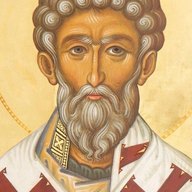
Blessed AugustineExposition on Psalm 110 · on Psalm 110:1
"I will make confession unto You, O Lord," he says, "with my whole heart". Confession is not always confession of sins, but the praise of God is poured forth in the devotion of confession. The former mourns, the latter rejoices: the former shows the wound to the physician, the latter gives thanks for health. The…
The works of the Lord are great, Sought out according to all his will.
Μεγάλα τὰ ἔργα Κυρίου, ἐξεζητημένα εἰς πάντα τὰ θελήματα αὐτοῦ.
Blessed AugustineExposition on Psalm 110 · on Psalm 110:2
"These are the great works of the Lord, sought out unto all His wills": through which mercy forsakes none who confesses, no man's wickedness is unpunished. [Hebrews 12:6] ...Let man choose for himself what he lists: the works of the Lord are not so constituted, that the creature, having free discretion allowed him,…
Blessed AugustineExposition on Psalm 110 · on Psalm 110:3
"Confession and glorious deeds are His work". What is a more glorious deed than to justify the ungodly? But perhaps the work of man preventeth that glorious work of God, so that when he hath confessed his sins, he deserveth to be justified. ...This is the glorious work of the Lord: for he loveth most, to whom most is…
Blessed AugustineExposition on Psalm 110 · on Psalm 110:4
"He has made His wonderful works to be remembered": by abasing this man, exalting that. Reserving unusual miracles for a fit season, that thus human weakness, intent upon novelty, may remember them, although His daily miracles be greater. He created so many trees throughout the whole earth, and no one wonders: He…
Blessed AugustineExposition on Psalm 110 · on Psalm 110:5
What too would fear profit, unless "the gracious and merciful Lord" gave "meat unto them that fear Him"?; meat that does not spoil, "bread that comes down from heaven," which He gave to no deservings of ours. For "Christ died for the ungodly." [Romans 5:6] No one then would give such food, save a gracious and merciful…
Blessed AugustineExposition on Psalm 110 · on Psalm 110:6
"He shall show His people the power of His works". Let not the holy Israelites, who have left all their possessions and have followed Him, be saddened; let them not be sorrowful and say, "Who then can be saved?" For "it is easier for a camel to go through the eye of a needle, than for a rich man to enter into the…
Blessed AugustineExposition on Psalm 110 · on Psalm 110:7
..."The fear of the Lord," therefore, "is the beginning of wisdom." "Understanding is good". Who gainsayeth? But to understand, and not to do, is dangerous. It is "good," therefore, "to those that do there after." Nor let it lift up the mind unto pride; for, "the praise of Him," the fear of whom is the beginning of…
Blessed AugustineExposition on Psalm 110 · on Psalm 110:7
"The works of His hands are verity and judgment". Let verity be held by those who are judged here. Martyrs are here sentenced, and brought to the judgment-seat, that they may judge not only those by whom they have been judged, but even give judgment on angels, [1 Corinthians 6:3] against whom was their struggle here,…
Blessed AugustineExposition on Psalm 110 · on Psalm 110:7
...since "He sent redemption unto His people". But from what are they redeemed, save from the captivity of this pilgrimage? Let not therefore rest be sought, save in the heavenly country. God indeed gave the carnal Israelites an earthly Jerusalem, "which is in bondage with her children:" but this is the Old Covenant,…
Every note is a real passage, quoted word for word from a published English translation, with its source. Nothing here is summarised or written by us. Some verses have many notes and some have none, because the Fathers wrote more on some passages than others.
Blessed Augustine, Expositions on the Book of Psalms, tr. A. Cleveland Coxe from the Oxford translation, Nicene and Post-Nicene Fathers, series 1, vol. 8 (1888).
Scripture: the Septuagint, in the translation of Sir Lancelot Brenton (1851), with spelling updated by Adam Boyd (2020); the Greek is Brenton's Septuagint text.
All of these translations are in the public domain. The passages were matched to their verses by the Historical Christian Commentaries project, which also hosts the full texts we link to. The Fathers are a treasury of the Church's mind, and they are best read alongside the life of the Church: if a passage raises a question, bring it to your priest.