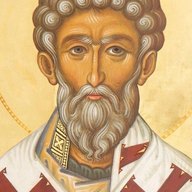
Blessed AugustineExposition on Psalm 117 · on Psalm 117:1
...We are taught in this Psalm, when we chaunt Allelujah, which meaneth, Praise the Lord, that we should, when we hear the words, "Confess unto the Lord" (ver. 1), praise the Lord. The praise of God could not be expressed in fewer words than these, "For He is good." I see not what can be more solemn than this brevity,…
Blessed AugustineExposition on Psalm 117 · on Psalm 117:2
"All nations compassed me round about, but in the Name of the Lord have I taken vengeance on them." He signifies the toils and the victory of the Church.
Blessed AugustineExposition on Psalm 117 · on Psalm 117:2
"They kept me in on every side, they kept me in, I say, on every side; but in the Name of the Lord have I taken vengeance on them." As if the question were asked how she could have overcome so great evils, he looks back to the example, and declares what she had first suffered in her Head, by adding what follows, "They…
Blessed AugustineExposition on Psalm 117 · on Psalm 117:2
"They came about me as bees do a hive, and burned up even as the fire among the thorns: and in the Name of the Lord have I taken vengeance on them". Here then the order of the words corresponds with the order of events. For we rightly understand that our Lord Himself, the Head of the Church, was surrounded by…
Blessed AugustineExposition on Psalm 117 · on Psalm 117:2
"I have been driven on like a heap of sand, so that I was falling, but the Lord upheld me". For though there were a great multitude of believers, that might be compared to the countless sand, and brought into one communion as into one heap; yet "what is man, save Thou be mindful of Him?" He said not, the multitude of…
Blessed AugustineExposition on Psalm 117 · on Psalm 117:2
"The Lord is my strength and my praise, and has become my salvation". Who then fall, when they are pushed, save they who choose to be their own strength and their own praise? For no man falls in the contest, except he whose strength and praise fails. He therefore whose strength and praise is the Lord, falls no more…
Blessed AugustineExposition on Psalm 117 · on Psalm 117:2
"The voice of joy and health is in the dwellings of the righteous" (ver. 15); where they who raged against their bodies thought there was the voice of sorrow and destruction. For they did not know the inward joy of the saints in their future hope. Whence the Apostle also saith, "As sorrowful, yet alway rejoicing;" and…
Blessed AugustineExposition on Psalm 117 · on Psalm 117:2
"The right hand of the Lord hath brought mighty things to pass" (ver. 16). What mighty things? saith he. "The right hand of the Lord," he saith, "hath exalted me." It is a mighty thing to exalt the humble, to deify the mortal, to bring perfection out of infirmity, glory from subjection, victory from suffering, to give…
Blessed AugustineExposition on Psalm 117 · on Psalm 117:2
"I shall not die, but live, and declare the works of the Lord". But they, while they were dealing havoc and death on every side, thought that the Church of Christ was dying. Behold, he now declares the works of the Lord. Everywhere Christ is the glory of the blessed Martyrs. By being beaten He conquered those who…
Blessed AugustineExposition on Psalm 117 · on Psalm 117:2
Nevertheless, let him point out to us, why the body of Christ, the holy Church, the people of adoption, suffered such indignities. "The Lord," he says, "hast chastened and corrected me, but He has not given me over unto death". Let not then the boastful wicked imagine that anything has been permitted to their power:…
Blessed AugustineExposition on Psalm 117 · on Psalm 117:2
"Open me," he says, "the gates of righteousness". Behold, we have heard of the gates. What is within? "That I may," he says, "go into them, and give thanks unto the Lord." This is the confession of praise full of wonder, "even unto the house of God, in the voice of joy and confession of praise, among such as keep…
Blessed AugustineExposition on Psalm 117 · on Psalm 117:2
"Let Israel now confess that He is good, and that His mercy endureth for ever" (ver. 2). "Let the house of Aaron now confess that His mercy endureth for ever" (ver. 3). "Yea, let all now that fear the Lord confess that His mercy endureth for ever" (ver. 4). Ye remember, I suppose, most beloved, what is the house of…
Blessed AugustineExposition on Psalm 117 · on Psalm 117:2
But consider how the gates of righteousness are entered into. "These are the gates of the Lord" he saith, "the righteous shall enter into them" (ver. 20). At least let no wicked man enter there, that Jerusalem which receiveth not one uncircumcised, where it is said, "Without are dogs." Be it enough, that in my long…
Blessed AugustineExposition on Psalm 117 · on Psalm 117:2
"I will confess unto You, O Lord, for You have heard me, and have become my salvation". How often is that confession proved to be one of praise, that does not point out wounds to the physician, but gives thanks for the health it has received. But the Physician Himself is the Salvation.
Blessed AugustineExposition on Psalm 117 · on Psalm 117:2
But who is this whom we speak of? "The Stone which the builders rejected"; for "It has become the head Stone of the corner" to "make in Himself of two one new man, so making peace; and that He might reconcile both unto God in one body;" [Ephesians 2:15-16] circumcision, to wit, and uncircumcision.
Blessed AugustineExposition on Psalm 117 · on Psalm 117:2
"By the Lord was it made unto it": that is, it is made into the head stone of the corner by the Lord. For although He would not have become this, had He not suffered: yet He became not this through those from whom He suffered. For they who were building, refused Him: but in the edifice which the Lord was secretly…
Blessed AugustineExposition on Psalm 117 · on Psalm 117:2
"Save me now, O Lord: prosper Thou well my way, O Lord". Because it is the day of Salvation, "save me:" because we, returning from a long pilgrimage, are separated from those who hated peace, with whom we were peaceful, and who, when we spoke to them, made war upon us without a cause; "prosper well our way" as we…
Blessed AugustineExposition on Psalm 117 · on Psalm 117:2
"Blessed be He that comes in the Name of the Lord". Cursed, therefore, is he that comes in his own name; as He says in the Gospel: "if another shall come in his own name, him you will receive." [John 5:43] "We have blessed you out of the house of God." I believe that these are the words of the great to the little, of…
Blessed AugustineExposition on Psalm 117 · on Psalm 117:2
And what shall we sing there, save His praises? What else shall we say there, save, "You are my God, and I will confess unto You; You are my God, and I will praise You. I wilt confess unto You, for You have heard me, and art become my Salvation." We will not say these things in loud words; but the love that abides in…
Blessed AugustineExposition on Psalm 117 · on Psalm 117:2
But, when my enemies have been brought to contempt, let not my friend present himself unto me as a good man, so as to bid me repose my hope in himself: for "It is better to trust in the Lord, than to put any confidence in man."
Blessed AugustineExposition on Psalm 117 · on Psalm 117:2
Nor let any one, who may in a certain sense be styled a good angel, be regarded by myself as one in whom I ought to put my trust: for "no one is good, save God alone;" and when a man or an angel appear to aid us, when they do this of sincere affection, He doth it through them, who made them good after their measure.…
Every note is a real passage, quoted word for word from a published English translation, with its source. Nothing here is summarised or written by us. Some verses have many notes and some have none, because the Fathers wrote more on some passages than others.
Blessed Augustine, Expositions on the Book of Psalms, tr. A. Cleveland Coxe from the Oxford translation, Nicene and Post-Nicene Fathers, series 1, vol. 8 (1888).
Scripture: the Septuagint, in the translation of Sir Lancelot Brenton (1851), with spelling updated by Adam Boyd (2020); the Greek is Brenton's Septuagint text.
All of these translations are in the public domain. The passages were matched to their verses by the Historical Christian Commentaries project, which also hosts the full texts we link to. The Fathers are a treasury of the Church's mind, and they are best read alongside the life of the Church: if a passage raises a question, bring it to your priest.