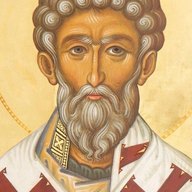
Blessed AugustineExposition on Psalm 126 · on Psalm 126:1
But that which is the house of God is also a city. For the house of God is the people of God; for the house of God is the temple of God....This is Jerusalem: she has guards: as she has builders, labouring at her building up, so also has she guards. To this guardianship these words of the Apostle relate: "I fear, lest…
Blessed AugustineExposition on Psalm 126 · on Psalm 126:2
If we wish to be guarded by Him who was humbled for our sakes, and who was exalted to keep us, let us be humble. Let no one assume anything unto himself. No man hath any good, except he hath received it from Him who alone is good. But he who chooseth to arrogate wisdom unto himself, is a fool. Let him be humble, that…
Blessed AugustineExposition on Psalm 126 · on Psalm 126:3
As if thou shouldest ask again, who are the beloved? "Lo, children, the reward of the fruit of the womb, are an heritage of the Lord". Since he saith, "fruit of the womb," these children have been born in travail. There is a certain woman, in whom what was said unto Eve, "in sorrow shalt thou bring forth children," is…
Blessed AugustineExposition on Psalm 126 · on Psalm 126:4
"Like as the arrows in the hand of the mighty one, even so are the children of those that are shot out". Whence has sprung this heritage, brethren? Whence has sprung so numerous a heritage? Some have been shot out from the Lord's hand, as arrows, and have gone far, and have filled the whole earth, whence the Saints…
Blessed AugustineExposition on Psalm 126 · on Psalm 126:5
"Blessed is the man who has filled his desire from them". Well, my brethren, who fills his desire from them? Who loves not the world. He who is filled with the desire of the world, has no room for that to enter which they have preached. Pour forth what you carry, and become fit for that which you have not. That is,…
Every note is a real passage, quoted word for word from a published English translation, with its source. Nothing here is summarised or written by us. Some verses have many notes and some have none, because the Fathers wrote more on some passages than others.
Blessed Augustine, Expositions on the Book of Psalms, tr. A. Cleveland Coxe from the Oxford translation, Nicene and Post-Nicene Fathers, series 1, vol. 8 (1888).
Scripture: the Septuagint, in the translation of Sir Lancelot Brenton (1851), with spelling updated by Adam Boyd (2020); the Greek is Brenton's Septuagint text.
All of these translations are in the public domain. The passages were matched to their verses by the Historical Christian Commentaries project, which also hosts the full texts we link to. The Fathers are a treasury of the Church's mind, and they are best read alongside the life of the Church: if a passage raises a question, bring it to your priest.