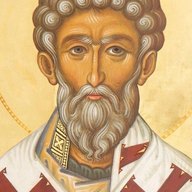
Blessed AugustineExposition on Psalm 14 · on Psalm 14:1
Touching this title there is no question. "O Lord who shall sojourn in Your tabernacle?". Although tabernacle be sometimes used even for an everlasting habitation: yet when tabernacle is taken in its proper meaning, it is a thing of war. Hence soldiers are called tent-fellows, as having their tents together. This…
Blessed AugustineExposition on Psalm 14 · on Psalm 14:3
"Who speaks the truth in his heart." For some have truth on their lips, and not in their heart. As if one should deceitfully point out a road, knowing that there were robbers there, and should say, If you go this way, you will be safe from robbers; and it should turn out that in fact there were no robbers found there:…
Blessed AugustineExposition on Psalm 14 · on Psalm 14:4
"The malicious one has been brought to nought in his sight". This is perfection, that the malicious one have no force against a man; and that this be "in his sight;" that is, that he know most surely that the malicious is not, save when the mind turns itself away from the eternal and immutable form of her own Creator…
Blessed AugustineExposition on Psalm 14 · on Psalm 14:5
"Who sweareth unto his neighbour, and deceiveth him not." "Who hath not given his money upon usury, and hath not taken rewards against the innocent" (ver. 5). These are no great things: but he who is not able to do even this, much less able is he to speak the truth in his heart, and to practise no deceit in his…
Every note is a real passage, quoted word for word from a published English translation, with its source. Nothing here is summarised or written by us. Some verses have many notes and some have none, because the Fathers wrote more on some passages than others.
Blessed Augustine, Expositions on the Book of Psalms, tr. A. Cleveland Coxe from the Oxford translation, Nicene and Post-Nicene Fathers, series 1, vol. 8 (1888).
Scripture: the Septuagint, in the translation of Sir Lancelot Brenton (1851), with spelling updated by Adam Boyd (2020); the Greek is Brenton's Septuagint text.
All of these translations are in the public domain. The passages were matched to their verses by the Historical Christian Commentaries project, which also hosts the full texts we link to. The Fathers are a treasury of the Church's mind, and they are best read alongside the life of the Church: if a passage raises a question, bring it to your priest.