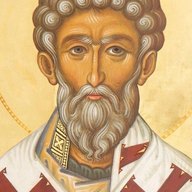
Blessed AugustineExposition on Psalm 3 · on Psalm 3:2
"O Lord, how are they multiplied that trouble me!". So multiplied indeed were they, that one even from the number of His disciples was not wanting, who was added to the number of His persecutors.
The Eastern Cross/Bible/Psalms/Psalm 3
The Book of Psalms · the Psalter
Tap Fathers under a verse to read what the saints said about it.
A Psalm of David, when he fled from the presence of his son Absalom.
Ψαλμὸς τῷ Δαυὶδ, ὁπότε ἀπεδίδρασκεν ἀπὸ προσώπου Ἀβεσσαλὼμ τοῦ υἱοῦ αὐτοῦ.
O Lord, why are they that afflict me multiplied? Many rise up against me.
Κύριε τί ἐπληθύνθησαν οἱ θλίβοντές με; πολλοὶ ἐπανίστανται ἐπʼ ἐμέ.
"O Lord, how are they multiplied that trouble me!". So multiplied indeed were they, that one even from the number of His disciples was not wanting, who was added to the number of His persecutors.
Many say concerning my soul, There is no deliverance for him in his God. Pause.
Πολλοὶ λέγουσι τῇ ψυχῇ μου, οὐκ ἔστι σωτηρία αὐτῷ ἐν τῷ Θεῷ αὐτοῦ· διάψαλμα.
So multiplied indeed were they, that one even from the number of His disciples was not wanting, who was added to the number of His persecutors. "Many rise up against me; many say unto my soul, There is no salvation for him in his God". It is clear that if they had had any idea that He would rise again, assuredly they…
But thou, O Lord, art my helper: My glory, and the one that lifts up my head.
Σὺ δὲ Κύριε, ἀντιλήπτωρ μου εἶ, δόξα μου, καὶ ὑψῶν τὴν κεφαλήν μου.
"But You, O Lord, art my taker." It is said to God in the nature of man, for the taking of man is, the Word made Flesh. "My glory." Even He calls God his glory, whom the Word of God so took, that God became one with Him. Let the proud learn, who unwillingly hear, when it is said to them, "For what have you that you…
I cried to the Lord with my voice, And he heard me out of his holy mountain. Pause.
Φωνῇ μου πρὸς Κύριον ἐκέκραξα, καὶ ἐπήκουσέ μου ἐξ ὄρους ἁγίου αὐτοῦ· διάψαλμα.
"With my voice have I cried unto the Lord"; that is, not with the voice of the body, which is drawn out with the sound of the reverberation of the air; but with the voice of the heart, which to men speaks not, but with God sounds as a cry. By this voice Susanna was heard; and with this voice the Lord Himself commanded…
I lay down and slept; I awoke; for the Lord will help me.
Ἐγὼ ἐκοιμήθην καὶ ὕπνωσα, ἐξηγέρθην, ὅτι Κύριος ἀντιλήψεταί μου.
The words, "I slept, and took rest; and rose, for the Lord will take me up," lead us to believe that this Psalm is to be understood as in the Person of Christ; for they sound more applicable to the Passion and Resurrection of our Lord, than to that history in which David's flight is described from the face of his…
I will not be afraid of ten thousands of people, Who beset me round about.
Οὐ φοβηθήσομαι ἀπὸ μυριάδων λαοῦ, τῶν κύκλῳ ἐπιτιθεμένων μοι.
"I will not fear the thousands of people that surround me". It is written in the Gospels how great a multitude stood around Him as He was suffering, and on the cross.
Arise, Lord; deliver me, my God: For thou hast smitten all who were without cause mine enemies; Thou hast broken the teeth of sinners.
Ἀνάστα Κύριε, σῶσόν με ὁ Θεός μου· ὅτι σὺ ἐπάταξας πάντας τοὺς ἐχθραίνοντάς μοι ματαίως, ὀδόντας ἁμαρτωλῶν συνέτριψας.
"Arise, O Lord, save me, O my God". It is not said to God, "Arise," as if asleep or lying down, but it is usual in holy Scripture to attribute to God what He does in us; not indeed universally, but where it can be done suitably; as when He is said to speak, when by His gift Prophets speak, and Apostles, or whatsoever…
Deliverance is the Lord’s, And thy blessing is upon thy people.
Τοῦ Κυρίου ἡ σωτηρία, καὶ ἐπὶ τὸν λαόν σου ἡ εὐλογία σου.
"Salvation is of the Lord; and upon Your people be Your blessing". In one sentence the Psalmist has enjoined men what to believe, and has prayed for believers. For when it is said, "Salvation is of the Lord," the words are addressed to men. Nor does it follow, "And upon Your people" be "Your blessing," in such wise as…
Every note is a real passage, quoted word for word from a published English translation, with its source. Nothing here is summarised or written by us. Some verses have many notes and some have none, because the Fathers wrote more on some passages than others.
All of these translations are in the public domain. The passages were matched to their verses by the Historical Christian Commentaries project, which also hosts the full texts we link to. The Fathers are a treasury of the Church's mind, and they are best read alongside the life of the Church: if a passage raises a question, bring it to your priest.