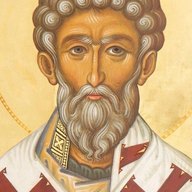
Blessed AugustineExposition on Psalm 31 · on Psalm 31:1
"Blessed are they whose unrighteousness is forgiven, and whose sins are covered": and whose sins are buried in oblivion.
The Eastern Cross/Bible/Psalms/Psalm 31
The Book of Psalms · the Psalter
Psalm 32 in the KJV and most English Bibles
Tap Fathers under a verse to read what the saints said about it.
A Psalm of instruction by David. Blessed are they whose transgressions are forgiven, And whose sins are covered.
Συνέσεως τῷ Δαυίδ. Μακάριοι ὧν ἀφέθησαν αἱ ἀνομίαι, καὶ ὧν ἐπεκαλύφθησαν αἱ ἁμαρτίαι.
"Blessed are they whose unrighteousness is forgiven, and whose sins are covered": and whose sins are buried in oblivion.
Blessed is the man to whom the Lord will not impute sin, And in whose mouth there is no guile.
Μακάριος ἀνὴρ ᾧ οὐ μὴ λογίσηται Κύριος ἁμαρτίαν, οὐδέ ἐστιν ἐν τῷ στόματι αὐτοῦ δόλος.
"Blessed is the man to whom the Lord has not imputed sin, nor is there guile in his mouth": nor has he in his mouth boastings of righteousness, when his conscience is full of sins.
Because I kept silence, my bones waxed old, From my crying all the day.
Ὅτι ἐσίγησα, ἐπαλαιώθη τὰ ὀστᾶ μου, ἀπὸ τοῦ κράζειν με ὅλην τὴν ἡμέραν.
"Because I kept silence, my bones waxed old:" because I made not with my mouth "confession unto salvation," [Romans 10:10] all firmness in me has grown old in infirmity. "Through my roaring all the day long": when I was ungodly and a blasphemer, crying against God, as though defending and excusing my sins.
For day and night thy hand was heavy upon me: I became thoroughly miserable while a thorn was fastened in me. Pause.
Ὅτι ἡμέρας καὶ νυκτὸς ἐβαρύνθη ἐπʼ ἐμὲ ἡ χείρ σου, ἐστράφην εἰς ταλαιπωρίαν ἐν τῷ ἐμπαγῆναι ἄκανθαν· διάψαλμα.
"Because day and night Your Hand was heavy upon me:" because, through the continual punishment of Your scourges, "I was turned in misery, while a thorn was fixed through me": I was made miserable by knowing my misery, being pricked with an evil conscience.
I acknowledged my sin, And hid not mine iniquity: I said, I will confess mine iniquity to the Lord against myself; And thou forgavest the ungodliness of my heart. Pause.
Τὴν ἁμαρτίαν μου ἐγνώρισα, καὶ τὴν ἀνομίαν μου οὐκ ἐκάλυψα· εἶπα, ἐξαγορεύσω κατʼ ἐμοῦ τὴν ἀνομίαν μου τῷ Κυρίῳ, καὶ σὺ ἀφῆκας τὴν ἀσέβειαν τῆς καρδίας μου· διάψαλμα.
"I acknowledged my sin, and my unrighteousness have I not hid:" that is, my unrighteousness have I not concealed. "I said, I will confess against myself my unrighteousness to the Lord:" I said, I will confess, not against God (as in my ungodly crying, when I kept silence), but against myself, my unrighteousness to the…
Therefore shall every holy one pray to thee in a fit time: Only in the deluge of many waters they shall not come nigh to him.
Ὑπὲρ ταύτης προσεύξεται πρὸς σὲ πᾶς ὅσιος ἐν καιρῷ εὐθέτῳ· πλὴν ἐν κατακλυσμῷ ὑδάτων πολλῶν πρὸς αὐτὸν οὐκ ἐγγιοῦσι.
"For this shall every one that is holy pray unto You in an acceptable time:" for this wickedness of heart shall every one that is righteous pray unto You. For not by their own merits will they be holy, but by that acceptable time, that is, at His coming, who redeemed us from sin. "Nevertheless in the flood of great…
Thou art my refuge from the affliction that encompasses me; My joy, to deliver me from them that have compassed me. Pause.
Σύ μου εἶ καταφυγὴ ἀπὸ θλίψεως τῆς περιεχούσης με, τὸ ἀγαλλίαμά μου λύτρωσαί με ἀπὸ τῶν κυκλωσάντων με· διάψαλμα.
"You are my refuge from the pressures, which have compassed me about:" You are my refuge from the pressure of my sins, which has compassed my heart. "O Thou, my Rejoicing, deliver me from them that compass me about": in You is my joy: deliver me from the sorrow which my sins bring upon me.
I will instruct thee and guide thee in this way wherein thou shalt go: I will fix mine eyes upon thee.
Συνετιῶ σε καὶ συμβιβῶ σε ἐν ὁδῷ ταύτῃ ᾗ πορεύσῃ, ἐπιστηριῶ ἐπὶ σὲ τοὺς ὀφθαλμούς μου.
Diapsalma. The answer of God: "I will give you understanding, and will set you in the way in which you shall go;" I will give you understanding after confession, that you depart not from the way in which you should go; lest you wish to be in your own power. "I will fix Mine Eyes upon you"; so will make sure upon you…
Be ye not as horse and mule, which have no understanding: But thou must constrain their jaws with bit and curb, Lest they should come nigh to thee.
Μὴ γίνεσθε ὡς ἵππος καὶ ἡμίονος, οἷς οὐκ ἔστι σύνεσις· ἐν χαλινῷ καὶ κημῷ τὰς σιαγόνας αὐτῶν ἄγξαι τῶν μὴ ἐγγιζόντων πρὸς σέ.
"Be not ye like horse or mule, which have no understanding:" and therefore would govern themselves. But says the Prophet, "Hold in their jaws with bit and bridle." Do Thou then, O God, unto them "that will not come near You", what man does to horse and mule, that by scourges Thou make them to bear Your rule.
Many are the scourges of the sinner: But him that hopes in the Lord mercy shall compass about.
Πολλαὶ αἱ μάστιγες τοῦ ἁμαρτωλοῦ, τὸν δὲ ἐλπίζοντα ἐπὶ Κύριον ἔλεος κυκλώσει.
"Many are the scourges of the sinner:" much is he scourged, who, confessing not his sins to God, would be his own ruler. "But he that trusts in the Lord, mercy compasses him about"; but he that trusts in the Lord, and submits himself to His rule, mercy shall compass him about.
Be glad in the Lord, and exult, ye righteous: And glory, all ye that are upright in heart.
Εὐφράνθητε ἐπὶ Κύριον καὶ ἀγαλλιᾶσθε δίκαιοι, καὶ καυχᾶσθε πάντες οἱ εὐθεῖς τῇ καρδίᾳ.
"Be glad in the Lord, and rejoice, you righteous:" be glad, and rejoice, you righteous, not in yourselves, but in the Lord. "And glory, all you that are right in heart": and glory in Him, all you who understand that it is right to be subject unto Him, that so ye may be placed above all things beside.
Every note is a real passage, quoted word for word from a published English translation, with its source. Nothing here is summarised or written by us. Some verses have many notes and some have none, because the Fathers wrote more on some passages than others.
All of these translations are in the public domain. The passages were matched to their verses by the Historical Christian Commentaries project, which also hosts the full texts we link to. The Fathers are a treasury of the Church's mind, and they are best read alongside the life of the Church: if a passage raises a question, bring it to your priest.