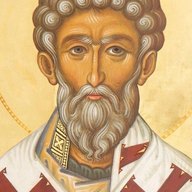
Blessed AugustineExposition on Psalm 6 · on Psalm 6:2
In fear of which condemnation the Church prays in this Psalm, and says, "Reprove me not, O Lord, in Your anger". The Apostle too mentions the anger of the judgment; "You treasure up unto yourself," he says, "anger against the day of the anger of the just judgment of God." [Romans 2:5] In which he would not be…
Pity me, O Lord; for I am weak: Heal me, O Lord; for my bones are vexed.
Ἐλέησόν με Κύριε, ὅτι ἀσθενής εἰμι· ἴασαί με Κύριε, ὅτι ἐταράχθη τὰ ὀστᾶ μου.
Blessed AugustineExposition on Psalm 6 · on Psalm 6:3
He proceeds accordingly to say, "Pity me, O Lord, for I am weak: heal me, O Lord, for my bones are troubled", that is, the support of my soul, or strength: for this is the meaning of "bones." The soul therefore says, that her strength is troubled, when she speaks of bones. For it is not to be supposed, that the soul…
Blessed AugustineExposition on Psalm 6 · on Psalm 6:5
"Turn, O Lord, and deliver my soul". Turning herself she prays that God too would turn to her: as it is said, "Turn ye unto Me, and I will turn unto you, says the Lord." [Zechariah 1:3] Or is it to be understood according to that way of speaking, "Turn, O Lord," that is make me turn, since the soul in this her turning…
Blessed AugustineExposition on Psalm 6 · on Psalm 6:6
"For in death there is no one that is mindful of You". He knows too that now is the time for turning unto God: for when this life shall have passed away, there remains but a retribution of our deserts. "But in hell who shall confess to You?" [Luke xvi] That rich man, of whom the Lord speaks, who saw Lazarus in rest,…
Blessed AugustineExposition on Psalm 6 · on Psalm 6:7
Wherefore he goes on to say, "I have laboured in my groaning." And as if this availed but little, he adds, "I will wash each night my couch". That is here called a couch, where the sick and weak soul rests, that is, in bodily gratification and in every worldly pleasure. Which pleasure, whoso endeavours to withdraw…
Blessed AugustineExposition on Psalm 6 · on Psalm 6:8
"My eye is disordered by anger": is it by his own, or God's anger, in which he makes petition that he might not be reproved, or chastened? But if anger in that place intimate the day of judgment, how can it be understood now? Is it a beginning of it, that men here suffer pains and torments, and above all the loss of…
Blessed AugustineExposition on Psalm 6 · on Psalm 6:9
Wherefore after the labour, and groaning, and very frequent showers of tears, since that cannot be ineffectual, which is asked so earnestly of Him, who is the Fountain of all mercies, and it is most truly said, "the Lord is near unto them that are of a broken heart:" after difficulties so great, the pious soul, by…
Blessed AugustineExposition on Psalm 6 · on Psalm 6:11
"Let all mine enemies be ashamed and vexed". He said above, "depart from me all you:" which can take place, as it has been explained, even in this life: but as to what he says, "let them be ashamed and vexed," I do not see how it can happen, save on that day when the rewards of the righteous and the punishments of the…
Every note is a real passage, quoted word for word from a published English translation, with its source. Nothing here is summarised or written by us. Some verses have many notes and some have none, because the Fathers wrote more on some passages than others.
Blessed Augustine, Expositions on the Book of Psalms, tr. A. Cleveland Coxe from the Oxford translation, Nicene and Post-Nicene Fathers, series 1, vol. 8 (1888).
Scripture: the Septuagint, in the translation of Sir Lancelot Brenton (1851), with spelling updated by Adam Boyd (2020); the Greek is Brenton's Septuagint text.
All of these translations are in the public domain. The passages were matched to their verses by the Historical Christian Commentaries project, which also hosts the full texts we link to. The Fathers are a treasury of the Church's mind, and they are best read alongside the life of the Church: if a passage raises a question, bring it to your priest.