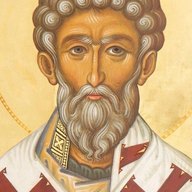
Blessed AugustineExposition on Psalm 82 · on Psalm 82:2
The people of God, then, in this Psalm saith, "O God, who shall be like unto Thee?" (ver. 1). Which I suppose to be more fitly taken of Christ, because, being made in the likeness of men, He was thought by those by whom He was despised to be comparable to other men: for He was even "reckoned among the unrighteous,"…
Blessed AugustineExposition on Psalm 82 · on Psalm 82:3–4
"For lo Thine enemies have sounded, and they that hate Thee have lifted up the head" (ver. 2). He seems to me to signify the last days, when these things that are now repressed by fear are to break forth into free utterance, but quite irrational, so that it should rather be called a "sound," than speech or discourse.…
Blessed AugustineExposition on Psalm 82 · on Psalm 82:5
"They have said, Come, and let us destroy them from a nation" (ver. 4). He has put the singular number for the plural: as it is said, "Whose is this cattle," even though the question be of a flock, and the meaning "these cattle." Lastly, other copies have "from nations," where the translators have rather followed the…
Blessed AugustineExposition on Psalm 82 · on Psalm 82:6
"Since they have imagined with one consent; together against Thee have they disposed a testament" (ver. 5): as though they could be the stronger. In fact, "a testament" is a name given in the Scriptures not only to that which is of no avail till the death of the testators, but every convenant and decree they used to…
Blessed AugustineExposition on Psalm 82 · on Psalm 82:8
"All their princes, who said, Let us take to ourselves the sanctuary of God in possession". This is that vain noise, with which, as said above, Your enemies have made a murmuring. But what must be understood by "the sanctuary of God," except the temple of God? As says the Apostle: "For the temple of God is holy, which…
Blessed AugustineExposition on Psalm 82 · on Psalm 82:8
But what follows? "My God, make them like a wheel". This is fitly taken as meaning that they should be constant in nothing that they think; but I think it may also be rightly explained, make them like a wheel, because a wheel is lifted up on the part of what is behind, is thrown down on the part of what is in front;…
Blessed AugustineExposition on Psalm 82 · on Psalm 82:8
This levity, by which consent is easily given to what is evil, is followed by severe torment; therefore he proceeds:— "Like as the fire that burns up the wood, and as the flame that consumes the mountains": "so shall You persecute them with Your tempest, and in Your anger shall disturb them". Wood, he says, for its…
Blessed AugustineExposition on Psalm 82 · on Psalm 82:8
"Fill their faces with shame, and they shall seek Your name, O Lord". Good and desirable is this which he prophesies for them: and he would not prophesy thus, unless there were even in that company of the enemies of God's people, some men of such kind that this would be granted to them before the last judgment: for…
Blessed AugustineExposition on Psalm 82 · on Psalm 82:8
Again, he returns to these last, who in the same company of enemies are to be made ashamed for this purpose, that they may not be ashamed for ever: and for this purpose to be destroyed in as far as they are wicked, that being made good they may be found alive for ever. For having said of them, "Let them be ashamed and…
Blessed AugustineExposition on Psalm 82 · on Psalm 82:8
Now let us see what the prophetic spirit prays may fall upon them, rather foretelling than cursing. "Do thou to them," he says, "as unto Madian and Sisera, as unto Jabin at the brook of Kishon". "They perished at Endor, they became as the dung of the earth". All these, the history relates, were subdued and conquered…
Every note is a real passage, quoted word for word from a published English translation, with its source. Nothing here is summarised or written by us. Some verses have many notes and some have none, because the Fathers wrote more on some passages than others.
Blessed Augustine, Expositions on the Book of Psalms, tr. A. Cleveland Coxe from the Oxford translation, Nicene and Post-Nicene Fathers, series 1, vol. 8 (1888).
Scripture: the Septuagint, in the translation of Sir Lancelot Brenton (1851), with spelling updated by Adam Boyd (2020); the Greek is Brenton's Septuagint text.
All of these translations are in the public domain. The passages were matched to their verses by the Historical Christian Commentaries project, which also hosts the full texts we link to. The Fathers are a treasury of the Church's mind, and they are best read alongside the life of the Church: if a passage raises a question, bring it to your priest.