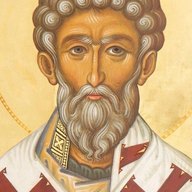
Blessed AugustineExposition on Psalm 89 · on Psalm 89:2
He adds, how He became our refuge, since He began to be that, viz. a refuge, to us which He had not been before, not that He had not existed before He became our refuge: "Before the mountains were brought forth, or ever the earth and the world were made: and from age even unto age You are". Thou therefore who art for…
Blessed AugustineExposition on Psalm 89 · on Psalm 89:3
But as our life here is exposed to numerous and great temptations, and it is to be feared lest we may be turned aside by them from that refuge, let us see what in consequence of this the prayer of the man of God seeks for. "Turn not Thou man to lowness": that is, let not man, turned aside from Your eternal and sublime…
Blessed AugustineExposition on Psalm 89 · on Psalm 89:4
"For a thousand years in Your sight are but as yesterday, which is past by": hence we ought to turn to Your refuge, where You are without any change, from the fleeting scenes around us; since however long a time may be wished for for this life, "a thousand years in Your sight are but as yesterday:" not as tomorrow,…
Blessed AugustineExposition on Psalm 89 · on Psalm 89:5
Next, the man of God, or rather the Prophetic spirit, seems to be reciting some law written in the secret wisdom of God, in which He has fixed a limit to the sinful life of mortals, and determined the troubles of mortality, in the following words: "Their years are as things which are nothing worth: in the morning let…
Blessed AugustineExposition on Psalm 89 · on Psalm 89:6
"In the evening," it means after they come, "let it fall, and be dried up, and withered". It is "to fall" in death, be "dried up" in the corpse, "withered" in the dust. What is this but flesh, wherein is the accursed lust of fleshly things? "For all flesh is grass, and all the goodliness of man as the flower of the…
Blessed AugustineExposition on Psalm 89 · on Psalm 89:7
Making no secret that this fate is a penalty inflicted for sin, he adds at once, "For we consume away in Thy displeasure, and are troubled at Thy wrathful indignation": we consume away in our weakness, and are troubled from the fear of death; for we are become weak, and yet fearful to end that weakness. "Another,"…
Blessed AugustineExposition on Psalm 89 · on Psalm 89:8
"You have set our misdeeds before You": that is, You have not dissembled Your anger: "and our age in the light of Your countenance." "The light of Your countenance" answers to "before You," and to "our misdeeds," as above.
Blessed AugustineExposition on Psalm 89 · on Psalm 89:9
"For all our days are failed, and in Thine anger we have failed". These words sufficiently prove that our subjection to death is a punishment. He speaks of our days failing, either because men fail in them from loving things that pass away, or because they are reduced to so small a number; which he asserts in the…
As for the days of our years, in them are seventy years; And if men should be in strength, eighty years: And the greater part of them would be labor and trouble; For weakness overtakes us, and we shall be chastened.
Blessed AugustineExposition on Psalm 89 · on Psalm 89:10
"The days of our age are threescore years and ten; and though men be so strong that they come to fourscore years, yet is more of them but labour and sorrow". These words appear to express the shortness and misery of this life: since those who have reached their seventieth year are styled old men. Up to eighty,…
Blessed AugustineExposition on Psalm 89 · on Psalm 89:11
"For who knows the power of Your wrath: and for the fear of You to number Your anger?". It belongs to very few men, he says, to know the power of Your wrath; for when Thou dost spare, Your anger is so far heavier against most men; that we may know that labour and sorrow belong not to wrath, but rather to Your mercy,…
And who knows how to number his days Because of the fear of thy wrath? So manifest thy right hand, And those that are instructed in wisdom in the heart.
Blessed AugustineExposition on Psalm 89 · on Psalm 89:12
"Make Your right hand so well known". This is the reading of most of the Greek copies: not of some in Latin, which is thus, "Make Your right hand well known to me." What is, "Your right hand," but Your Christ, of whom it is said, And to whom is the Arm of the Lord revealed? [Isaiah 53:1] Make Him so well known, that…
Blessed AugustineExposition on Psalm 89 · on Psalm 89:13
And as when they became so well known, as to despise these things, and by setting their affections on things eternal, gave a testimony through their sufferings (whence they are called witnesses or martyrs in the Greek), they endured for a long while many bitter temporal afflictions. This man of God gives heed to this,…
Blessed AugustineExposition on Psalm 89 · on Psalm 89:14–15
Next, in anticipation of future blessings, of which he speaks as already vouchsafed, he says, "We are satisfied with Your mercy in the morning". Prophecy has thus been kindled for us, in the midst of these toils and sorrows of the night, like a lamp in the darkness, until day dawn, and the Day-star arise in our…
Blessed AugustineExposition on Psalm 89 · on Psalm 89:16
But now in days that are as yet evil, let us speak as follows. "Look upon Thy servants, and upon Thy works". For Thy servants themselves are Thy works, not only inasmuch as they are men, but as Thy servants, that is, obedient to Thy commands. For we are His workmanship, created not merely in Adam, but in Christ Jesus,…
Blessed AugustineExposition on Psalm 89 · on Psalm 89:17
"And let the brightness of the Lord our God be upon us"; whence the words, "O Lord, the light of Your countenance is marked upon us." And, "Make Thou straight the works of our hands upon us:" that we may do them not for hope of earthly reward: for then they are not straight, but crooked. In many copies the Psalm goes…
Every note is a real passage, quoted word for word from a published English translation, with its source. Nothing here is summarised or written by us. Some verses have many notes and some have none, because the Fathers wrote more on some passages than others.
Blessed Augustine, Expositions on the Book of Psalms, tr. A. Cleveland Coxe from the Oxford translation, Nicene and Post-Nicene Fathers, series 1, vol. 8 (1888).
Scripture: the Septuagint, in the translation of Sir Lancelot Brenton (1851), with spelling updated by Adam Boyd (2020); the Greek is Brenton's Septuagint text.
All of these translations are in the public domain. The passages were matched to their verses by the Historical Christian Commentaries project, which also hosts the full texts we link to. The Fathers are a treasury of the Church's mind, and they are best read alongside the life of the Church: if a passage raises a question, bring it to your priest.