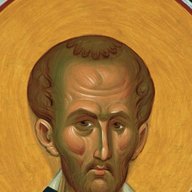
St. John ChrysostomHomily 13 on 1 Timothy · on 1 Timothy 5:1
"Rebuke not an elder." Is he now speaking of the order? I think not, but of any elderly man. What then if he should need correction? Do not rebuke him, but address him as you would a father offending.
St. John ChrysostomHomily 13 on 1 Timothy · on 1 Timothy 5:2
"The elder women as mothers, the younger men as brethren; the younger women as sisters, with all purity." Rebuke is in its own nature offensive, particularly when it is addressed to an old man, and when it proceeds from a young man too, there is a threefold show of forwardness. By the manner and the mildness of it,…
St. John ChrysostomHomily 13 on 1 Timothy · on 1 Timothy 5:3
"Honor widows, that are widows indeed." Why does he say nothing of virginity, nor command us to honor virgins? Perhaps there were not yet any professing that state, or they might have fallen from it. "For some," he says, "are already turned aside after Satan." For a woman may have lost her husband, and yet not be…
But if any widow have children or nephews, let them learn first to shew piety at home, and to requite their parents: for that is good and acceptable before God.
St. John ChrysostomHomily 13 on 1 Timothy · on 1 Timothy 5:4
"But if any widow have children or grandchildren, let them learn first to show piety at home, and to requite their parents." Observe the discretion of Paul; how often he urges men from human considerations. For he does not here lay down any great and lofty motive, but one that is easy to be understood: "to requite…
St. John ChrysostomHomily 13 on 1 Timothy · on 1 Timothy 5:5
"Now she that is a widow indeed, and desolate, trusteth in God, and continueth in supplications and prayers night and day. But she that liveth in pleasure is dead while she liveth." She who being a widow has not made choice of a worldly life, is a widow indeed; she who trusts in God as she ought, and continues instant…
But she that liveth in pleasure is dead while she liveth.
ἡ δὲ σπαταλῶσα ζῶσα τέθνηκε.
St. John ChrysostomHomily 13 on 1 Timothy · on 1 Timothy 5:6
But since many who have children choose the state of widowhood, not to cut off the occasions of a worldly life, but rather to enhance them, that they may do what they will with the greater license, and indulge the more freely in worldly lusts: therefore he says, "She that liveth in pleasure is dead while she liveth."…
And these things give in charge, that they may be blameless.
καὶ ταῦτα παράγγελλε, ἵνα ἀνεπίληπτοι ὦσιν.
St. John ChrysostomHomily 13 on 1 Timothy · on 1 Timothy 5:7
"These things give in charge, that they may be blameless." He does not leave it to their choice. Command them, he says, not to be luxurious, assuming it to be confessedly an evil, as not holding it lawful or admissible for the luxurious to partake of the Holy Mysteries. "These things command," he says, "that they may…
But if any provide not for his own, and specially for those of his own house, he hath denied the faith, and is worse than an infidel.
εἰ δέ τις τῶν ἰδίων καὶ μάλιστα τῶν οἰκείων οὐ προνοεῖ, τὴν πίστιν ἤρνηται καὶ ἔστιν ἀπίστου χείρων.
St. John ChrysostomHomily 14 on 1 Timothy · on 1 Timothy 5:8
Many consider that their own virtue is sufficient for their salvation, and if they duly regulate their own life, that nothing further is wanting to save them. But in this they greatly err, which is proved by the example of him who buried his one talent, for he brought it back not diminished but entire, and just as it…
St. John ChrysostomHomily 14 on 1 Timothy · on 1 Timothy 5:9
He had said, "Let them learn first to show piety at home, and to requite their parents." He had also said, "She that liveth in pleasure is dead whilst she liveth." He had said, "If she provides not for her own she is worse than an infidel." Having mentioned the qualities which not to have would render a woman unworthy…
Well reported of for good works; if she have brought up children, if she have lodged strangers, if she have washed the saints’ feet, if she have relieved the afflicted, if she have diligently followed every good work.
St. John ChrysostomHomily 14 on 1 Timothy · on 1 Timothy 5:10
"Well reported of for good works, if she have brought up children." Truly, it is no unimportant work to bring up children; but bringing them up is not merely taking care of them; they must be brought up well; as he said before, "If they continue in faith, and charity, and holiness." (1 Tim. ii. 15) Observe how…
St. John ChrysostomHomily 14 on 1 Timothy · on 1 Timothy 5:10
Observe, the hospitality here spoken of is not merely a friendly reception, but one given with zeal and alacrity, with readiness, and going about it as if one were receiving Christ Himself. The widows should perform these services themselves, not commit them to their handmaids. For Christ said, "If I your Master and…
St. John ChrysostomHomily 15 on 1 Timothy · on 1 Timothy 5:11
"The younger widows refuse, for when they have begun to wax wanton against Christ, they will marry"; that is, when they have become scornful and luxurious. For as in the case of a just man, we might say, "Let her depart, for she has become another's." He shows therefore that though they chose widowhood, it was not the…
Having damnation, because they have cast off their first faith.
ἔχουσαι κρῖμα, ὅτι τὴν πρώτην πίστιν ἠθέτησαν·
St. John ChrysostomHomily 15 on 1 Timothy · on 1 Timothy 5:12
"Having condemnation, because they have cast off their first faith." By faith he means, fidelity to their covenant. As if he had said, They have been false to Christ, they have dishonored Him, and transgressed His covenant.
And withal they learn to be idle, wandering about from house to house; and not only idle, but tattlers also and busybodies, speaking things which they ought not.
St. John ChrysostomHomily 15 on 1 Timothy · on 1 Timothy 5:13
Thus he commands not only men, but women also, to work. For idleness is the teacher of every sin. And not only are they exposed to this condemnation, but to other sins. If therefore it is unbecoming for a married woman "to go from house to house," much more is it for a virgin. What then happens, when the care for the…
St. John ChrysostomHomily 15 on 1 Timothy · on 1 Timothy 5:14
"I will therefore," he says, (since they themselves wish it,) "that the younger widows marry, bear children, guide the house." This course is at least preferable to the other. They ought indeed to be concerned for the things of God, they ought to preserve their faith. But since they do not this, it is better to avoid…
St. John ChrysostomHomily 15 on 1 Timothy · on 1 Timothy 5:15
"For some are already turned aside after Satan." Such widows as these then he would have refused, not meaning that there should be no younger widows, but that there should be no adulteresses, that none should be idle, busy-bodies, speaking things that they ought not, that no occasion should be given to the adversary.…
If any man or woman that believeth have widows, let them relieve them, and let not the church be charged; that it may relieve them that are widows indeed.
St. John ChrysostomHomily 15 on 1 Timothy · on 1 Timothy 5:16
Observe how again he speaks of those as "widows indeed," who are left destitute, and have no resource from any other quarter. It was better to have it so. For thus two great objects were attained. Those had an opportunity of doing good, whilst these were honorably maintained, and the Church not burdened. And he has…
St. John ChrysostomHomily 15 on 1 Timothy · on 1 Timothy 5:17
The "honor" of which he here speaks is attention to them, and the supply of their necessities, as is shown by his adding, "Thou shalt not muzzle the ox that treadeth out the corn"; and, "The laborer is worthy of his reward." So when he says, "Honor widows," he means, "support" them in all that is necessary. Thus he…
St. John ChrysostomHomily 15 on 1 Timothy · on 1 Timothy 5:18
He alleges the Law, he alleges the words of Christ, both agreeing herein. For the Law says, "Thou shall not muzzle the ox that treadeth out the corn." See how he would have the teacher labor! For there is not, indeed there is not, any other labor such as his. But this is from the Law. But how does he quote from…
St. John ChrysostomHomily 15 on 1 Timothy · on 1 Timothy 5:19
May we then receive an accusation against a younger man, or against any one at all without witnesses? Ought we not in all cases to come to our judgments with the greatest exactness? What then does he mean? Do not so, he means, with any, but especially in the case of an elder. For he speaks of an elder not with respect…
St. John ChrysostomHomily 15 on 1 Timothy · on 1 Timothy 5:20
Do not, he says, hastily cut them off, but carefully enquire into all the circumstances, and when thou hast thoroughly informed thyself, then proceed against the offender with rigor, that others may take warning. For as it is wrong to condemn hastily and rashly, so not to punish manifest offenses is to open the way to…
I charge thee before God, and the Lord Jesus Christ, and the elect angels, that thou observe these things without preferring one before another, doing nothing by partiality.
St. John ChrysostomHomily 16 on 1 Timothy · on 1 Timothy 5:21
Having spoken of Bishops and Deacons, of men, and women, of widows and elders, and of all others, and having shown how great was the authority of a Bishop, now he was speaking of judgment, he has added, "I charge thee before God and the Lord Jesus Christ and the elect angels, that thou observe these things without…
St. John ChrysostomHomily 16 on 1 Timothy · on 1 Timothy 5:22
"Lay hands," he says, "suddenly on no man, neither be partaker of other men's sins." What is "suddenly"? Not upon a first, nor a second, nor a third trial, but after frequent and strict examination and circumspection. For it is an affair of no common peril. For thou wilt be responsible for the sins committed by him,…
St. John ChrysostomHomily 16 on 1 Timothy · on 1 Timothy 5:23
"Drink no longer water, but use a little wine for thy stomach's sake and thy often infirmities." If one who had practiced fasting to such an extent, and used only water, so long that he had brought on "infirmities" and "frequent infirmities," is thus commanded to be chaste, and does not refuse the admonition, much…
St. John ChrysostomHomily 16 on 1 Timothy · on 1 Timothy 5:24
"Some men's sins are open beforehand, going before to judgment; and some they follow after." In speaking of ordination, he had said, "Be not partaker of other men's sins." But what, he might say, if I be ignorant of them? Why, "some men's sins are open beforehand, going before them to judgment, and some they follow…
St. John ChrysostomHomily 16 on 1 Timothy · on 1 Timothy 5:25
"Going before to judgment." This he had said, implying that of evil actions here some are concealed, and some are not; but there neither the good nor the bad can be concealed. And what is that going before to judgment? When one commits offenses that already condemn him, or when he is incorrigible, and when one thinks…
Every note is a real passage, quoted word for word from a published English translation, with its source. Nothing here is summarised or written by us. Some verses have many notes and some have none, because the Fathers wrote more on some passages than others.
St. John Chrysostom, Homilies on 1 Timothy, Nicene and Post-Nicene Fathers, series 1, vol. 13 (1888–1889).
Scripture: the King James Version (1611); the Greek (tap Ελ) is the 1904 Patriarchal text of the Ecumenical Patriarchate.
All of these translations are in the public domain. The passages were matched to their verses by the Historical Christian Commentaries project, which also hosts the full texts we link to. The Fathers are a treasury of the Church's mind, and they are best read alongside the life of the Church: if a passage raises a question, bring it to your priest.