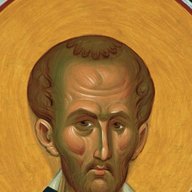
St. John ChrysostomHomily 32 on Acts · on Acts 15:1
Mark how at every step of the right progress in respect of the Gentiles, the beginning is brought in as matter of necessity. Before this Peter being found fault with, justified himself, and said all that he said in the tone of apology, which was what made his words acceptable: then, the Jews having turned away, upon…
St. John ChrysostomHomily 32 on Acts · on Acts 15:1
In Jerusalem, then, there were not any believers from among the Gentiles: but in Antioch of course there were. Therefore there came down certain yet laboring under this disease of the love of rule, and wishing to have those of the Gentiles attached to them. And yet Paul, though he too was learned in the Law, was not…
When therefore Paul and Barnabas had no small dissension and disputation with them, they determined that Paul and Barnabas, and certain other of them, should go up to Jerusalem unto the apostles and elders about this question.
St. John ChrysostomHomily 32 on Acts · on Acts 15:2
And Paul does not say, What? Have I not a right to be believed after so many signs? but he complied for their sakes. But when he returned from thence, the doctrine also became more exact. For if they at Jerusalem enjoin no such thing, much more these have no right to do so.
And being brought on their way by the church, they passed through Phenice and Samaria, declaring the conversion of the Gentiles: and they caused great joy unto all the brethren.
St. John ChrysostomHomily 32 on Acts · on Acts 15:3
And observe, the consequence is that all the Samaritans also, learn what has come to the Gentiles: and they rejoiced. Do you mark, as many as are not enamoured of rule, rejoiced in their believing? It was no ambitious feeling that prompted their recitals, neither was it for display, but in justification of the…
And when they were come to Jerusalem, they were received of the church, and of the apostles and elders, and they declared all things that God had done with them.
St. John ChrysostomHomily 32 on Acts · on Acts 15:4
See what a providence is here! And observe they do not come accusing those at Antioch, but "declaring all things that God had done with them." Thus they say nothing of what had happened in the matter of the Jews. But still they brought forward none of these charges: but when they have proved the matter, then the…
But there rose up certain of the sect of the Pharisees which believed, saying, That it was needful to circumcise them, and to command them to keep the law of Moses.
St. John ChrysostomHomily 32 on Acts · on Acts 15:5
Great effrontery this, of the Pharisees, that even after faith they set up the Law, and will not obey the Apostles. But see these, how mildly they speak, and not in the tone of authority: such words are amiable, and more apt to fix themselves in the mind. Observe, it is nowhere a display of words, but demonstration by…
St. John ChrysostomHomily 32 on Acts · on Acts 15:6
"And the Apostles and elders came together to consider of this matter. And when there had been much disputing, Peter rose up and said unto them." And this too is no small point-at a time when Jews believed, not turned away from the Gospel. "Among us," an argument from the place: "of old days," from the time.
And when there had been much disputing, Peter rose up, and said unto them, Men and brethren, ye know how that a good while ago God made choice among us, that the Gentiles by my mouth should hear the word of the gospel, and believe.
St. John ChrysostomHomily 32 on Acts · on Acts 15:7
Observe Peter from the first standing aloof from the affair, and even to this time judaizing. And yet he says "ye know." Perhaps those were present who of old found fault with him in the matter of Cornelius, and went in with him on that occasion: for this reason he brings them forward as witnesses. "From old days," he…
St. John ChrysostomHomily 32 on Acts · on Acts 15:8
"And God, that knoweth the hearts, gave testimony unto them:" he refers them to the spiritual testimony: "by giving them the Holy Ghost even as unto us." Everywhere he puts the Gentiles upon a thorough equality. Then he shows that the testimony given them is not of grace merely, but of their virtue. "And God which…
St. John ChrysostomHomily 32 on Acts · on Acts 15:9
"And put no difference between us and them, having purified their hearts by faith." From faith alone, he says, they obtained the same gifts. This is also meant as a lesson to those objectors; this is able to teach even them that faith only is needed, not works nor circumcision. For indeed they do not say all this only…
St. John ChrysostomHomily 32 on Acts · on Acts 15:10
"Now therefore why tempt ye God, to put a yoke upon the neck of the disciples?" What means, "Tempt ye God?" As if He had not power to save by faith. Consequently, it proceeds from a want of faith, this bringing in the Law. Then he shows that they themselves were nothing benefited by it, and he turns the whole stress…
St. John ChrysostomHomily 32 on Acts · on Acts 15:11
"But we believe that through the grace of the Lord Jesus we shall be saved, even as they." How full of power these words! The same that Paul says at large in the Epistle to the Romans, the same says Peter here. "For if Abraham," says Paul, "was justified by works, he hath whereof to glory, but not before God." Do you…
St. John ChrysostomHomily 32 on Acts · on Acts 15:11
Then he shows, not that the Law was evil, but themselves weak. "But we believe that through the grace of the Lord Jesus we shall be saved even as they." Mark how he ends with a fearful consideration. He does not discourse to them from the Prophets, but from things present, of which themselves were witnesses. For if,…
Then all the multitude kept silence, and gave audience to Barnabas and Paul, declaring what miracles and wonders God had wrought among the Gentiles by them.
St. John ChrysostomHomily 33 on Acts · on Acts 15:12
"Then all the multitude kept silence." There was no arrogance in the Church. After Peter Paul speaks, and none silences him: James waits patiently, not starts up for the next word. Great the orderliness of the proceedings. No word speaks John here, no word the other Apostles, but held their peace, for James was…
St. John ChrysostomHomily 33 on Acts · on Acts 15:13–15
This James was bishop, as they say, and therefore he speaks last, and herein is fulfilled that saying, "In the mouth of two or three witnesses shall every word be established." But observe the discretion shown by him also, in making his argument good from the prophets, both new and old. For he had no acts of his own…
St. John ChrysostomHomily 33 on Acts · on Acts 15:14
But what means it, "How God first did visit?" It means from the beginning. Moreover he well says, "Symeon expounded," implying that he too spake the mind of others. "And to this agree," etc. Observe how he shows that this is a doctrine of old time. "To take out of the Gentiles," he says, "a people for His Name." Not…
After this I will return, and will build again the tabernacle of David, which is fallen down; and I will build again the ruins thereof, and I will set it up:
St. John ChrysostomHomily 33 on Acts · on Acts 15:16–17
"After this I will return, and will build again the tabernacle of David which is fallen down; and I will build again the ruins thereof, and I will set it up." What? was Jerusalem raised up? Was it not rather thrown down? What sort of raising up does he call that which took place after the return from Babylon? "That…
Known unto God are all his works from the beginning of the world.
γνωστὰ ἀπ᾽ αἰῶνός ἐστι τῷ Θεῷ πάντα τὰ ἔργα αὐτοῦ.
St. John ChrysostomHomily 33 on Acts · on Acts 15:18
"Saith the Lord, which doeth these things." Not "saith" only, but "doeth." Why then, it was God's work. "But the question is other than this namely, what Peter spoke more plainly, whether they must be circumcised. Then why dost thou harangue about these matters?" For what the objectors asserted, was not that they must…
St. John ChrysostomHomily 33 on Acts · on Acts 15:19
"Wherefore," saith he, "my sentence is, not to trouble them which from among the Gentiles do turn unto God," that is, not to subvert: for, if God called them, and these observances subvert, we fight against God. And again, "them which from the Gentiles," he saith, "do turn." And he says well, with authority, the "my…
St. John ChrysostomHomily 33 on Acts · on Acts 15:20
"But that we write unto them, that they abstain from pollutions of idols, and from fornication" - and yet they often insisted upon these points in discoursing to them - but, that he may seem also to honor the Law he mentions these also, speaking however not as from Moses but from the Apostles, and to make the…
St. John ChrysostomHomily 33 on Acts · on Acts 15:21
"For Moses of old time hath in every city them that preach him, being read in the synagogues every sabbath day." Since then they had heard of the Law, with good reason he enjoins these things from the Law, that he may not seem to make it of no authority. And yet observe how he does not let them be told these things…
Then pleased it the apostles and elders, with the whole church, to send chosen men of their own company to Antioch with Paul and Barnabas; namely, Judas surnamed Barsabas, and Silas, chief men among the brethren:
St. John ChrysostomHomily 33 on Acts · on Acts 15:22
Then the decree is made in common. "Then pleased it the Apostles and elders, together with the whole Church, to choose men of their own company" - do you observe they do not merely enact these matters, and nothing more? - "and send them to Antioch with Paul and Barnabas: namely, Judas surnamed Barsabas, and Silas,…
And they wrote letters by them after this manner; The apostles and elders and brethren send greeting unto the brethren which are of the Gentiles in Antioch and Syria and Cilicia:
St. John ChrysostomHomily 33 on Acts · on Acts 15:23
"The Apostles and elders and brethren send greeting unto the brethren which are of the Gentiles in Antioch and Syria and Cilicia." "To those in Antioch," it says, "and Syria and Cilicia," where the disease had its birth. Observe how they say nothing harsher against those brethren, but look to one thing only, namely,…
Forasmuch as we have heard, that certain which went out from us have troubled you with words, subverting your souls, saying, Ye must be circumcised, and keep the law: to whom we gave no such commandment:
St. John ChrysostomHomily 33 on Acts · on Acts 15:24
And mark with what forbearance of all harsh vituperation of those brethren they indite their epistle. "Forasmuch as we have heard, that certain which went out from us have troubled you with words, subverting your souls, saying, Ye must be circumcised, and keep the Law: to whom we gave no such commandment." Sufficient…
St. John ChrysostomHomily 33 on Acts · on Acts 15:25–26
Then to show that they do not act despotically, that all are agreed in this, that with deliberation they write this - "It seemed good to us, being assembled with one accord, to send men of ours whom we have chosen" - then, that it may not look like disparagement of Paul and Barnabas, that those men are sent, observe…
St. John ChrysostomHomily 33 on Acts · on Acts 15:27
"We have sent therefore Judas and Silas; who shall also tell you the same things by mouth." For it was necessary that there should be not merely the Epistle there by itself, lest they should say that Paul and Barnabas had suppressed the real purport, that they said one thing instead of another.
St. John ChrysostomHomily 33 on Acts · on Acts 15:28
"For it seemed good to the Holy Ghost and to us" - it is not man's doing, it says - "to lay upon you no greater burden" - again it calls the Law a burden: then apologizing even for these injunctions - "save these necessary things." For that was a superfluous burden. See here a brief Epistle, with nothing more in it…
That ye abstain from meats offered to idols, and from blood, and from things strangled, and from fornication: from which if ye keep yourselves, ye shall do well. Fare ye well.
St. John ChrysostomHomily 33 on Acts · on Acts 15:29
"That ye abstain from meats offered to idols, and from blood, and from things strangled, and from fornication from which if ye keep yourselves, ye shall do well." For these things the New Testament did not enjoin: we nowhere find that Christ discoursed about these matters; but these things they take from the Law.…
St. John ChrysostomHomily 33 on Acts · on Acts 15:30–31
"So when they were dismissed, they came to Antioch: and when they had gathered the multitude together, they delivered the epistle: which when they had read, they rejoiced for the consolation." Then those brethren also exhorted them: and having established them, for towards Paul they were contentiously disposed, so…
St. John ChrysostomHomily 33 on Acts · on Acts 15:32–33
"And Judas and Silas, being prophets also themselves, exhorted the brethren with many words, and confirmed them. And after they had tarried there a space, they were let go in peace from the brethren unto the Apostles." No more factions and fightings, but thenceforth Paul taught. After the epistle, then Judas and Silas…
St. John ChrysostomHomily 34 on Acts · on Acts 15:35
"Teaching and preaching the word of the Lord." They did not simply tarry in Antioch, but taught. What did they "teach," and what "preach" (evangelize)? They both (taught) those that were already believers, and (evangelized) those that were not yet such.
And some days after Paul said unto Barnabas, Let us go again and visit our brethren in every city where we have preached the word of the LORD, and see how they do.
St. John ChrysostomHomily 34 on Acts · on Acts 15:36–39
"And some days after Paul said unto Barnabas, Let us go again and visit our brethren in every city where we have preached the word of the Lord, and see how they do. And Barnabas determined to take with them John, whose surname was Mark. But Paul thought not good to take him with them, who departed from them from…
St. John ChrysostomHomily 34 on Acts · on Acts 15:36–39
And there seems indeed to be exasperation, but in fact the whole matter is a plan of the Divine Providence, that each should receive his proper place: and it behooved that they should not be upon a par, but the one should lead, and the other be led. "And so Barnabas took Mark, and sailed unto Cyprus; and Paul chose…
St. John ChrysostomHomily 34 on Acts · on Acts 15:36–39
And besides, the contention cannot be said to be evil, when each disputes for such objects (as here) and with just reason. I grant you, if the exasperation were in seeking his own, and contending for his own honor, this might well be (reproved): but if wishing, both the one and the other, to instruct and teach, the…
St. John ChrysostomHomily 34 on Acts · on Acts 15:39
"And how is it not amiss, that upon so small a matter there should arise so great an evil?" In the first place then, no evil did come of it, if, sufficing each for whole nations, they were divided the one from the other, but a great good. And besides, they would not readily have chosen to leave each other. But admire,…
St. John ChrysostomHomily 34 on Acts · on Acts 15:39
The point to be considered, is not that they differed in their opinions, but that they accommodated themselves the one to the other (seeing), that thus it was a greater good their being parted: and the matter took a pretext from this. What then? did they withdraw in enmity? God forbid! In fact you see after this…
St. John ChrysostomHomily 34 on Acts · on Acts 15:39
Would to God we too made such separations, as to go forth for preaching. A wonderful man this is; and exceedingly great! To Mark this contest was exceedingly beneficial. For the awe inspired by Paul converted him, while the kindness of Barnabas caused that he was not left behind: so that they contend indeed, but the…
St. John ChrysostomHomily 34 on Acts · on Acts 15:39
This happens even in the case where God and men are the parties: the man requests, God is wroth. For instance, when He saith, "If her father had spit in her face": and again, "Let me alone, and in Mine anger I will blot out this people." And Samuel when he mourns for Saul. For by both, great good is done. Thus also…
St. John ChrysostomHomily 34 on Acts · on Acts 15:40
"But Paul," it says, "departed, having chosen Silas, and being commended to the grace of God." What is this? They prayed it says: they besought God. See on all occasions how the prayer of the brethren can do great things.
St. John ChrysostomHomily 34 on Acts · on Acts 15:41
"And he went through Syria and Cilicia, confirming the Churches." And now he journeyed by land, wishing even by his journeying to benefit those who saw him. For when indeed they were in haste they sailed, but now not so. "And he went through Syria and Cilicia, confirming the Churches. Then came he to Derbe and…
Every note is a real passage, quoted word for word from a published English translation, with its source. Nothing here is summarised or written by us. Some verses have many notes and some have none, because the Fathers wrote more on some passages than others.
St. John Chrysostom, Homilies on Acts, Nicene and Post-Nicene Fathers, series 1, vol. 11 (1888–1889).
Scripture: the King James Version (1611); the Greek (tap Ελ) is the 1904 Patriarchal text of the Ecumenical Patriarchate.
All of these translations are in the public domain. The passages were matched to their verses by the Historical Christian Commentaries project, which also hosts the full texts we link to. The Fathers are a treasury of the Church's mind, and they are best read alongside the life of the Church: if a passage raises a question, bring it to your priest.