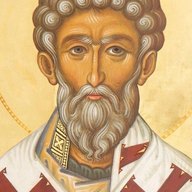
Blessed AugustineExposition on Psalm 135 · on Psalm 135:1
"Give thanks unto the Lord, for He is good, for His mercy endures for ever". This Psalm contains the praise of God, and all its verses finish in the same way. Wherefore although many things are related here in praise of God, yet His mercy is most commended; for without this plain commendation, he, whom the Holy Spirit…
Blessed AugustineExposition on Psalm 135 · on Psalm 135:2
Then follows, "Give thanks to the God of gods, for His mercy endures for ever". "Give thanks to the Lord of lords, for His mercy endures for ever". We may well enquire, Who are these gods and lords, of whom He who is the true God is God and Lord? And we find written in another Psalm, that even men are called gods. The…
Blessed AugustineExposition on Psalm 135 · on Psalm 135:4
Let us therefore "give thanks to the God of gods, and the Lord of lords, for His mercy," etc. "Who alone did wonderful things". As at the last part of every verse, it is written, "For His mercy endureth for ever," so we must understand at the beginning of each, though it be not written, "Give thanks." Which indeed in…
Blessed AugustineExposition on Psalm 135 · on Psalm 135:5–10
But what means, "who alone does great wonders"? Is it because many wonderful things He has done by means of angels and men? Some wonderful things there are which God does alone, and these he enumerates, saying, "who by His wisdom made the heavens", "who stretched out the earth above the waters", "who alone made great…
Blessed AugustineExposition on Psalm 135 · on Psalm 135:12
"With a mighty Hand and stretched-out Arm". What more powerful, what more out-stretched, than that of which is said "To whom is the Arm of the Lord revealed?" [Isaiah 53:1]
Blessed AugustineExposition on Psalm 135 · on Psalm 135:19
"Sehon king of the Amorites", an "useless shoot," or "fiery temptation," for so is Sehon interpreted: the king of "them who cause bitterness," for such is the meaning of Amorites.
Blessed AugustineExposition on Psalm 135 · on Psalm 135:20
"And Og, the king of Basan". The "heaper-together," such is the meaning of Og, and, king of "confusion," which Basan signifies. For what else does the devil heap together but confusion?
Blessed AugustineExposition on Psalm 135 · on Psalm 135:21
"And gave away their land for an heritage", "even an heritage unto Israel His servant". For He gives them, whom once the devil owned, for an heritage to the seed of Abraham, that is, Christ.
Blessed AugustineExposition on Psalm 135 · on Psalm 135:21
"Who giveth food to all flesh", that is, to the whole race of mankind, not Israelites only, but Gentiles too; and of this Food is said, "My Flesh is meat indeed."
Blessed AugustineExposition on Psalm 135 · on Psalm 135:21
"Give thanks unto the God of Heaven". "Give thanks unto the Lord of lords". For what he here says, "the God of Heaven," I suppose that he meant to express in other words what He had before said, "the God of gods." For what there he subjoined, he has here also repeated. "Give thanks unto the Lord of lords." "But to us…
Every note is a real passage, quoted word for word from a published English translation, with its source. Nothing here is summarised or written by us. Some verses have many notes and some have none, because the Fathers wrote more on some passages than others.
Blessed Augustine, Expositions on the Book of Psalms, tr. A. Cleveland Coxe from the Oxford translation, Nicene and Post-Nicene Fathers, series 1, vol. 8 (1888).
Scripture: the Septuagint, in the translation of Sir Lancelot Brenton (1851), with spelling updated by Adam Boyd (2020); the Greek is Brenton's Septuagint text.
All of these translations are in the public domain. The passages were matched to their verses by the Historical Christian Commentaries project, which also hosts the full texts we link to. The Fathers are a treasury of the Church's mind, and they are best read alongside the life of the Church: if a passage raises a question, bring it to your priest.