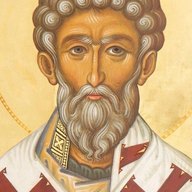
Blessed AugustineExposition on Psalm 136 · on Psalm 136:1
Observe "the waters of Babylon." "The waters of Babylon" are all things which here are loved, and pass away. ...But then other citizens of the holy Jerusalem, understanding their captivity, mark how the natural wishes and the various lusts of men hurry and drag them hither and thither, and drive them into the sea;…
Blessed AugustineExposition on Psalm 136 · on Psalm 136:2
"On the willows in the midst thereof we hung up our instruments of music". The citizens of Jerusalem have their "instruments of music," God's Scriptures, God's commands, God's promises, meditation on the life to come; but while they are dwelling "in Babylon," they "hang up their instruments." Willows are unfruitful…
For there they that had taken us captive asked of us the words of a song; And they that had carried us away asked a hymn, saying, Sing us one of the songs of Zion.
Blessed AugustineExposition on Psalm 136 · on Psalm 136:3
"For there they that led us captive demanded of us words of songs, and they that led us away, an hymn". They demanded of us words of songs and an hymn, who led us captive....We are tempted by the delights of earthly things, and we struggle daily with the suggestions of unlawful pleasures; scarce do we breathe freely…
How should we sing the Lord’s song in a strange land?
Πῶς ᾄσωμεν τὴν ᾠδὴν Κυρίου ἐπὶ γῆς ἀλλοτρίας;
Blessed AugustineExposition on Psalm 136 · on Psalm 136:4
"Those" then "who have led us captive," the devil and his angels, when have they spoken unto us: "Sing us one of the songs of Sion"? What answer we? Babylon beareth thee, Babylon containeth thee, Babylon nourisheth thee, Babylon speaks by thy mouth, thou knowest not to take in save what glitters for the present, thou…
Blessed AugustineExposition on Psalm 136 · on Psalm 136:5
But take heed how thou dwellest among them, O people of God, O body of Christ, O high-born band of wanderers (for thy home is not here, but elsewhere), lest when thou lovest them, strivest for their friendship, and fearest to displease such men, Babylon begin to delight thee and thou forget Jerusalem. In fear then of…
Blessed AugustineExposition on Psalm 136 · on Psalm 136:6
"Let my tongue cleave to my jaws, if I remember not you". That is, let me be dumb, he says, if I remember not you. For what word, what sound does he utter, who utters not songs of Sion? That is our tongue, the song of Jerusalem. The song of the love of this world is a strange tongue, a barbarous tongue, which we have…
Blessed AugustineExposition on Psalm 136 · on Psalm 136:7
Then he turneth to God in prayer against the enemies of that city. "Remember, O Lord, the children of Edom" (ver. 7). Edom is the same who is also called Esau: for ye heard just now the words of the Apostle read, "Jacob have I loved, but Esau have I hated." ...Esau then signifieth all the carnal, Jacob all the…
Blessed AugustineExposition on Psalm 136 · on Psalm 136:8
Then he turneth himself to her, "O daughter of Babylon, unhappy;" unhappy in thy very exulting, thy presumption, thine enmity; "unhappy daughter of Babylon!" (ver. 8). The city is called both Babylon, and daughter of Babylon: just as they speak of "Jerusalem" and "the daughter of Jerusalem," "Sion" and "the daughter…
Blessed AugustineExposition on Psalm 136 · on Psalm 136:9
"Happy shall he be that repayeth thee, as thou hast served us." What repayment meaneth he? Herewith the Psalm closeth, "Happy, that taketh and dasheth thy little ones against the rock" (ver. 9). Her he calleth unhappy, but him happy who payeth her as she hath served us. Do we ask, what reward? This is the repayment.…
Every note is a real passage, quoted word for word from a published English translation, with its source. Nothing here is summarised or written by us. Some verses have many notes and some have none, because the Fathers wrote more on some passages than others.
Blessed Augustine, Expositions on the Book of Psalms, tr. A. Cleveland Coxe from the Oxford translation, Nicene and Post-Nicene Fathers, series 1, vol. 8 (1888).
Scripture: the Septuagint, in the translation of Sir Lancelot Brenton (1851), with spelling updated by Adam Boyd (2020); the Greek is Brenton's Septuagint text.
All of these translations are in the public domain. The passages were matched to their verses by the Historical Christian Commentaries project, which also hosts the full texts we link to. The Fathers are a treasury of the Church's mind, and they are best read alongside the life of the Church: if a passage raises a question, bring it to your priest.