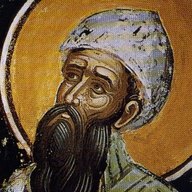
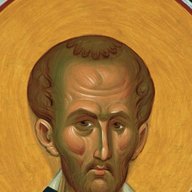
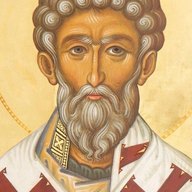
St. Cyril of AlexandriaCommentary on Luke · on Luke 17:1
It is impossible but that offences come. WHAT are the offences which Christ mentions as being in every way certain to happen? Offences then are of two kinds: for some are against the glory of the Supreme Being, and assail That Substance Which transcends all, as far at least as regards the purpose of the contrivers of…
St. John Chrysostomin the Catena Aurea · on Luke 17:1–2
But by the punishment of the man who offends, learn the reward of him who saves. For had not the salvation of one soul been of such exceeding care to Christ, He would not threaten with such a punishment the offender.
St. Cyril of Alexandriain the Catena Aurea · on Luke 17:1–2
Now there are two kinds of offences, of which the one resist the glory of God, but the other serve only to cause a stumbling-block to the brethren. For the inventions of heresies, and every word that is spoken against the truth, are obstructions to the glory of God. Such offences however do not seem to be mentioned…
Blessed Theophylact of Ohridin the Catena Aurea · on Luke 17:1–2
Because the Pharisees were covetous and railed against Christ when He preached poverty, He put to them the parable of the rich man and Lazarus. Afterwards, in speaking with His disciples concerning the Pharisees, He declares them to be men who caused division, and placed obstacles in the divine way. As it follows;…
St. Bede the Venerablein the Catena Aurea · on Luke 17:1–2
This is spoken according to the custom of the province of Palestine; for among the ancient Jews the punishment of those who were guilty of the greater crimes was that they should be sunk into the deep with a stone tied to them; and in truth it were better for a guilty man to finish his bodily life by a punishment…
Blessed Theophylact of Ohridin the Catena Aurea · on Luke 17:3–4
As if He says, Offences must needs come; but it does not follow that you must perish, if only you be on your guard: as it need not that the sheep should perish when the wolf comes, if the shepherd is watching. And since there are great varieties of offenders, (for some are incurable, some are curable,) He therefore…
St. Ambrose of Milanin the Catena Aurea · on Luke 17:3
After the parable of the rich man who is tormented in punishment, Christ added a commandment to give forgiveness to those who turn themselves from their trespasses, lest any one through despair should not be reclaimed from his fault; and hence it is said, Take heed to yourselves. That there might neither be hard-wrung…
St. Bede the Venerablein the Catena Aurea · on Luke 17:3–4
But we must mark, that He does not bid us forgive every one who sins, but him only who repents of his sins. For by taking this course we may avoid offences, hurting no one, correcting the sinner with a righteous zeal, extending the bowels of mercy to the penitent. By using the number seven He assigns no bound to the…
St. Cyril of AlexandriaCommentary on Luke · on Luke 17:4
If seven times in the day he sin against you. For if, He says, he who sins against you repent and acknowledge his fault, you shall forgive him: and that not once only, but very many times. For we must not show ourselves deficient in mutual love, and neglect forbearance, because any one is weak, and again and again…
St. Ambrose of Milanin the Catena Aurea · on Luke 17:4
Or this number is used because God rested on the seventh day from His works. After the seventh day of the world everlasting rest is promised us, that as the evil works of that world shall then cease, so also may the sharpness of punishment be abated.
St. Cyril of AlexandriaCommentary on Luke · on Luke 17:5
The Apostles said to the Lord, Increase our faith. That which necessarily gives joy to the soul of the saints is not the possession of transitory and earthly goods; for they are corruptible, and easily lost; but of such rather as render those that receive them reverend and blessed, even the spiritual graces which are…
St. John Chrysostomin the Catena Aurea · on Luke 17:5–6
He mentions the mustard seed, because, though small in size, it is mightier in power than all the others. He implies then that the least part of faith can do great things. But though the Apostles did not transplant the mulberry tree, do not thou accuse them; for our Lord said not, You shall transplant, but, You shall…
Blessed Augustinein the Catena Aurea · on Luke 17:5
We may indeed understand that they asked for the increase of that faith by which men believe in the things which they see not; but there is further signified a faith in things, whereby not with the words only, but the things themselves present, we believe. And this shall be, when the Wisdom of God, by whom all things…
Blessed Theophylact of Ohridin the Catena Aurea · on Luke 17:5–6
The disciples hearing our Lord discoursing of certain arduous duties, such as poverty, and avoiding offences, entreat Him to increase their faith, that so they might be able to follow poverty, (for nothing so prompts to a life of poverty as faith and hope in the Lord,) and through faith to guard against giving…
St. Bede the Venerablein the Catena Aurea · on Luke 17:5–6
Or our Lord here compares perfect faith to a grain of mustard seed, because it is lowly in appearance, but fervid in heart. But mystically by the mulberry tree, (whose fruit and branches are red with a blood-red colour,) is represented the Gospel of the cross, which, through the faith of the Apostles being uprooted by…
And the Lord said, If ye had faith as a grain of mustard seed, ye might say unto this sycamine tree, Be thou plucked up by the root, and be thou planted in the sea; and it should obey you.
St. Cyril of AlexandriaCommentary on Luke · on Luke 17:6
But that to be confirmed in the faith is a great and special grace, the Lord shows by saying, "If you have faith as a grain of mustard seed, hot, that is, and fervent, you might have said to the sycamine tree, Be you uprooted in the sea, and it would have obeyed you." For he who confides in Christ trusts not to his…
St. Ambrose of Milanin the Catena Aurea · on Luke 17:6
Or this is said because faith keeps out the unclean spirit, especially since the nature of the tree falls in with this meaning. For the fruit of the mulberry is at first white in the blossom, and being formed from thence grows red, and blackens as it gets ripe. The devil also having by transgression fallen from the…
St. Cyril of AlexandriaCommentary on Luke · on Luke 17:7–10
But which of you having a servant ploughing or feeding cattle. In the verses which precede a long and important discourse has been addressed to us by the Lord, to show unto us the paths which lead unto honour, and to manifest the glories of the blameless life, that making progress therein, and advancing zealously unto…
Blessed Augustinein the Catena Aurea · on Luke 17:7
Or else; To the many who understand not this faith in the truth already present, our Lord might seem not to have answered the petitions of His disciples. And there appears a difficulty in the connection here, unless we suppose He meant the change from faith to faith, from that faith, namely, by which we serve God, to…
St. Cyril of Alexandriain the Catena Aurea · on Luke 17:7–10
Our Lord teaches us that it is no more than the just and proper right of a master to require, as their bounden duty, subjection from servants, adding, Doth he thank that servant because he did the things that were commanded him? I trow not. Here then is the disease of pride cut away. Why boastest thou thyself? Dost…
Blessed Theophylact of Ohridin the Catena Aurea · on Luke 17:7–10
Because faith makes its possessor a keeper of God's commandments, and adorns him with wonderful works; it would seem from thence that a man might thereby fall into the sin of pride. Our Lord therefore forewarned His Apostles by a fit example, not to boast themselves in their virtues, saying, But which of you having a…
St. Ambrose of Milanin the Catena Aurea · on Luke 17:7–8
For we know that no one sits down before he has first passed over. Moses indeed also passed over, that he might see a great sight. Since then thou not only sayest to thy servant, Sit down to meat, but requirest from him another service, so in this life the Lord does not put up with the performance of one work and…
St. Bede the Venerablein the Catena Aurea · on Luke 17:7
Or the servant departs from the field when giving up for a time his work of preaching, the teacher retires into his own conscience, pondering his own words or deeds within himself. To whom our Lord does not at once say, Go from this mortal life, and sit down to meat, that is, refresh thyself in the everlasting…
And will not rather say unto him, Make ready wherewith I may sup, and gird thyself, and serve me, till I have eaten and drunken; and afterward thou shalt eat and drink?
Blessed Augustinein the Catena Aurea · on Luke 17:8
While His servants also are ministering, that is, preaching the Gospel, our Lord is eating and drinking the faith and confession of the Gentiles. It follows, And afterward thou shall eat and drink. As if He says, After that I have been delighted with the work of thy preaching, and refreshed myself with the choice food…
St. Bede the Venerablein the Catena Aurea · on Luke 17:8
He bids make ready wherewith he may sup, that is, after the labours of public discourse, He bids him humble himself in self-examination. With such a supper our Lord desires to be fed. But to gird one's self is to collect the mind which has been enfolded in the base coil of fluctuating thoughts, whereby its steps in…
St. Ambrose of Milanin the Catena Aurea · on Luke 17:9–10
Boast not thyself then that thou hast been a good servant. Thou hast done what thou oughtest to have done. The sun obeys, the moon submits herself, the angels are subject; let us not then seek praise from ourselves. Therefore He adds in conclusion, So likewise ye, when ye have done all good things, say, We are…
So likewise ye, when ye shall have done all those things which are commanded you, say, We are unprofitable servants: we have done that which was our duty to do.
St. Bede the Venerablein the Catena Aurea · on Luke 17:10
Servants, I say, because bought with a price; (1 Cor. 6:20) unprofitable, for the Lord needeth not our good things, (Ps. 16:2) or because the sufferings of this present time are not worthy to be compared to the glory which shall be revealed in us. (Rom. 8:18.) Herein then is the perfect faith of men, when having done…
Blessed Augustinein the Catena Aurea · on Luke 17:11–19
The lepers may be taken mystically for those who, having no knowledge of the true faith, profess various erroneous doctrines. For they do not conceal their ignorance, but blazen it forth as the highest wisdom, making a vain show of it with boasting words. But since leprosy is a blemish in colour, when true things…
St. Cyril of AlexandriaCommentary on Luke · on Luke 17:12
Ten lepers met him. Again the Saviour manifests unto us His glory, and by working godlike miracles, endeavours to win senseless Israel unto faith, obdurate though he was, and unbelieving. What argument then will avail him at the day of judgment for refusing to accept salvation through Christ? Especially when they…
St. Cyril of Alexandriain the Catena Aurea · on Luke 17:12
The Saviour next manifests His glory by drawing over Israel to the faith. As it follows, And as he entered into a certain village, there met him ten men that were lepers, men who were banished from the towns and cities, and counted unclean, according to the rites of the Mosaic law.
St. Cyril of AlexandriaCommentary on Luke · on Luke 17:13
The lepers then having met the Saviour, earnestly besought Him to free them from their misery, and called Him Master, that is, Teacher. No one pitied them when suffering this malady: but He Who had appeared on earth for this very reason, and had become man that He might show pity unto all, He was moved with compassion…
Blessed Theophylact of Ohridin the Catena Aurea · on Luke 17:13
Thus they stood afar off, but were made nigh unto Him by their prayers. For the Lord is nigh unto all them that call upon him in truth. (Ps. 145:18.) Therefore it follows, And they lifted up their voices, and said, Jesus, Master, have mercy upon us. They do not merely supplicate or entreat Him as if He were a man, but…
St. Cyril of AlexandriaCommentary on Luke · on Luke 17:14
He said unto them, Go and show yourselves unto the priests. And why did He not rather say, "I will, be you cleansed;" as he did in the case of another leper: but commanded them rather to show themselves unto the priests? It was because the law gave directions to this effect to those who were delivered from leprosy:…
St. Cyril of Alexandriain the Catena Aurea · on Luke 17:14
The law also ordered, that those who were cleansed from leprosy should offer sacrifice for the sake of their purification. Whereby the Jewish priests who were jealous of His glory might know that it was by Christ granting them health that they were suddenly and miraculously healed.
Blessed Theophylact of Ohridin the Catena Aurea · on Luke 17:14
But He bids them show themselves to the priests, as it follows, And when he saw them, he said, Go, show yourselves unto the priests. For they were examined whether they were cleansed from their leprosy or not. Therefore in bidding them go to the priests, he meant nothing more than that they were just about to be…
St. Cyril of AlexandriaCommentary on Luke · on Luke 17:15–18
The nine then, as being Jews, falling into a thankless forgetfulness, did not return to give glory to God: by which He shows that Israel was hard of heart, and utterly unthankful: but the stranger,—for as being a Samaritan he was of foreign race, having been brought thither from Assyria: for the phrase is not without…
Blessed Theophylact of Ohridin the Catena Aurea · on Luke 17:15
But out of the ten, the nine Israelites were ungrateful, whereas the Samaritan stranger returned and lifted up his voice in thanksgiving, as it follows, And one of them turned back, and with a loud voice glorified God.
Blessed Theophylact of Ohridin the Catena Aurea · on Luke 17:16
We may gather from this that a man is not one whit hindered from pleasing God because he comes from a cursed race, only let him bear in his heart an honest purpose.
Blessed Theophylact of Ohridin the Catena Aurea · on Luke 17:17–18
Further, let not him that is born of saints boast himself, for the nine who were Israelites were ungrateful; and hence it follows, And Jesus answering him said, Were there not ten cleansed?
St. Bede the Venerablein the Catena Aurea · on Luke 17:19
And he is commanded to rise and walk, because he who, knowing his own weakness, lies lowly on the ground, is led to advance by the consolation of the divine word to mighty deeds. But if faith made him whole, who hurried himself back to give thanks, therefore does unbelief destroy those who have neglected to give glory…
And when he was demanded of the Pharisees, when the kingdom of God should come, he answered them and said, The kingdom of God cometh not with observation:
St. Cyril of AlexandriaCommentary on Luke · on Luke 17:20–21
And having been asked by the Pharisees when the kingdom of God comes, He answered and said unto them, The kingdom of God comes not by watchings; neither shall they say, Lo! here, or Lo! there: for behold! the kingdom of God is within you. And He said unto the disciples, The days will come, when you shall desire to see…
St. Cyril of Alexandriain the Catena Aurea · on Luke 17:20–21
Because our Saviour, in His discourses which He addressed to others, spake often of the kingdom of God, the Pharisees derided Him; hence it is said, And when he was asked by the Pharisees when the kingdom of God should come. As though they said tauntingly, "Before the kingdom of God come, which Thou speakest of, the…
St. Cyril of AlexandriaCommentary on Luke · on Luke 17:22
Having therefore made this plain to all men, He now transfers His words to the holy disciples, to whom as His true companions He says, "The days will come when you shall desire to see one of the days of the Son of man, and shall not see it." Is the Lord then in so speaking working cowardice in His disciples? Does He…
St. Cyril of Alexandriain the Catena Aurea · on Luke 17:22–23
When our Lord said, The kingdom of God is within you, He would fain prepare His disciples for suffering, that being made strong they might be able to enter the kingdom of God; He therefore foretells to them, that before His coming from heaven at the end of the world, persecution will break out upon them. Hence it…
Blessed Theophylact of Ohridin the Catena Aurea · on Luke 17:22
For their life was then without trouble, for Christ took care of them and protected them. But the time was coming when Christ should be taken away, and they should be exposed to perils, being brought before kings and princes, and then they should long for the first time and its tranquillity.
St. Bede the Venerablein the Catena Aurea · on Luke 17:22
Or, by the day of Christ He signifies His kingdom, which we hope will come, and He rightly says, one day, because there shall no darkness disturb the glory of that blessed time. It is right then to long for the day of Christ, yet from the earnestness of our longing, let us not vision to ourselves as though the day…
St. Cyril of AlexandriaCommentary on Luke · on Luke 17:23–25
But that He will descend from heaven in the latter times of the world, not obscurely nor secretly, but with godlike glory, and as "dwelling in the light which no man can approach unto," He declared, saying, that His coming shall he as the lightning. He was born indeed in the flesh of a woman, to fulfil the…
For as the lightning, that lighteneth out of the one part under heaven, shineth unto the other part under heaven; so shall also the Son of man be in his day.
St. Bede the Venerablein the Catena Aurea · on Luke 17:24
And he well says, that lighteneth out of the one part under heaven, because the judgment will be given under the heaven, that is, in the midst of the air, as the Apostle says, We shall be caught up together with them in the clouds. (1 Thess. 4:17.) But if the Lord shall appear at the Judgment like lightning, then…
St. Cyril of Alexandriain the Catena Aurea · on Luke 17:25
Now His disciples supposed that He would go to Jerusalem, and would at once make a manifestation of the kingdom of God. To rid them therefore of this belief, He informs them that it became Him first to suffer the Life-giving Passion, then to ascend to the Father and shine forth from above, that He might judge the…
St. Bede the Venerablein the Catena Aurea · on Luke 17:25
He means the generation not only of the Jews, but also of all wicked men, by whom even now in His own body, that is, His Church, the Son of man suffers many things, and is rejected. But while He spake many things of His coming in glory, He inserts something also concerning His Passion, that when men saw Him dying,…
St. Cyril of AlexandriaCommentary on Luke · on Luke 17:26–30
And to show that He will appear unexpectedly, and with no man knowing it, and the end of the world come, He says, that the end shall be "as it was in the days of Noah and Lot. For they were eating, He says, and drinking: and were taking wives, and being made the wives of men: they were selling and buying, and…
Blessed Theophylact of Ohridin the Catena Aurea · on Luke 17:26–30
For when Antichrist has come, then shall men become wanton, given up to abominable vices, as the Apostle says, Lovers of pleasure rather than lovers of God. (2 Tim. 3:4.) For if Antichrist is the dwelling-place of every sin, what else will he then implant in the miserable race of men, but what belongs to himself. And…
St. Ambrose of Milanin the Catena Aurea · on Luke 17:26–27
He rightly declares the deluge to have been caused by our sins, for God did not create evil, but our deservings found it out for themselves. Let it not however be supposed that marriages, or again meat and drink, are condemned, seeing that by the one succession is sustained, by the other nature, but moderation is to…
St. Bede the Venerablein the Catena Aurea · on Luke 17:26
The coming of our Lord, which He had compared to lightning flying swiftly across the heavens, He now likens to the days of Noah and Lot, when a sudden destruction came upon mankind.
They did eat, they drank, they married wives, they were given in marriage, until the day that Noe entered into the ark, and the flood came, and destroyed them all.
St. John Chrysostomin the Catena Aurea · on Luke 17:27
For refusing to believe the words of warning they were suddenly visited with a real punishment from God; but their unbelief proceeded from self-indulgence, and softness of mind. For such as a man's wishes and inclinations are, will also be his expectations. Therefore it follows, they eat and drank.
St. Bede the Venerablein the Catena Aurea · on Luke 17:27
Now Noah builds the ark mystically. The Lord builds His Church of Christ's faithful servants, by uniting them together in one, as smooth pieces of wood; and when it is perfectly finished, He enters it: as at the day of Judgment, He who ever dwells within His Church enlightens it with His visible presence. But while…
St. Bede the Venerablein the Catena Aurea · on Luke 17:28–29
Passing by the unutterable wickedness of the Sodomites, He mentions only those which may be thought trifling offences, or none at all; that you may understand how fearfully unlawful pleasures are punished, when lawful pleasures taken to excess receive for their reward fire and brimstone.
St. Bede the Venerablein the Catena Aurea · on Luke 17:28–30
Now mystically, Lot, which is interpreted 'turning aside,' is the people of the elect, who, while in Sodom, i. e. among the wicked, live as strangers, to the utmost of their power turning aside from all their wicked ways. But when Lot went out, Sodom is destroyed, for at the end of the world, the angels shall go forth…
St. Bede the Venerablein the Catena Aurea · on Luke 17:30
For He who in the mean time though we see Him not yet sees all things, shall then appear to judge all things. And He shall come especially at that time, when He shall see all who are forgetful of His judgments in bondage to this world.
In that day, he which shall be upon the housetop, and his stuff in the house, let him not come down to take it away: and he that is in the field, let him likewise not return back.
St. Cyril of AlexandriaCommentary on Luke · on Luke 17:31
In that day, he who is upon the housetop, and his goods in the house, let him not go down to carry them away: and he who is in the field, let him in like manner not return back. Remember Lot's wife. Whosoever shall seek to save his life shall lose it: and whosoever shall lose it, shall save it alive. 1 tell you, in…
St. Cyril of AlexandriaCommentary on Luke · on Luke 17:31–32
But even "if any one be, He says, in the field, in like manner let him not return back." That is, if any one be found devoted to industry, and occupied in labours, earnestly desirous of spiritual fruitfulness, and gathering the wages of virtuous toil, let him hold firmly to this diligence: "let him not return back:"…
Blessed Augustinein the Catena Aurea · on Luke 17:31
For he is on the housetop who, departing from carnal things, breathes as it were the free air of a spiritual life. But the vessels in the house are the carnal senses, which many using to discover truth which is only taken in by the intellect, have entirely missed it. Let the spiritual man then beware, lest in the day…
Blessed Theophylact of Ohridin the Catena Aurea · on Luke 17:31–33
Matthew relates all these things to have been said by our Lord, with reference to the destruction of Jerusalem, that when the Romans came upon them, they who were on the housetop should not come down to take any thing, but fly at once, nor they that were in the field return home. And surely so it was at the taking of…
St. Ambrose of Milanin the Catena Aurea · on Luke 17:31–32
Because good men must needs on account of the wicked be sore vexed in this world, in order that they may receive a more plentiful reward in the world to come, they are here punished with certain remedies, as it is here said, In that day, &c. that is, if a man goes up to the top of his house and rises to the summit of…
Blessed Augustinein the Catena Aurea · on Luke 17:32
Lot's wife represents those who in time of trouble look back and turn aside from the hope of the divine promise, and hence she was made a pillar of salt as a warning to men not to do likewise, and to season as it were their hearts, lest they become corrupt.
St. Cyril of AlexandriaCommentary on Luke · on Luke 17:33
On that day therefore, He says, and at that time, both those who are accustomed to live in luxury must entirely abstain from such pride, and readily labour, in order that they may save themselves: and in like manner those who are industrious, and honour useful exertion, must bravely hold to the mark that has been set…
St. Cyril of Alexandriain the Catena Aurea · on Luke 17:33
How a man may lose his own life to save it, St. Paul explains when he speaks of some who crucified their flesh with the affections and lusts, (Gal. 5:24.) that is, with perseverance and devotion engaging in the conflict.
St. Cyril of AlexandriaCommentary on Luke · on Luke 17:34
This He teaches us by saying, "In that night there shall be two men in one bed: one shall be taken, and one shall be left. Two women shall be grinding at a mill together, the one shall be taken, and the other left." Now by the two who are in one bed, He seems to hint at those who live in rest and plenty, and are equal…
St. Cyril of AlexandriaCommentary on Luke · on Luke 17:34
And He calls the time of judgment night, because, as I imagine, of His advent being unknown and unexpected. For we remember also one of the holy prophets crying out to them who love sin, and saying, "Woe unto them that desire the day of the Lord! What will the day of the Lord be unto you? and it is darkness and not…
Blessed Augustinein the Catena Aurea · on Luke 17:34–36
Or He says, in that night, meaning in that tribulation. Or there are three classes of men here represented. The first is composed of those who prefer their ease and quiet, and busy not themselves in secular or ecclesiastical concerns. And this quiet life of theirs is signified by the bed. The next class embraces those…
St. Cyril of Alexandriain the Catena Aurea · on Luke 17:34
For by the two men in one bed, He seems to denote the rich who repose themselves in worldly pleasures, for a bed is a sign of rest. But not all who abound in riches are wicked, but if one is good and elect in the faith, he will be taken, but another who is not so will be left. For when our Lord descends to judgment,…
Blessed Theophylact of Ohridin the Catena Aurea · on Luke 17:34–37
Or He teaches us the suddenness of Christ's coming, which we are told will be in the night. And having said that the rich can scarcely be saved, He shows that not all the rich perish, nor all the poor are saved.
St. Ambrose of Milanin the Catena Aurea · on Luke 17:34
He rightly says, night, for Antichrist is the hour of darkness, because he pours a dark cloud over the minds of men while he declares himself to be Christ. But Christ as lightning shines brightly, that we may be able to see in that night the glory of the resurrection.
Two women shall be grinding together; the one shall be taken, and the other left.
δύο ἔσονται ἀλήθουσαι ἐπὶ τὸ αὐτό, μία παραληφθήσεται καὶ ἡ ἑτέρα ἀφεθήσεται·
St. Cyril of AlexandriaCommentary on Luke · on Luke 17:35
"Two women, He says, shall be grinding at a mill; the one shall be taken, and the other left." And by these again He seems to mean such as live in poverty and labour: but even in these, He says, there is a certain vast difference. For some have borne the burden of poverty manfully, honouring a sober and virtuous…
St. Ambrose of Milanin the Catena Aurea · on Luke 17:35–36
Or out of the same bed of human infirmity, one is left, that is, rejected, another is taken up, that is, is caught to meet Christ in the air. By the two grinding together, he seems to imply the poor and the oppressed. To which belongs what follows. Two men shall be in the field, &c. For in these there is no slight…
Two men shall be in the field; the one shall be taken, and the other left.
δύο ἐν τῷ ἀγρῷ, εἷς παραληφθήσεται καὶ ὁ ἕτερος ἀφεθήσεται.
BV
St. Bede the Venerablein the Catena Aurea · on Luke 17:36
Our Lord had just before said, that he who is in the field must not return back; and lest this should seem to have been spoken of those only who would openly return from the field, that is, who would publicly deny their Lord, He goes on to show, that there are some who, while seeming to turn their face forward, are…
St. Cyril of AlexandriaCommentary on Luke · on Luke 17:37
As Christ however, our common Saviour, had used the expression "shall be taken," the disciples usefully and necessarily ask, "Whither, Lord? And He said unto them, Where the body is, there will also the eagles be gathered." And what does this mean? By the use of a common and very plain fact, He hints at a great and…
St. Cyril of Alexandriain the Catena Aurea · on Luke 17:37
When He said that some should be taken up, the disciples not unprofitably inquire, 'Where, Lord?' As if He said, As when a dead body is thrown away, all the birds which feed on human flesh flock to it, so when the Son of man shall come, all the eagles, that is, the saints, shall haste to meet Him.
St. Ambrose of Milanin the Catena Aurea · on Luke 17:37
For the souls of the righteous are likened to eagles, because they soar high and forsake the lower parts, and are said to live to a great age. Now concerning the body, we can have no doubt, and above all if we remember that Joseph received the body from Pilate. (Matt. 28.) And do not you see the eagles around the body…
St. Bede the Venerablein the Catena Aurea · on Luke 17:37
Our Lord was asked two questions, where the good should be taken up, and where the bad left; He gave only one answer, and left the other to be understood, saying, Wheresoever the body is, thither will the eagles be gathered together.
Every note is a real passage, quoted word for word from a published English translation, with its source. Nothing here is summarised or written by us. Some verses have many notes and some have none, because the Fathers wrote more on some passages than others.
Blessed Augustine, The Harmony of the Gospels, tr. S. D. F. Salmond, Nicene and Post-Nicene Fathers, series 1, vol. 6 (1888).
St. Cyril of Alexandria, Commentary upon the Gospel according to S. Luke, tr. R. Payne Smith (Oxford, 1859).
Chrysostom, Augustine, Cyril, Theophylact, Ambrose, Gregory and Bede, as gathered in the Catena Aurea ("golden chain"), tr. J. H. Newman and others (Oxford, 1841–1845). In the 1260s Thomas Aquinas set the Fathers' comments on each verse of the Gospels side by side. He chose and arranged them, but every word is the Father's own.
Scripture: the King James Version (1611); the Greek (tap Ελ) is the 1904 Patriarchal text of the Ecumenical Patriarchate.
All of these translations are in the public domain. The passages were matched to their verses by the Historical Christian Commentaries project, which also hosts the full texts we link to. The Fathers are a treasury of the Church's mind, and they are best read alongside the life of the Church: if a passage raises a question, bring it to your priest.