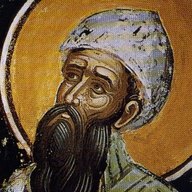
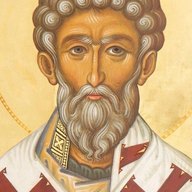
St. Cyril of AlexandriaCommentary on Luke · on Luke 15:1–2
Now all the publicans and sinners used to draw near unto Him to hear Him. And the Pharisees and Scribes murmured, saying, This man receives sinners, and eats with them. And He spoke this parable unto them, saying, What man of you having a hundred sheep, and having lost one of them, does not leave the ninety and nine…
St. Ambrose of Milanin the Catena Aurea · on Luke 15:1–2
Thou hadst learnt by what went before not to be occupied by the business of this world, not to prefer transitory things to eternal. But because the frailty of man can not keep a firm step in so slippery a world, the good Physician has shown thee a remedy even after falling; the merciful Judge has not denied the hope…
St. Gregory the Dialogistin the Catena Aurea · on Luke 15:1
From which we may gather, that true justice feels compassion, false justice scorn, although the just are wont rightly to repel sinners. But there is one act proceeding from the swelling of pride, another from the zeal for discipline. For the just, though without they spare not rebukes for the sake of discipline,…
Blessed Theophylact of Ohridin the Catena Aurea · on Luke 15:2
For this was His wont, for the sake whereof He had taken upon Him the flesh, to receive sinners as the physician those that are sick. But the Pharisees, the really guilty, returned murmurs for this act of mercy, as it follows, And the Pharisees and Scribes murmured, saying, &c.
St. Gregory the Dialogistin the Catena Aurea · on Luke 15:2
But, on the contrary, they who from false justice are wont to pride themselves, despise all others, and never in mercy condescend to the weak; and thinking themselves not to be sinners, are so much the worse sinners. Of such were the Pharisees, who condemning our Lord because He received sinners, with parched hearts…
St. Gregory the Dialogistin the Catena Aurea · on Luke 15:3
For it follows, And he spake this parable unto them, saying, What man of you having an hundred sheep, and if he lose one of them, does not go after it, &c. He gave a comparison which man might recognise in himself, though it referred to the Creator of men. For since a hundred is a perfect number, He Himself had a…
What man of you, having an hundred sheep, if he lose one of them, doth not leave the ninety and nine in the wilderness, and go after that which is lost, until he find it?
St. Cyril of AlexandriaCommentary on Luke · on Luke 15:4–7
He sought therefore that which was lost: and, to show that the Jewish fault-finding on this account was vain, He says unto them, "What man of you having a hundred sheep, and having lost one of them, does not leave the ninety and nine in the wilderness, and go to seek that which is lost. And if it chance to be found,…
Blessed Augustinein the Catena Aurea · on Luke 15:4
Or He spoke of those ninety and nine whom He left in the wilderness, signifying the proud, who bear solitude as it were in their mind, in that they wish to appear themselves alone, to whom unity is wanting for perfection. For when a man is torn from unity, it is by pride; since desiring to be his own master, he…
St. Cyril of Alexandriain the Catena Aurea · on Luke 15:4–7
We may hence understand the extent of our Saviour's kingdom. For He says there are a hundred sheep, bringing to a perfect sum the number of rational creatures subject to Him. For the number hundred is perfect, being composed of ten decades. But out of these one has wandered, namely, the race of man which inhabits…
St. Gregory the Dialogistin the Catena Aurea · on Luke 15:4
One sheep then perished when man by sinning left the pastures of life. But in the wilderness the ninety and nine remained, because the number of the rational creatures, that is to say of Angels and men who were formed to see God, was lessened when man perished; and hence it follows, Does he not leave the ninety and…
Blessed Theophylact of Ohridin the Catena Aurea · on Luke 15:6
The heavenly powers thus are called sheep, because every created nature as compared with God is as the beasts, but inasmuch as it is rational, they are called friends and neighbours.
St. Gregory the Dialogistin the Catena Aurea · on Luke 15:6
But having found the sheep, he returns home; for our Shepherd having restored man, returns to his heavenly kingdom. And hence it follows, And coming he collects together his friends and neighbours, saying to them, Rejoice with me, for I have found my sheep which was lost. (1 Pet. 2:24, Isai. 53.) By His friends and…
I say unto you, that likewise joy shall be in heaven over one sinner that repenteth, more than over ninety and nine just persons, which need no repentance.
St. Ambrose of Milanin the Catena Aurea · on Luke 15:7
Now the angels, inasmuch as they are intelligent beings, do not unreasonably rejoice at the redemption of men, as it follows, I say unto you, that likewise joy shall be in heaven over one sinner that repenteth, more than over ninety and nine just persons who need no repentance. Let this serve as an incentive to…
St. Gregory the Dialogistin the Catena Aurea · on Luke 15:7
But he allows there is more joy in heaven over the converted sinner, than over the just who remain stedfast; for the latter for the most part, not feeling themselves oppressed by the weight of their sins, stand indeed in the way of righteousness, but still do not anxiously sigh after the heavenly country, frequently…
Either what woman having ten pieces of silver, if she lose one piece, doth not light a candle, and sweep the house, and seek diligently till she find it?
St. Cyril of AlexandriaCommentary on Luke · on Luke 15:8–10
And the sense of the parable which immediately follows is exactly similar, in which, He says, that 'a woman who had ten drachms lost one of them, and having lit a lamp and found it, rejoiced greatly therein, and made it a reason for special joy.' By the former parable therefore, in which the wandering sheep signified…
Blessed Augustinein the Catena Aurea · on Luke 15:8–10
Or by the nine pieces of silver, as by the ninety and nine sheep, He represents those who trusting in themselves, prefer themselves to sinners returning to salvation. For there is one wanting to nine to make it ten, and to ninety-nine to make it a hundred. To one He assigns all who are reconciled by repentance.
St. Gregory the Dialogistin the Catena Aurea · on Luke 15:8
He who is signified by the shepherd, is also by the woman. For it is God Himself, God and the wisdom of God, but the Lord has formed the nature of angels and men to know Him, and has created them after His likeness. The woman then had ten pieces of silver, because there are nine orders of angels, but that the number…
Blessed Theophylact of Ohridin the Catena Aurea · on Luke 15:9
Either they are friends as performing His will, but neighbours as being spiritual; or perhaps His friends are all the heavenly powers, but His neighbours those that come near to Him, as Thrones, Cherubims, and Seraphims.
St. Gregory the Dialogistin the Catena Aurea · on Luke 15:10
To work repentance is to mourn over past sins, and not to commit things to be mourned over. For he who weeps over some things so as yet to commit others, still knows not how to work repentance, or is a hypocrite; he must also reflect that by so doing he satisfies not his Creator, since he who had done what was…
St. Cyril of AlexandriaCommentary on Luke · on Luke 15:11–32
And He said, A certain man had two sons: and the younger of them said to his father, Father, give me the portion of your goods that comes to me. And he divided unto them his substance. And not many days after, the younger son gathered every thing together, and journeyed into a far country, and there scattered his…
St. John Chrysostomin the Catena Aurea · on Luke 15:11
There is also in the above-mentioned parable a rule of distinction with reference to the characters or dispositions of the sinners. The father receives his penitent son, exercising the freedom of his will, so as to know from whence he had fallen; and the shepherd seeks for the sheep that wanders and knows not how to…
Blessed Augustinein the Catena Aurea · on Luke 15:11–12
This man then having two sons is understood to be God having two nations, as if they were two roots of the human race; and the one composed of those who have remained in the worship of God, the other, of those who have ever deserted God to worship idols. From the very beginning then of the creation of mankind the…
St. Cyril of Alexandriain the Catena Aurea · on Luke 15:11
But some say that by the elder son is signified Israel according to the flesh, but by the other who left his father, the multitude of the Gentiles. But since the Jews are frequently reproved in holy Scripture for their many crimes, how agree with this people the words of the elder son, saying, Lo, these many years do…
St. Ambrose of Milanin the Catena Aurea · on Luke 15:11–12
St. Luke has given three parables successively; the sheep which was lost and found, the piece of silver which was lost and found, the son who was dead and came to life again, in order that invited by a threefold remedy, we might heal our wounds. Christ as the Shepherd bears thee on His own body, the Church as the…
St. John Chrysostomin the Catena Aurea · on Luke 15:12
Now the Scripture says, that the father divided equally between his two sons his substance, that is, the knowledge of good and evil, which is a true and everlasting possession to the soul that uses it well. The substance of reason which flows from God to men at their earliest birth, is given equally to all who come…
Blessed Theophylact of Ohridin the Catena Aurea · on Luke 15:12
The substance of man is the capacity of reason which is accompanied by free will, and in like manner whatever God has given us shall be accounted for our substance, as the heaven, the earth, and universal nature, the Law and the Prophets.
And not many days after the younger son gathered all together, and took his journey into a far country, and there wasted his substance with riotous living.
St. John Chrysostomin the Catena Aurea · on Luke 15:13
The younger son set out into a distant country, not locally departing from God, who is every where present, but in heart. For the sinner flees from God that he may stand afar off.
Blessed Augustinein the Catena Aurea · on Luke 15:13
But that which is said to have taken place not many days after, namely, that gathering all together he set out abroad into a far country, which is forgetfulness of God, signifies that not long after the institution of the human race, the soul of man chose of its free will to take with it a certain power of its nature,…
St. Ambrose of Milanin the Catena Aurea · on Luke 15:13–14
For it follows, And not many days after, the younger son gathered all together, and took his journey into a far country. For what is more afar off than to depart from one's self, to be separate not by country but by habits. For he who severs himself from Christ is an exile from his country, and a citizen of this…
Blessed Augustinein the Catena Aurea · on Luke 15:14
As it follows, And when he had spent all, there arose a great famine in that land. The famine is the want of the word of truth. It follows, And he began to be in want. Fitly did he begin to be in want who abandoned the treasures of the wisdom and the knowledge of God, and the unfathomableness of the heavenly riches.
St. John Chrysostomin the Catena Aurea · on Luke 15:15–16
Or he who is destitute of spiritual riches, as wisdom and understanding, is said to feed swine, that is, to nourish in his soul sordid and unclean thoughts, and he devours the material food of evil conversation, sweet indeed to him who lacks good works, because every work of carnal pleasure seems sweet to the…
Blessed Augustinein the Catena Aurea · on Luke 15:15
It follows, And he went and joined himself to a citizen of that country. One of the citizens of that country was a certain prince of the air belonging to the army of the devil, whose fields signify the manner of his power, concerning which it follows, And he sent him into the field to feed swine. The swine are the…
St. Ambrose of Milanin the Catena Aurea · on Luke 15:15–16
Therefore began he to be in want and to suffer hunger, because nothing satisfies a prodigal mind. He went away therefore, and attached himself to one of the citizens. For he who is attached, is in a snare. And that citizen seems to be a prince of the world. Lastly, he is sent to his farm which he bought who excused…
St. Bede the Venerablein the Catena Aurea · on Luke 15:15
For to be sent to the farm is to be enthralled by the desire of worldly substance. But to feed swine is to work those things in which the unclean spirits delight.
Blessed Augustinein the Catena Aurea · on Luke 15:16
The husks then with which the swine were fed are the teaching of the world, which cries loudly of vanity; according to which in various prose and verse men repeat the praises of the idols, and fables belonging to the gods of the Gentiles, wherewith the devils are delighted. Hence when he would fain have filled…
Blessed Theophylact of Ohridin the Catena Aurea · on Luke 15:16
To whom no one gives a sufficiency of evil; for he is afar from God who lives on such things, and the devils do their best that a satiety of evil should never come.
St. Bede the Venerablein the Catena Aurea · on Luke 15:16
It follows, And he would have filled his belly with the husks which the swine did eat. The husk is a sort of bean, empty within, soft outside, by which the body is not refreshed, but filled, so that it rather loads than nourishes.
St. John Chrysostomin the Catena Aurea · on Luke 15:17
After that he had suffered in a foreign land all such things as the wicked deserve, constrained by the necessity of his misfortunes, that is, by hunger and want, he becomes sensible of what had been his ruin, who through fault of his own will had thrown himself from his father to strangers, from home to exile, from…
Blessed Augustinein the Catena Aurea · on Luke 15:17
But he returned to himself, when from those things which without unprofitably entice and seduce, he brought back his mind to the inward recesses of his conscience. But whence could he know this who had that great forgetfulness of God, which exists in all idolaters, unless it was the reflection of one returning to his…
St. Ambrose of Milanin the Catena Aurea · on Luke 15:17
He rightly returns to himself, because he departed from himself. For he who returns to God restores himself to himself, and he who departs from Christ rejects himself from himself.
St. John Chrysostomin the Catena Aurea · on Luke 15:18
When he says, Before thee, he shows that this father must be understood as God. For God alone beholds all things, from Whom neither the simple thoughts of the heart can be hidden.
St. John Chrysostomin the Catena Aurea · on Luke 15:18
Or by heaven in this place may be understood Christ. For he who sins against heaven, which although above us is yet a visible element, is the same as he who sins against man, whom the Son of God took into Himself for our salvation.
Blessed Augustinein the Catena Aurea · on Luke 15:18–19
For he was lying down. And I will go, for he was a long way off. To my father, because he was under a master of swine. But the other words are those of one meditating repentance in confession of sin, but not yet working it. For he does not now speak to his father, but promises that he will speak when he shall come.…
St. Ambrose of Milanin the Catena Aurea · on Luke 15:18–19
For the son who has the pledge of the Holy Spirit in his heart seeks not the gain of an earthly reward, but preserves the right of an heir. These are also good husbandmen, to whom the vineyard is let out. (Matt. 21:41.) They abound not in husks, but bread. How merciful! He, though offended, disdains not to hear the…
St. Bede the Venerablein the Catena Aurea · on Luke 15:19
To the affection of a son, who doubts not that all things which are his father's are his, he by no means lays claim, but desires the condition of a hired servant, as now about to serve for a reward. But he admits that not even this could he deserve except by his father's approbation.
And he arose, and came to his father. But when he was yet a great way off, his father saw him, and had compassion, and ran, and fell on his neck, and kissed him.
St. John Chrysostomin the Catena Aurea · on Luke 15:20
Who after that he said, I will go to my father, (which brought all good things,) tarried not, but took the whole journey; for it follows, And he arose, and came to his father. Let us do likewise, and not be wearied with the length of the way, for if we are willing, the return will become swift and easy, provided that…
St. John Chrysostomin the Catena Aurea · on Luke 15:20
Now the father perceiving his penitence did not wait to receive the words of his confession, but anticipates his supplication, and had compassion on him, as it is added, and was moved with pity.
St. John Chrysostomin the Catena Aurea · on Luke 15:20
For what else means it that he ran, but that we through the hindrance of our sins cannot by our own virtue reach to God. But because God is able to come to the weak, he fell on his neck. The mouth is kissed, as that from which has proceeded the confession of the penitent, springing from the heart, which the father…
Blessed Augustinein the Catena Aurea · on Luke 15:20
For before that he perceived God afar off, when he was yet piously seeking him, his father saw him. For the ungodly and proud, God is well said not to see, as not having them before his eyes. For men are not commonly said to be before the eyes of any one except those who are beloved. Or running he fell upon his neck;…
St. Ambrose of Milanin the Catena Aurea · on Luke 15:20
He runs then to meet thee, because He hears thee within meditating the secrets of thy heart, and when thou wert yet afar off, He runs lest any one should stop Him. He embraces also, (for in the running there is fore-knowledge, in the embrace mercy,) and as if by a certain impulse of paternal affection, falls upon thy…
Blessed Augustinein the Catena Aurea · on Luke 15:21
But already planted in the Church, he begins to confess his sins, nor says he all that he promised he would say. For it follows, And his son said unto him, &c. He wishes that to be done by grace, of which he confesses himself unworthy by any merits of his own. He does not add what he had said, when meditating…
St. John Chrysostomin the Catena Aurea · on Luke 15:22
Or he orders the ring to be given, which is the symbol of the seal of salvation, or rather the badge of betrothment, and pledge of the nuptials with which Christ espouses His Church. Since the soul that recovers is united by this ring of faith to Christ.
St. John Chrysostomin the Catena Aurea · on Luke 15:22–23
Or he bids them put shoes on his feet, either for the sake of covering the soles of his feet that he may walk firm along the slippery path of the world, or for the mortification of his members. For the course of our life is called in the Scriptures a foot, and a kind of mortification takes place in shoes; inasmuch as…
Blessed Theophylact of Ohridin the Catena Aurea · on Luke 15:22
By the servants (or angels) you may understand administering spirits, or priests who by baptism and the word of teaching clothe the soul with Christ Himself. For as many of us as have been baptized in Christ have put on Christ. (Gal. 3:27.)
St. Ambrose of Milanin the Catena Aurea · on Luke 15:22
Or the robe is the cloke of wisdom, by which the Apostle covers the nakedness of the body. But he received the best wisdom; for there is one wisdom which knew not the mystery. The ring is the seal of our unfeigned faith, and the impression of truth; concerning which it follows, And put a ring on his hand.
Blessed Augustinein the Catena Aurea · on Luke 15:23
Or the ring on the hand is a pledge of the Holy Spirit, because of the participation of grace, which is well signified by the finger. But the shoes on the feet are the preparation for preaching the Gospel, in order not to touch earthly things. Or, the fatted calf is our Lord Himself in the flesh loaded with insults.…
St. Ambrose of Milanin the Catena Aurea · on Luke 15:23–24
Rightly the flesh of the calf, because it is the priestly victim which was offered for sin. But he introduces him feasting, when he says, Be merry; to show that the food of the Father is our salvation; the joy of the Father the redemption of our sins. He is dead who was. Therefore the Gentiles are not, the Christian…
St. John Chrysostomin the Catena Aurea · on Luke 15:24
For the father himself rejoices in the return of his son, and feasts on the calf, because the Creator, rejoicing in the acquisition of a believing people, feasts on the fruit of His mercy by the sacrifice of His Son. Hence it follows, For this my son was dead, and is alive again.
Blessed Augustinein the Catena Aurea · on Luke 15:24
Those banquets are now celebrated, the Church being enlarged and extended throughout the whole world. For that calf in our Lord's body and blood is both offered up to the Father, and feeds the whole house.
Blessed Theophylact of Ohridin the Catena Aurea · on Luke 15:24
As then with respect to the condition of his sins, he had been despaired of; so in regard to human nature, which is changeable and can be turned from vice to virtue, he is said to be lost. For it is less to be lost than to die. But every one who is recalled and turned from sin, partaking of the fatted calf, becomes an…
Blessed Augustinein the Catena Aurea · on Luke 15:25–27
The elder son is the people of Israel, not indeed gone into a distant country, yet not in the house, but in the field, that is, in the paternal wealth of the Law and the Prophets, choosing to work earthly things. But coming from the field he began to draw nigh to the house, that is, the labour of his servile works…
St. Cyril of Alexandriain the Catena Aurea · on Luke 15:25–32
Which we also ourselves sometimes feel; for some live a most excellent and perfect life, another off time even in his old age is converted to God, or perhaps when just about to close his last day, through God's mercy washes away his guilt. But this mercy some men reject from restless timidity of mind, not counting…
Blessed Theophylact of Ohridin the Catena Aurea · on Luke 15:25–29
Or to take the whole differently; the character of the son who seems to complain is put for all those who are offended at the sudden advances and salvation of the perfect, as David introduces one who took offence at the peace of sinners. Or he was in the field, that is, in the world, pampering his own flesh, that he…
St. Ambrose of Milanin the Catena Aurea · on Luke 15:25–26
But the younger son, that is the Gentile people, is envied by Israel as the elder brother, the privilege of his father's blessing. Which the Jews did because Christ sat down to meat with the Gentiles, as it follows; And he was angry, and would not go in, &c.
St. Bede the Venerablein the Catena Aurea · on Luke 15:25
While the Scribes and Pharisees were murmuring about His receiving sinners, our Saviour put three parables to them successively. In the two first He hints at the joy He has with the angels in the salvation of penitents. But in the third He not only declares His own joy and that of His angels, but He also blames the…
St. John Chrysostomin the Catena Aurea · on Luke 15:28–32
But it is asked, whether one who grieves at the prosperity of others is affected by the passion of envy. We must answer, that no Saint grieves at such things; but rather looks upon the good things of others as his own. Now we must not take every thing contained in the parable literally, but bringing out the meaning…
Blessed Augustinein the Catena Aurea · on Luke 15:28
He is angry even also now, and still is unwilling to enter. When then the fulness of the Gentiles shall have come in, His father will go out at the fit time that all Israel also may be saved, as it follows, therefore came his father out and entreated him. (Rom. 11:26.) For there shall be at some time an open calling…
And he answering said to his father, Lo, these many years do I serve thee, neither transgressed I at any time thy commandment: and yet thou never gavest me a kid, that I might make merry with my friends:
Blessed Augustinein the Catena Aurea · on Luke 15:29–30
Next the answer of the elder son involves two questions; for it follows, And he answering said to his father, Lo these many years do I serve thee, neither transgressed I at any time thy commandment. With respect to the commandment not transgressed, it at once occurs, that it was not spoken of every command, but of…
St. Ambrose of Milanin the Catena Aurea · on Luke 15:29–30
The Jew requires a kid, the Christian a lamb, and therefore is Barabbas released to them, to us a lamb is sacrificed. Which thing also is seen in the kid, because the Jews have lost the ancient rite of sacrifice. Or they who seek for a kid wait for Antichrist. Now the shameless son is like to the Pharisee justifying…
Blessed Augustinein the Catena Aurea · on Luke 15:31
But the father does not rebuke him as a liar, but commending his stedfastness with him invites him to the perfection of a better and happier rejoicing. Hence it follows, But he said to him, Son, thou art ever with me. But what means he that he adds, And all that I have is thine, as if they were not his brother's also?…
St. Ambrose of Milanin the Catena Aurea · on Luke 15:31–32
But the kind father was still desirous to save him, saying, Thou art ever with me, either as a Jew in the law, or as the righteous man in communion with Him. For if he ceases to envy, he will feel all things to be his, either as the Jew possessing the sacraments of the Old Testament, or as a baptized person those of…
Every note is a real passage, quoted word for word from a published English translation, with its source. Nothing here is summarised or written by us. Some verses have many notes and some have none, because the Fathers wrote more on some passages than others.
Blessed Augustine, The Harmony of the Gospels, tr. S. D. F. Salmond, Nicene and Post-Nicene Fathers, series 1, vol. 6 (1888).
St. Cyril of Alexandria, Commentary upon the Gospel according to S. Luke, tr. R. Payne Smith (Oxford, 1859).
Chrysostom, Augustine, Cyril, Theophylact, Ambrose, Gregory and Bede, as gathered in the Catena Aurea ("golden chain"), tr. J. H. Newman and others (Oxford, 1841–1845). In the 1260s Thomas Aquinas set the Fathers' comments on each verse of the Gospels side by side. He chose and arranged them, but every word is the Father's own.
Scripture: the King James Version (1611); the Greek (tap Ελ) is the 1904 Patriarchal text of the Ecumenical Patriarchate.
All of these translations are in the public domain. The passages were matched to their verses by the Historical Christian Commentaries project, which also hosts the full texts we link to. The Fathers are a treasury of the Church's mind, and they are best read alongside the life of the Church: if a passage raises a question, bring it to your priest.