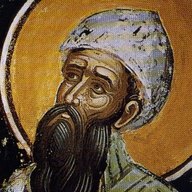
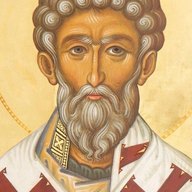
St. Cyril of AlexandriaCommentary on Luke · on Luke 23:1
And the whole multitude arose and led Him to Pilate. And they began to accuse Him, saying, We found this man perverting our people, and forbidding to give tribute to Caesar, and saying of Himself that He is Christ, a King. And Pilate asked Him, saying, Are You the King of the Jews? And He answered him, and said, You…
Blessed Augustinein the Catena Aurea · on Luke 23:1
Luke, after he had finished relating the denial of Peter, recapitulated all that took place concerning our Lord during the morning, mentioning some particulars which the others omitted; and so he has composed his narrative, giving a similar account with the rest, when he says, And the whole multitude of them arose,…
St. Ambrose of Milanin the Catena Aurea · on Luke 23:1–5
Our Lord is accused and is silent, for He needs no defence. Let them cast about for defence who fear to be conquered. He does not then confirm, the accusation by His silence, but He despises it by not refuting it. Why then should He fear who does not court safety? The Safety of all men forfeits His own, that He may…
St. Bede the Venerablein the Catena Aurea · on Luke 23:1
That the word of Jesus might be fulfilled which He prophesied of His own death, He shall be delivered to the Gentiles, that is, to the Romans. For Pilate was a Roman, and the Romans had sent him as governor to Judæa.
And they began to accuse him, saying, We found this fellow perverting the nation, and forbidding to give tribute to Caesar, saying that he himself is Christ a King.
Blessed AugustineHarmony of the Gospels, Book 3 · on Luke 23:2
Let us next take the account of these same incidents—that is to say, those in which Pilate was engaged—as it is presented by John. He proceeds thus: "And they themselves went not into the judgment-hall, lest they should be defiled; but that they might eat the passover. Pilate then went out unto them, and said, What…
Blessed AugustineHarmony of the Gospels, Book 3 · on Luke 23:2
And then he goes on, the Lord being still the speaker, to recite other matters which the rest have not recorded. His terms are these: "To this end was I born, and for this cause came I into the world, that I should bear witness unto the truth. Every one that is of the truth heareth my voice. Pilate saith unto him,…
Blessed AugustineHarmony of the Gospels, Book 3 · on Luke 23:2–3
Luke gives the following version of what took place in presence of Pilate: "And they began to accuse Him, saying, We found this fellow perverting the nation, and forbidding to give tribute to Cæsar, and saying that he himself is Christ a king." The previous two evangelists have not recorded these words, although they…
St. Cyril of AlexandriaCommentary on Luke · on Luke 23:2
But let us see what was the manner of their wickedness, and what also they said to Pilate, when framing their accusations against our common Saviour Christ. "We found this man perverting our people, and forbidding to give tribute to Caesar, and saying of Himself that He is Christ a King." And yet, but a short time…
St. Cyril of AlexandriaCommentary on Luke · on Luke 23:2–4
At language thus unbridled in its violence God in his anger has somewhere said, by one of the holy prophets, "But draw you near, you wicked children, you seed of adulterers and the harlot: at Whom made you merry? and against Whom opened you your mouth? and against Whom sent you forth your tongue? Are you not sons of…
Blessed Augustinein the Catena Aurea · on Luke 23:2
He next relates what happens before Pilate, as follows, And they began to accuse him, saying, We found this fellow perverting our nation, &c. Matthew and Mark do not give this, though affirming that they accused Him, but Luke has laid open the very charges which they falsely brought against Him.
Blessed Theophylact of Ohridin the Catena Aurea · on Luke 23:2
Most plainly are they opposed to the truth. For our Lord was so far from forbidding to give tribute, that He commanded it to be given. How then did He pervert the people? Was it that He might take possession of the kingdom? But this is incredible to all, for when the whole multitude wished to choose Him for their…
St. Bede the Venerablein the Catena Aurea · on Luke 23:2–3
Now two charges having been brought against our Lord, namely, that He forbade to pay tribute to Cæsar, and called Himself Christ the King, it may be that Pilate had chanced to hear that which our Lord spake, Render unto Cæsar the things which be Cæsar's; and therefore setting aside this accusation as a palpable lie of…
Blessed AugustineHarmony of the Gospels, Book 3 · on Luke 23:3
Here, then, he proceeds thus: "Then said Pilate unto them, Take ye him, and judge him according to your law. The Jews, therefore, said unto him, It is not lawful for us to put any man to death; that the saying of Jesus might be fulfilled, which He spake, signifying what death He should die. Then Pilate entered into…
Blessed Theophylact of Ohridin the Catena Aurea · on Luke 23:3
It seems to me that he asked this question of Christ by way of deriding the wantonness or hypocrisy of the alleged charge. As if he said, Thou a poor humble naked man, with none to help Thee, art accused of seeking a kingdom, for which Thou wouldest need many to help Thee, and much money.
St. Bede the Venerablein the Catena Aurea · on Luke 23:3
He answers the governor in the same words which He used to the Chief Priests, that Pilate might be condemned by his own voice; for it follows, And he answering said, Thou sayest.
Blessed AugustineHarmony of the Gospels, Book 3 · on Luke 23:4–12
The truth, however, is not at all affected by the order in which Luke has narrated these things; and as little is it affected by the mere circumstance that one writer passes over some incident without notice, which another expressly specifies. We have an instance in what follows; namely, "Then said Pilate to the chief…
St. Cyril of AlexandriaCommentary on Luke · on Luke 23:5
"But they vehemently protested, He perverts the people, "teaching in all Judaea, and having begun from Galilee (continues) even to this place." Again they change from their former accusations, and invent pretexts for laying sins to His charge, and gather fresh opportunities for slandering Him. "For He perverts, they…
Blessed Theophylact of Ohridin the Catena Aurea · on Luke 23:5
Now they finding nothing else to support their calumny, have resort to the aid of clamour, for it follows, And they were the more fierce, saying, He stirreth up the people, teaching throughout all Jewry, beginning from Galilee to this place. As if they said, He perverts the people, not in one part only, but beginning…
St. Bede the Venerablein the Catena Aurea · on Luke 23:5
But with these words they accuse not Him, but themselves. For to have taught the people, and by teaching to have roused them from their former idleness, and doing this to have passed through the whole land of promise, was an evidence not of sin, but of virtue.
St. Bede the Venerablein the Catena Aurea · on Luke 23:6
Pilate having determined not to question our Lord concerning the above-mentioned accusation, is the rather glad now that an opportunity offers to escape from passing judgment upon Him. Hence it is said, When Pilate heard of Galilee, he asked whether the man were a Galilæan.
St. Bede the Venerablein the Catena Aurea · on Luke 23:7
And lest he should be compelled to pass sentence against one whom he knew to be innocent, and delivered for envy, sends Him to be heard by Herod, preferring that he who was the Tetrarch of our Lord's country might be the person either to acquit or punish Him; for it follows, And as soon as he knew that he belonged to…
And when Herod saw Jesus, he was exceeding glad: for he was desirous to see him of a long season, because he had heard many things of him; and he hoped to have seen some miracle done by him.
Blessed Theophylact of Ohridin the Catena Aurea · on Luke 23:8
Not as though he was about to gain any benefit from the sight, but seized with curiosity he thought he should see that extraordinary man, of whose wisdom and wonderful works he had heard so much. He also wished to hear from His mouth what He could say.
Blessed Theophylact of Ohridin the Catena Aurea · on Luke 23:9
Accordingly he asks Him questions, making a sport of Him, and ridiculing Him. But Jesus, who performed all things prudently, and who, as David testifies, ordereth His words with discretion, (Ps. 112:5.) thought it right in such a case to be silent. For a word uttered to one whom it profiteth nothing becomes the cause…
St. Ambrose of Milanin the Catena Aurea · on Luke 23:9
He was silent and did nothing, for Herod's unbelief deserved not to see Him, and the Lord shunned display. And perhaps typically in Herod are represented all the ungodly, who if they have not believed the Law and the Prophets, cannot see Christ's wonderful works in the Gospel.
St. Gregory the Dialogistin the Catena Aurea · on Luke 23:9
From these words we ought to derive a lesson, that whenever our hearers wish as if by praising us to gain knowledge from us, but not to change their own wicked course, we must be altogether silent, lest if from love of ostentation we speak God's word, both they who were guilty cease not to be so, and we who were not…
Blessed Theophylact of Ohridin the Catena Aurea · on Luke 23:11
Nevertheless, observe how the Devil is thwarted by the thing which He does. He heaps up scorn and reproaches against Christ, whereby it is made manifest that the Lord is not seditious. Otherwise He would not have been derided, when so great a danger was afloat, and that too from a people who were held in suspicion,…
St. Ambrose of Milanin the Catena Aurea · on Luke 23:11
It is not without reason that He is arrayed by Herod in a white robe, as bearing a sign of His immaculate Passion, that the Lamb of God without spot would take upon Himself the sins of the world.
Blessed Theophylact of Ohridin the Catena Aurea · on Luke 23:12
But the sending of Christ by Pilate to Herod, becomes the commencement of a mutual friendship, Pilate not receiving those who were subject to Herod's authority, as it is added, And they were made friends, &c. Observe the Devil every where uniting together things separate, that he may compass the death of Christ. Let…
St. Ambrose of Milanin the Catena Aurea · on Luke 23:12
Under the type also of Herod and Pilate, who from enemies were made friends by Jesus Christ, is preserved the figure of the people of Israel and the Gentile nation; that through our Lord's Passion should come to pass the future concord of both, yet so that the people of the Gentiles should receive the word of God…
St. Bede the Venerablein the Catena Aurea · on Luke 23:12
Or this alliance between Herod and Pilate signifies that the Gentiles and Jews, though differing in race, religion, and character, agree together in persecuting Christians.
Blessed AugustineHarmony of the Gospels, Book 3 · on Luke 23:13–23
In accordance with his own plan, however, Luke makes the above digression with the view of telling what occurred with Herod; and after that he reverts to the history of what took place in the governor's presence. Thus he now continues as follows: "And Pilate, when he had called together the chief priests and the…
Blessed Augustinein the Catena Aurea · on Luke 23:13
Luke returns to those things which were going on before the governor, from which He had digressed in order to relate what took place with Herod; saying as follows, And Pilate, when he had called, &c. from which we infer, that he has omitted the part wherein Pilate questioned our Lord what He had to answer to His…
Blessed Theophylact of Ohridin the Catena Aurea · on Luke 23:13–15
Wherefore by the testimony of two men, Jesus is declared innocent, but the Jews His accusers brought forward no witness whom they could believe. See then how truth triumphs. Jesus is silent, and His enemies witness for Him; the Jews make loud cries, and not one of them corroborates their clamour.
St. Ambrose of Milanin the Catena Aurea · on Luke 23:13–25
Here Pilate, who as a judge acquits Christ, is made the minister of His crucifixion. He is sent to Herod, sent back to Pilate, as it follows, Nor yet Herod, for I sent you to him, and behold nothing worthy of death is done unto him. They both refuse to pronounce Him guilty, yet for fear's sake, Pilate gratifies the…
Said unto them, Ye have brought this man unto me, as one that perverteth the people: and, behold, I, having examined him before you, have found no fault in this man touching those things whereof ye accuse him:
St. Cyril of AlexandriaCommentary on Luke · on Luke 23:14–15
But even when so speaking, Pilate rebuked them, excusing himself, and saying, "I find no cause at all in Him." " For you have brought me, he says, This Man, as one Who upturns the people, and behold, I having tried Him in your presence, have not found in This Man any cause of those things whereof you accuse Him. No,…
St. Bede the Venerablein the Catena Aurea · on Luke 23:14
Perish then those writings, which, composed so long a time after Christ, convict not the accused of magical arts against Pilate, but the writers themselves of treachery and lying against Christ.
Blessed Theophylact of Ohridin the Catena Aurea · on Luke 23:16–17
Pilate therefore lenient and easy, yet wanting in firmness for the truth, because afraid of being accused, adds, I will therefore chastise him and release him.
St. Bede the Venerablein the Catena Aurea · on Luke 23:16–17
As if he said, I will subject Him to all the scourgings and mockings you desire, but do not thirst after the innocent blood. It follows, For of necessity he must release one unto them, &c. an obligation not imposed by a decree of the imperial law, but binding by the annual custom of the nation, whom in such things he…
St. Cyril of AlexandriaCommentary on Luke · on Luke 23:18–19
Lo! those who know the divine laws, and with haughty countenance say, "We are Moses' disciples," beseech that He may be condemned to death, Who is guilty of no base action, yes, rather Who is the Head and Teacher of all piety, and Who renders those who believe in Him skilful in every virtue: and when he whose duty it…
St. John Chrysostomin the Catena Aurea · on Luke 23:18–19
For they thought they could add this, namely, that Jesus was worse than a robber, and so wicked, that neither for mercy's sake, or by the privilege of the feast, ought He to be let free.
Blessed Theophylact of Ohridin the Catena Aurea · on Luke 23:18
For the Romans permitted the Jews to live according to their own laws and customs. And it was a natural custom of the Jews to seek pardon of the prince for those who were condemned, as they asked Jonathan of Saul. And hence it is now added, with respect to their petition, And they cried all at once, Away with this…
St. Ambrose of Milanin the Catena Aurea · on Luke 23:18–19
Not unreasonably do they seek the pardon of a murderer, who were themselves demanding the death of the innocent. Such are the laws of iniquity, that what innocence hates, guilt loves. And here the interpretation of the name affords a figurative resemblance, for Barabbas is in Latin, the son of a father. Those then to…
St. Bede the Venerablein the Catena Aurea · on Luke 23:18–19
Even to this day their request still clings to the Jews. For since when they had the choice given to them, they chose a robber for Jesus, a murderer for a Saviour; rightly lost they both life and salvation, and became subject to such robberies and seditions among themselves as to forfeit both their country and kingdom.
Blessed AugustineHarmony of the Gospels, Book 3 · on Luke 23:20–23
Again, if any one affirms his ability to prove it not to have been the third hour when the Jews cried out in the terms in question, because, after Mark's statement to this effect, "And Pilate answered, and said again unto them, What will ye then that I shall do unto him whom ye call the King of the Jews? And they…
Blessed Theophylact of Ohridin the Catena Aurea · on Luke 23:20–23
Thus it came to pass, the once holy nation rages to slay, the Gentile Pilate forbids slaughter; as it follows, Pilate therefore spoke again unto them, but they cried out, Crucify, &c.
St. Cyril of AlexandriaCommentary on Luke · on Luke 23:21
"For they cried out, it says, saying, Crucify Him, crucify Him." And this their unholy cry the Lord blamed, saying, by the voice of Jeremiah, "I have left My house, I have abandoned My inheritance: I have given My dearly beloved, My soul, into the hand of her enemies. My inheritance has become to Me like a lion in a…
St. Bede the Venerablein the Catena Aurea · on Luke 23:21
With the worst kind of death, that is, crucifixion, they long to murder the innocent. For they who hung on the cross, with their hands and feet fixed by nails to the wood, suffered a prolonged death, that their agony might not quickly cease; but the death of the cross was chosen by our Lord, as that which having…
And he said unto them the third time, Why, what evil hath he done? I have found no cause of death in him: I will therefore chastise him, and let him go.
Blessed Theophylact of Ohridin the Catena Aurea · on Luke 23:22
Three times did Pilate acquit Christ, for it follows, And he said unto them the third time, Why, what evil hath he done? I will chastise him, and let him go.
St. Bede the Venerablein the Catena Aurea · on Luke 23:22–23
This chastisement wherewith Pilate sought to satisfy the people, lest their rage should go even so far as to crucify Jesus, John's words bear testimony that he not only threatened but performed together with mockings and scourgings. But when they saw all their charges which they brought against the Lord baffled by…
Blessed Theophylact of Ohridin the Catena Aurea · on Luke 23:23–25
They cry out the third time against Christ, that by this third voice, they may approve the murder to be their own, which by their entreaties they extorted; for it follows, And Pilate gave sentence that it should be as they required. And he released him that for sedition and murder was cast into prison, but delivered…
And Pilate gave sentence that it should be as they required.
ὁ δὲ Πιλᾶτος ἐπέκρινε γενέσθαι τὸ αἴτημα αὐτῶν,
St. Cyril of AlexandriaCommentary on Luke · on Luke 23:24–25
And Pilate gave sentence that their request should be done. And he released him who for sedition and murder was cast into prison, for whom they asked: but he delivered Jesus to their will. And as they led Him away, they laid hold upon Simon, a Cyrenian, coming out of the country; and on him they laid the cross to…
St. Cyril of AlexandriaCommentary on Luke · on Luke 23:25–26
Yet here behold, I pray, that rebellious serpent driven from his empire over us all, and digging for himself and the wicked hosts that serve him the pit of destruction. For as the Psalmist says, "The heathen are caught in the destruction they have made: in the snare which they set is their own foot taken. The Lord is…
And as they led him away, they laid hold upon one Simon, a Cyrenian, coming out of the country, and on him they laid the cross, that he might bear it after Jesus.
Blessed AugustineHarmony of the Gospels, Book 3 · on Luke 23:26
Matthew, accordingly, goes on with his narrative in these terms: "And as they came out, they found a man of Cyrene, Simon by name: him they compelled to bear His cross." In like manner, Mark says: "And they led Him out to be crucified. And they compelled one Simon, a Cyrenian, who passed by, coming out of the country,…
St. Cyril of AlexandriaCommentary on Luke · on Luke 23:26
The Redeemer therefore was led to His saving passion: but they laid His cross, it says, upon Simon the Cyrenian. Another holy evangelist, however, tells us that the Lord Himself carried, the tree: and necessarily both the one and the other are true. For the Saviour indeed bore the cross, but in the middle of the way…
Blessed Augustinein the Catena Aurea · on Luke 23:26
But John relates that Jesus bore His own cross, from which is understood that He was Himself carrying His cross, when He went forth to that place which is called Calvary; but as they journeyed Simon was forced into the service on the road, and the cross was given him to carry as far as that place.
Blessed Theophylact of Ohridin the Catena Aurea · on Luke 23:26
For no one else accepted to bear the cross, because the wood was counted an abomination. Accordingly upon Simon the Cyrenian they imposed as it were to his dishonour the bearing of the cross, which others refused. Here is fulfilled that prophecy of Isaiah, Whose government shall be upon his shoulder. (Isa. 9:6.) For…
St. Ambrose of Milanin the Catena Aurea · on Luke 23:26
Christ therefore bearing His cross, already as a conqueror carried His trophies. The cross is laid upon His shoulders, because, whether Simon or Himself bore it, both Christ bore it in the man, and the man in Christ. Nor do the accounts of the Evangelists differ, since the mystery reconciles them. And it is the…
St. Bede the Venerablein the Catena Aurea · on Luke 23:26
Simon is by interpretation "obedient," Cyrene "an heir." By this man therefore the people of the Gentiles are denoted, who formerly foreigners and aliens to the covenant, have now by obedience been made heirs of God. But Simon coming out of a village, bears the cross after Jesus, because forsaking the pagan rites, he…
St. Cyril of AlexandriaCommentary on Luke · on Luke 23:27–30
He was going therefore to the place of crucifixion: and there followed Him women weeping, as well as many others. For constantly, so to speak, the female sex is given to tears, and of a disposition ready to sink at the approach of aught that is sorrowful. 'But, O daughters of Jerusalem, He says, stay those tears on My…
St. Cyril of Alexandriain the Catena Aurea · on Luke 23:27–29
Women also are ever prone to tears, and have hearts easily disposed to pity. Signifying that in the time to come women would be bereft of their children. For when war breaks out upon the land of the Jews, all shall perish, both small and great. Hence it follows, For, behold, the days are coming, in the which they…
St. Bede the Venerablein the Catena Aurea · on Luke 23:27
A large multitude indeed followed the cross of Christ, but with very different feelings. For the people who had demanded His death were rejoicing that they should see Him dying, the women weeping that He was about to die. But He was followed by the weeping only of women, not because that vast crowd of men was not also…
St. Cyril of Alexandriain the Catena Aurea · on Luke 23:28–29
Signifying that in the time to come women would be bereft of their children. For when war breaks out upon the land of the Jews, all shall perish, both small and great. Hence it follows, For, behold, the days are coming, in the which they shall say, Blessed are the barren, &c.
For, behold, the days are coming, in the which they shall say, Blessed are the barren, and the wombs that never bare, and the paps which never gave suck.
St. Bede the Venerablein the Catena Aurea · on Luke 23:29–30
By these days He signifies the time of the siege and captivity which was coming upon them from the Romans, of which He had said before, Woe to them that are with child, and give suck in those days. It is natural, when captivity by an enemy is threatening, to seek for refuge in fastnesses or hidden places, where men…
St. Cyril of AlexandriaCommentary on Luke · on Luke 23:31
But it is worth our while to see what the Saviour's meaning is in these words. For the saying is shaped in the form of a parable, or an example rather, but is pregnant with a spiritual signification: and it intends, I think, to suggest perhaps what follows. He calls Himself the green tree, that namely which has leaves…
Blessed Theophylact of Ohridin the Catena Aurea · on Luke 23:31
As though He said to the Jews, If then the Romans have so raged against Me, a fruit-bearing and ever flourishing tree, what will they not attempt against you the people, who are a dry tree, destitute of every lifegiving virtue, and bearing no fruit?
St. Gregory the Dialogistin the Catena Aurea · on Luke 23:31
He has called Himself the green wood and us the dry, for He has in Himself the life and strength of the Divine nature; but we who are mere men are called the dry wood.
St. Bede the Venerablein the Catena Aurea · on Luke 23:31
Or as if He spake to all: If I who have done no sin being called the tree of life, do not depart from the world without suffering the fire of my Passion, what torment think ye awaits those who are barren of all fruits?
And there were also two other, malefactors, led with him to be put to death.
Ἤγοντο δὲ καὶ ἕτεροι δύο κακοῦργοι σὺν αὐτῷ ἀναιρεθῆναι.
St. Cyril of AlexandriaCommentary on Luke · on Luke 23:32–33
And there were led also two others, who were malefactors, to be put to death with Him. And when they came to the place which is called a skull, there they crucified Him and the malefactors, one on the right hand and the other on the left. And dividing His garments, they cast lots. And the people stood looking on. And…
Blessed Theophylact of Ohridin the Catena Aurea · on Luke 23:32
But the Devil, desiring to engender an evil opinion of our Lord, caused robbers also to be crucified with Him; whence it follows, And there were two other malefactors led with him to be put to death.
And when they were come to the place, which is called Calvary, there they crucified him, and the malefactors, one on the right hand, and the other on the left.
St. John Chrysostomin the Catena Aurea · on Luke 23:33
Two thieves also they crucified on the two sides, that He might be a partaker of their reproach; as it follows, And the thieves one on his right hand, the other on his left. But it did not so turn out. For of them nothing is said, but His cross is every where honoured. Kings, laying aside their crowns, assume the…
Blessed Augustinein the Catena Aurea · on Luke 23:33
For not without reason did He choose this kind of death, in order that He might be the master of breadth and length, and heighth and depth. For breadth lies in that cross piece of wood which is fastened from above. This belongs to good works, because on it the hands are outstretched. Length lies in that which is seen…
St. Cyril of Alexandriain the Catena Aurea · on Luke 23:33
The only-begotten Son of God did not Himself in His own nature in which He is God suffer the things which belong to the body, but rather in His earthly nature. For of one and the same Son both may be affirmed, namely, that He doth not suffer in His divine nature, and that He suffered in His human.
Blessed Theophylact of Ohridin the Catena Aurea · on Luke 23:33
But the Devil, desiring to engender an evil opinion of our Lord, caused robbers also to be crucified with Him; whence it follows, And there were two other malefactors led with him to be put to death. Because also by a tree death bad entered, it must needs be that by a tree it should be abolished, and that the Lord…
St. Bede the Venerablein the Catena Aurea · on Luke 23:33
Or else, without the gate were the places where the heads of condemned criminals were cut off, and they received the name of Calvary, that is, beheaded. Thus for the salvation of all men the innocent is crucified among the guilty, that where sin abounded, there grace might much more abound. But the two robbers…
Blessed AugustineHarmony of the Gospels, Book 3 · on Luke 23:34
Matthew goes on thus: "And after they crucified Him, they parted His garments, casting lots: and sitting down, they watched Him." Mark reports the same incident, as follows: "And crucifying Him, they parted His garments, casting lots upon them, what every man should take." In like manner Luke says: "And they parted…
St. Cyril of AlexandriaCommentary on Luke · on Luke 23:34–36
He bore derision, and mockeries, and spittings: for the rulers of the synagogue of the Jews scoffed Him, shaking their polluted heads, and pouring out upon Him bitter laughter, as they said, "He saved others: let Him save Himself, if He is the Christ." But if you did not really believe that He was the Christ, why did…
St. John Chrysostomin the Catena Aurea · on Luke 23:34
Because the Lord had said, Pray for them that persecute you, (Matt. 5:44.) this likewise He did, when He ascended the cross, as it follows, Then said Jesus, Father, forgive them, not that He was not able Himself to pardon them, but that He might teach us to pray for our persecutors, not only in word, but in deed also.…
Blessed Theophylact of Ohridin the Catena Aurea · on Luke 23:34
For perhaps many of them were in want. Or perhaps rather they did this as a reproach, and from a kind of wantonness. For what treasure did they find in His garments?
St. Ambrose of Milanin the Catena Aurea · on Luke 23:34
It is important then to consider, in what condition He ascends the cross; for I see Him naked. Let him then who prepares to overcome the world, so ascend that he seek not the appliances of the world. Now Adam was overcome who sought for a covering. He overcame who laid aside His covering. He ascends such as nature…
St. Bede the Venerablein the Catena Aurea · on Luke 23:34
Nor must we imagine here that He prayed in vain, but that in those who believed after His passion He obtained the fruit of His prayers? It must be remarked, however, that He prayed not for those who chose rather to crucify, rather than to confess Him whom they knew to be the Son of God, but for such as were ignorant…
St. Bede the Venerablein the Catena Aurea · on Luke 23:34
But in the lot the grace of God seems to be commended; for when the lot is cast, we yield not to the merits of any person, but to the secret judgment of God.
And the people stood beholding. And the rulers also with them derided him, saying, He saved others; let him save himself, if he be Christ, the chosen of God.
Blessed AugustineHarmony of the Gospels, Book 3 · on Luke 23:35
Then Matthew continues thus: "Likewise also the chief priests, mocking Him, with the scribes and elders, said, He saved others; himself he cannot save: if he be the King of Israel, let him now come down from the cross, and we will believe him. He trusted in God; let Him deliver him now, if He will: for he said, I am…
Blessed Augustinein the Catena Aurea · on Luke 23:35
Having mentioned the rulers, and said nothing of the priests, St. Luke comprehended under a general name all the chief men, so that hereby may be understood both the scribes and the elders.
Blessed Theophylact of Ohridin the Catena Aurea · on Luke 23:35
They did it then mockingly. For when the rulers scoffed, what can we say of the crowd? for it follows, And the people stood, who in truth had entreated that He should be crucified, waiting, namely, for the end. And the rulers also with them derided.
St. Bede the Venerablein the Catena Aurea · on Luke 23:35–37
And it is worthy of remark, that the Jews blaspheme and mock the name of Christ, which was delivered to them by the authority of Scripture; whereas the soldiers, as being ignorant of the Scriptures, insult not Christ the chosen of God, but the King of the Jews.
Blessed AugustineHarmony of the Gospels, Book 3 · on Luke 23:36–37
Matthew next makes this statement: "And straightway one of them ran, and took a sponge, and filled it with vinegar, and put it on a reed, and gave Him to drink." Mark presents it in a similar form: "And one ran, and filled a sponge full of vinegar, and put it on a reed, and gave Him to drink, saying, Let alone; let us…
Blessed Theophylact of Ohridin the Catena Aurea · on Luke 23:38
Observe a second time the device of the devil turned against himself. For in letters of three different characters he published the accusation of Jesus, that in truth it might not escape one of the passers by, that He was crucified because He made Himself King. For it is said, In Greek, Latin, and Hebrew, by which it…
St. Ambrose of Milanin the Catena Aurea · on Luke 23:38
And rightly is the title placed above the cross, because Christ's kingdom is not of the human body, but of the power of God. I read the title of the King of the Jews, when I read, My kingdom is not of this world. (John 18:36.) I read the cause of Christ written above His head, when I read, And the Word was God. (John…
Blessed AugustineHarmony of the Gospels, Book 3 · on Luke 23:39–42
Matthew continues his narrative in these terms: "The robbers also, which were crucified with Him, cast the same in His teeth." Mark is quite in harmony with Matthew here, giving the same statement in different words. On the other hand, Luke may be thought to contradict this, unless we be careful not to forget a…
St. Cyril of AlexandriaCommentary on Luke · on Luke 23:39–41
Two thieves therefore were hanged with Him, as I said, in mockery even of the passion which brings salvation to the whole world: but of these, the one, it says, resembled in his conduct the impiety of the Jews, belching forth the same words as they did, and giving free utterance to blasphemous expressions. "For if,…
St. Cyril of Alexandriain the Catena Aurea · on Luke 23:39–41
Now one of the thieves uttered the same revilings as the Jews, but the other tried to check his words, while he confessed his own guilt, adding, We indeed justly, for we receive the due reward of our deeds.
St. Ambrose of Milanin the Catena Aurea · on Luke 23:39–43
But it must also be explained how the others, that is, Matthew and Mark, introduced two thieves reviling, while Luke, one reviling, the other resisting him. Perhaps this other at first reviled, but was suddenly converted. It may also have been spoken of one, but in the plural number; as in the Hebrews, They wandered…
St. Bede the Venerablein the Catena Aurea · on Luke 23:39–43
For as many of us as were baptized in Christ Jesus, were baptized in His death; but we are washed by baptism, seeing we were sinners. But some, in that they praise God suffering in the flesh, are crowned; others, in that they refuse to have the faith or works of baptism, are deprived of the gift which they have…
St. John Chrysostomin the Catena Aurea · on Luke 23:40–41
Here the condemned performs the office of judge, and he begins to decide concerning truth who before Pilate confessed his crime only after many tortures. For the judgment of man from whom secret things are hid is of one kind; the judgment of God who searches the heart of another. And in the former case punishment…
St. Cyril of AlexandriaCommentary on Luke · on Luke 23:42
And let us look at his most beautiful confession of faith. "Jesus, he says, remember me when You come in Your kingdom." You see Him crucified, and call Him a king: Him Who was bearing scorn and suffering, you expect to come in godlike glory: you see Him surrounded by a multitude of the Jews, and the wicked gang of the…
St. John Chrysostomin the Catena Aurea · on Luke 23:42
But when he saw that the ears of those who stood by were stopped up, he turns to Him who knoweth the hearts; for it follows, And he said to Jesus, Lord, remember me when thou comest into thy kingdom. Thou beholdest the Crucified, and thou acknowledgest Him to be thy Lord. Thou seest the form of a condemned criminal,…
St. Gregory the Dialogistin the Catena Aurea · on Luke 23:42
On the cross nails had fastened his hands and feet, and nothing remained free from torture, but his heart and tongue. By the inspiration of God, the thief offered to Him the whole which he found free, that as it is written, With the heart he might believe unto righteousness, with the mouth he might confess unto…
St. Cyril of AlexandriaCommentary on Luke · on Luke 23:43
What reward therefore did he receive? Of what honours was he counted worthy? Or what benefit did the thief gain who was the first to profess faith? He lit upon a treasure worth the having: he became rich unexpectedly, and possessed of every blessing: he won the inheritance of the saints, and to have his name written…
St. John Chrysostomin the Catena Aurea · on Luke 23:43
Here then might one see the Saviour between the thieves weighing in the scales of justice faith, and unbelief. The devil cast Adam out of Paradise. Christ brought the thief into Paradise before the whole world, before the Apostles. By a mere word and by faith alone he entered into Paradise, that no one after his sins…
Blessed Theophylact of Ohridin the Catena Aurea · on Luke 23:43
And as every king who returns victorious carries in triumph the best of his spoils, so the Lord having despoiled the devil of a portion of his plunder, carries it with Him into Paradise. This however is more true than all, that although they have not obtained all the promises, I mean, the thief and the other saints in…
St. Ambrose of Milanin the Catena Aurea · on Luke 23:43
A most remarkable example is here given of seeking after conversion, seeing that pardon is so speedily granted to the thief. The Lord quickly pardons, because the thief is quickly converted. And grace is more abundant than prayer; for the Lord ever gives more than He is asked for. The thief asked that He should…
St. Gregory the Dialogistin the Catena Aurea · on Luke 23:43
Or that flaming sword is said to be turning, because that He knew the time would come when it must be removed; when He in truth should come, who by the mystery of His incarnation was to open to us the way of Paradise.
Blessed AugustineHarmony of the Gospels, Book 3 · on Luke 23:44–45
Matthew proceeds in the following terms: "Now from the sixth hour there was darkness over all the land unto the ninth hour." The same fact is attested by two others of the evangelists. Luke adds, however, a statement of the cause of the darkness, namely, that "the sun was darkened."
St. Cyril of AlexandriaCommentary on Luke · on Luke 23:44–45
There was darkness over all the land. He who excels all created things, and shares the Father's throne, humbled Himself to emptying, and took the form of a slave, and endured the limits of human nature, that He might fulfil the promise made of God to the forefathers of the Jews: but they were so obdurate and…
Blessed Augustinein the Catena Aurea · on Luke 23:44–45
What is here said of the darkness, the other two Evangelists, Matthew and Mark, confirm, but St. Luke adds the cause whence the darkness arose, saying, And the sun was darkened.
St. Cyril of Alexandriain the Catena Aurea · on Luke 23:44–45
As soon as the Lord of all had been given up to be crucified, the whole framework of the world bewailed its rightful Master, and the light was darkened at mid-day, (Amos 8:9.) which was a manifest token that the souls of those who crucified Him would suffer darkness.
St. Ambrose of Milanin the Catena Aurea · on Luke 23:44
The sun also is eclipsed to the sacrilegious, that it may overshadow the scene of their awful wickedness; darkness was spread over the eyes of the unbelieving, that the light of faith might rise again.
And the sun was darkened, and the veil of the temple was rent in the midst.
καὶ ἐσχίσθη τὸ καταπέτασμα τοῦ ναοῦ μέσον·
Blessed AugustineHarmony of the Gospels, Book 3 · on Luke 23:45
Matthew proceeds thus: "And, behold, the veil of the temple was rent in twain from the top to the bottom." Mark's version is also as follows: "And the veil of the temple was rent in twain from the top to the bottom." Luke likewise gives a statement in similar terms: "And the veil of the temple was rent in the midst."…
Blessed Augustinein the Catena Aurea · on Luke 23:45
This darkening of the sun it is quite plain did not happen in the regular and fixed course of the heavenly bodies, because it was then the Passover, which is always celebrated at the full moon. But a regular eclipse of the sun does not take place except at new moon.
Blessed Theophylact of Ohridin the Catena Aurea · on Luke 23:45
By this then our Lord showed that the Holy of Holies should be no longer inaccessible, but being given over into the hands of the Romans, should be defiled, and its entrance laid open. Whereby it is signified that the veil which kept us asunder from the holy things which are in heaven, is broken through, namely,…
St. Ambrose of Milanin the Catena Aurea · on Luke 23:45
The veil also is rent, by which is declared the division of the two people, and the profanation of the synagogue. The old veil is rent that the Church may hang up the new veils of faith. The covering of the synagogue is drawn up, that we may behold with the eyes of the mind the inward mysteries of religion now…
St. Bede the Venerablein the Catena Aurea · on Luke 23:45
But Luke, wishing to join miracle to miracle, adds, And the veil of the temple was rent in twain. This took place when our Lord expired, as Matthew and Mark bear witness, but Luke related it by anticipation.
Blessed AugustineHarmony of the Gospels, Book 3 · on Luke 23:46
Matthew proceeds as follows: "And Jesus, crying again with a loud voice, yielded up the ghost." In like manner, Mark says, "And Jesus cried with a loud voice, and gave up the ghost." Luke, again, has told us what He said when that loud voice was uttered. For his version is thus: "And Jesus, crying with a loud voice,…
St. John Chrysostomin the Catena Aurea · on Luke 23:46
Now this voice teaches us, that the souls of the saints are not henceforth shut up in hell as before, but are with God, Christ being made the beginning of this change.
St. Ambrose of Milanin the Catena Aurea · on Luke 23:46
The flesh dies that the Spirit may rise again. The Spirit is commended to the Father, that heavenly things also may be loosed from the chain of iniquity, and peace be made in heaven, which earthly things should follow. His spirit then is commended to God, but though He is above He yet gives light to the parts below…
St. Bede the Venerablein the Catena Aurea · on Luke 23:46
By invoking the Father He declares Himself to be the Son of God, but by commending His Spirit, He signifies not the weakness of His strength, but His confidence in the same power with the Father.
Blessed AugustineHarmony of the Gospels, Book 3 · on Luke 23:47
Matthew proceeds thus: "And the earth did quake, and the rocks rent; and the graves were opened; and many bodies of the saints which slept arose, and came out of the graves after the resurrection, and went into the holy city, and appeared unto many." There is no reason to fear that these facts, which have been related…
St. Cyril of AlexandriaCommentary on Luke · on Luke 23:47–48
And when the centurion saw what was done, he glorified God. Again observe, I pray, that no sooner had He endured the passion upon the cross for our sakes, than He began to win many to a knowledge of the truth: "for the centurion, it says, when he saw what had happened, glorified God, saying, that truly This Man was…
Blessed Augustinein the Catena Aurea · on Luke 23:47
When after uttering that voice He immediately gave up the ghost, those who were present greatly marvelled. For those who hung upon the cross were generally tortured by a prolonged death. Hence it is said, Now when the centurion saw, &c. There is no contradiction in that Matthew says, that the centurion seeing the…
Blessed Theophylact of Ohridin the Catena Aurea · on Luke 23:47
The words of our Lord seem now to be fulfilled, wherein He said, When I shall be lifted up I will draw all men unto me. For when lifted upon the cross He drew to Him the thief and the centurion, besides some of the Jews also, of whom it follows, And all the people that came together smote their breasts.
St. Ambrose of Milanin the Catena Aurea · on Luke 23:47
O the breasts of the Jews, harder than the rocks! The judge acquits, the officer believes, the traitor by his death condemns his own crime, the elements flee away, the earth quakes, the graves are opened; the hardness of the Jews still remains immoveable, though the whole world is shaken.
St. Bede the Venerablein the Catena Aurea · on Luke 23:47–49
By their smiting their breasts as if betokening a penitential sorrow, two things may be understood; either that they bewailed Him unjustly slain whose life they loved, or that remembering that they had demanded His death, they trembled to see Him in death still farther glorified. But we may observe, that the Gentiles…
Blessed AugustineHarmony of the Gospels, Book 3 · on Luke 23:48–49
Matthew proceeds thus: "And many women were there beholding afar off, which followed Jesus from Galilee: among which was Mary Magdalene, and Mary the mother of James and Joseph, and the mother of Zebedee's children." Mark gives it in this form: "There were also women looking on afar off: among whom was Mary Magdalene,…
Blessed Theophylact of Ohridin the Catena Aurea · on Luke 23:49
But the race of women formerly cursed remains and sees all these things; for it follows, And the women which followed him from Galilee, seeing these things. And thus they are the first to be renewed by justification, or by the blessing which flows from His passion, as also from His resurrection.
St. Ambrose of Milanin the Catena Aurea · on Luke 23:50–53
Now mystically, the just man buries the body of Christ. For the burial of Christ is such as to have no guile or wickedness in it. But rightly did Matthew call the man rich, for by carrying Him that was rich he knew not the poverty of faith. The just man covers the body of Christ with linen. Do thou also clothe the…
St. Bede the Venerablein the Catena Aurea · on Luke 23:50
A counsellor, or decurio, is so called because he is of the order of the curia or council, and administers the office of the curia. He is also wont to be called curialis, from his management of civil duties. Joseph then is said to have been of high rank in the world, but of still higher estimation before God; as it…
(The same had not consented to the counsel and deed of them;) he was of Arimathaea, a city of the Jews: who also himself waited for the kingdom of God.
Blessed Augustinein the Catena Aurea · on Luke 23:51–52
Now John says, that Joseph was a disciple of Jesus. Hence it is also here added, Who also himself waited for the kingdom of God. But it naturally causes surprise how he who for fear was a secret disciple should have dared to beg our Lord's body, which none of those who openly followed Him dared to do; for it is said,…
St. Bede the Venerablein the Catena Aurea · on Luke 23:52
So then being fitted by the righteousness of his works for the burial of our Lord's body, he was worthy by the dignity of his secular power to obtain it.
Blessed AugustineHarmony of the Gospels, Book 3 · on Luke 23:53
Matthew proceeds thus: "And when Joseph had taken the body, he wrapped it in a clean linen cloth, and laid it in his own new tomb, which he had hewn out in the rock: and he rolled a great stone to the door of the sepulchre, and departed." Mark's version is as follows: "And he bought fine linen, and took Him down, and…
St. Ambrose of Milanin the Catena Aurea · on Luke 23:53
Nor without meaning has one Evangelist spoken of a new tomb, another of the tomb of Joseph. For the grave is prepared by those who are under the law of death; the Conqueror of death has no grave of His own. For what fellowship hath God with the grave. He alone is enclosed in this tomb, because the death of Christ,…
St. Bede the Venerablein the Catena Aurea · on Luke 23:53
Hence it follows, And he took it down, and wrapped it in linen. By the simple burial of our Lord, the pride of the rich is condemned, who not even in their graves can be without their wealth.
St. Bede the Venerablein the Catena Aurea · on Luke 23:53
That is, hewn out of a rock, lest if it had been built of many stones, and the foundations of the tomb being dug up after the resurrection, the body should be said to have been stolen away. It is laid also in a new tomb, wherein never man before was laid, lest when the rest of the bodies remained after the…
And that day was the preparation, and the sabbath drew on.
καὶ ἡμέρα ἦν παρασκευή, σάββατον ἐπέφωσκε.
BV
St. Bede the Venerablein the Catena Aurea · on Luke 23:54
But because man was created on the sixth day, rightly being crucified on the sixth day our Lord fulfilled the secret of man's restitution. It follows, And it was the day of the παρασκευὴ, which means the preparation, the name by which they called the sixth day, because on that day they prepared the things which were…
St. Bede the Venerablein the Catena Aurea · on Luke 23:54
Now that the Lord is crucified on the sixth day and rests on the seventh, signifies that in the sixth age of the world we must of necessity suffer for Christ, and as it were be crucified to the world. (Gal. 6:14.) But in the seventh age, that is, after death, our bodies indeed rest in the tombs, but our souls with the…
St. Cyril of AlexandriaCommentary on Luke · on Luke 23:55–56
And women also followed, who had come with Him from Galilee. Wise women followed our common Saviour Christ, gathering whatever was both useful and necessary for faith in Him. And when He gave His flesh as a ransom for the life of us all, they wisely betook themselves to tend His body: for they supposed that the corpse…
St. Bede the Venerablein the Catena Aurea · on Luke 23:55
Now we said above, that all His acquaintance stood afar off, and the women which followed Him. These then of His acquaintance, after His body was taken down, returned to their homes, but the women who more tenderly loved Him, following His funeral, desired to see the place where He was laid. For it follows, And the…
Blessed Theophylact of Ohridin the Catena Aurea · on Luke 23:56
For they had not yet sufficient faith, but prepared as if for a mere man spices and ointments, after the manner of the Jews, who performed such duties to their dead. Hence it follows, And they returned, and prepared spices. For our Lord being buried, they were occupied as long as it was lawful to work, (that is, until…
St. Bede the Venerablein the Catena Aurea · on Luke 23:56
But even at the present time also holy women, (that is, humble souls,) fervent in love, diligently wait upon the Passion of Christ, and if perchance they may be able to imitate Him, with anxious carefulness ponder each step in order, by which this Passion is fulfilled. And having read, heard, and called to mind all…
Every note is a real passage, quoted word for word from a published English translation, with its source. Nothing here is summarised or written by us. Some verses have many notes and some have none, because the Fathers wrote more on some passages than others.
Blessed Augustine, The Harmony of the Gospels, tr. S. D. F. Salmond, Nicene and Post-Nicene Fathers, series 1, vol. 6 (1888).
St. Cyril of Alexandria, Commentary upon the Gospel according to S. Luke, tr. R. Payne Smith (Oxford, 1859).
Chrysostom, Augustine, Cyril, Theophylact, Ambrose, Gregory and Bede, as gathered in the Catena Aurea ("golden chain"), tr. J. H. Newman and others (Oxford, 1841–1845). In the 1260s Thomas Aquinas set the Fathers' comments on each verse of the Gospels side by side. He chose and arranged them, but every word is the Father's own.
Scripture: the King James Version (1611); the Greek (tap Ελ) is the 1904 Patriarchal text of the Ecumenical Patriarchate.
All of these translations are in the public domain. The passages were matched to their verses by the Historical Christian Commentaries project, which also hosts the full texts we link to. The Fathers are a treasury of the Church's mind, and they are best read alongside the life of the Church: if a passage raises a question, bring it to your priest.