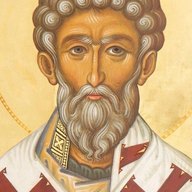
Blessed AugustineHarmony of the Gospels, Book 2 · on Mark 13:1–2
Matthew proceeds with his history in the following terms: "And Jesus went out and departed from the temple; and His disciples came to Him for to show Him the buildings of the temple. And Jesus said unto them, See ye all these things? Verily I say unto you, There shall not be left here one stone upon another which…
Blessed Theophylact of Ohridin the Catena Aurea · on Mark 13:1–2
For, since the Lord had spoken much concerning the destruction of Jerusalem, His disciples wondered, that such numerous and beautiful buildings were to be destroyed; and this is the reason why they point out the beauty of the temple, and He answers not only that they were to be destroyed, but also that one stone…
St. Bede the Venerablein the Catena Aurea · on Mark 13:1–2
Because after the founding of the Church of Christ, Judæa was to be punished for her treachery, the Lord fitly, after praising the devotedness of the Church in the person of the poor widow, goes out of the temple, and foretold its coming ruin, and the contempt in which the buildings now so wonderful were soon to be…
Blessed AugustineHarmony of the Gospels, Book 2 · on Mark 13:3–4
Matthew continues in the following strain: "And as He sat upon the mount of Olives, the disciples came unto Him privately, saying, Tell us, when shall these things be? and what shall be the sign of Thy coming, and of the end of the world? And Jesus answered, and said unto them, Take heed that no man deceive you: for…
Blessed Augustinein the Catena Aurea · on Mark 13:3–8
In answer to the disciples, the Lord tells them of things which were from that time forth to have their course; whether He meant the destruction of Jerusalem which occasioned their question, or His own coming through the Church, (in which He ever comes even unto the end, for we know that He comes in His own, when His…
St. Bede the Venerablein the Catena Aurea · on Mark 13:3–4
Because the Lord, when some were praising the buildings of the temple, had plainly answered that all these were to be destroyed, the disciples privately enquired about the time and the signs of the destruction which was foretold; wherefore it is said: And as he sat upon the mount of Olives, over against the temple,…
Blessed Theophylact of Ohridin the Catena Aurea · on Mark 13:5–6
But before answering their question, He strengthens their minds that they may not be deceived, wherefore there follows: And Jesus answering them began to say, Take heed lest any man deceive you? And this He says, because when the sufferings of the Jews began, some arose professing to be teachers, wherefore there…
St. Bede the Venerablein the Catena Aurea · on Mark 13:5–6
For many came forward, when destruction was hanging over Jerusalem, saying that they were Christs, and that the time of freedom was now approaching. Many teachers of heresy also arose in the Church even in the time of the Apostles; and many Antichrists came in the name of Christ, the first of whom was Simon Magus, to…
Blessed Theophylact of Ohridin the Catena Aurea · on Mark 13:7
That is, the Romans against the Jews, which Josephus relates happened before the destruction of Jerusalem. For when the Jews refused to pay tribute, the Romans arose, in anger; but because at that time they were merciful they took indeed their spoils, but did not destroy Jerusalem.
St. Bede the Venerablein the Catena Aurea · on Mark 13:7
Now from the time of the Passion of our Lord there ceased not amongst the Jewish people, who chose the seditious robber and rejected Christ the Saviour, either external wars or civil discord; wherefore it goes on: And when ye shall hear of wars and rumours of wars, be ye not troubled. And when these come, the Apostles…
For nation shall rise against nation, and kingdom against kingdom: and there shall be earthquakes in divers places, and there shall be famines and troubles: these are the beginnings of sorrows.
St. Bede the Venerablein the Catena Aurea · on Mark 13:8
It goes on: For nation shall rise against nation, and kingdom against kingdom. Now it is on record that this literally took place at the time of the Jewish rebellion. But kingdom against kingdom, the pestilence of those whose word spreads as a canker, dearth of the word of God, the commotion of the whole earth, and…
But take heed to yourselves: for they shall deliver you up to councils; and in the synagogues ye shall be beaten: and ye shall be brought before rulers and kings for my sake, for a testimony against them.
Blessed Theophylact of Ohridin the Catena Aurea · on Mark 13:9
Fitly also did He premise a recital of those things which concerned the Apostles, that in their own tribulations they might find some consolation in the community of troubles and sufferings. There follows: And ye shall be brought before rulers and kings for my sake, for a testimony against them. He says kings and…
St. Bede the Venerablein the Catena Aurea · on Mark 13:9
The Lord shows how Jerusalem and the province of Judæa merited the infliction of such calamities, in the following words: But take heed to yourselves: for they shall deliver you up to councils; and in the synagogues ye shall be beaten. For the greatest cause of destruction to the Jewish people was, that after slaying…
And the gospel must first be published among all nations.
καὶ εἰς πάντα τὰ ἔθνη δεῖ πρῶτον κηρυχθῆναι τὸ εὐαγγέλιον.
Blessed AugustineHarmony of the Gospels, Book 2 · on Mark 13:10
Again, what Matthew states in this form, "And this gospel of the kingdom shall be preached in all the world for a witness unto all nations, and then shall the end come," is given also in the same connection by Mark in the following manner: "And the gospel must first be published among all nations." Mark has not added…
Blessed Theophylact of Ohridin the Catena Aurea · on Mark 13:10
Then, that they might not think that their preaching should be impeded by troubles and dangers, He adds: And the Gospel must first be published among all nations.
St. Bede the Venerablein the Catena Aurea · on Mark 13:10
Ecclesiastical historians testify that this was fulfilled, for they relate that all the Apostles long before the destruction of the province of Judæa were dispersed to preach the Gospel over the whole world, except James the son of Zebedee and James the brother of our Lord, who had before shed their blood in Judæa for…
But when they shall lead you, and deliver you up, take no thought beforehand what ye shall speak, neither do ye premeditate: but whatsoever shall be given you in that hour, that speak ye: for it is not ye that speak, but the Holy Ghost.
St. Bede the Venerablein the Catena Aurea · on Mark 13:11
For when we are led before judges for Christ's sake, all our duty is to offer up our will for Christ. As for the rest, Christ Himself who dwells in us speaks for us, and the grace of the Holy Ghost shall be given us, when we answer. Wherefore it goes on: For it is not ye that shall speak, but the Holy Ghost.
Now the brother shall betray the brother to death, and the father the son; and children shall rise up against their parents, and shall cause them to be put to death.
Blessed Theophylact of Ohridin the Catena Aurea · on Mark 13:12
He also foretells to them a worse evil, that they should suffer persecution from their relations. Wherefore there follows: Now the brother shall betray the brother to death, and the father the son; and children shall rise up against their parents, and shall cause them to be put to death; and ye shall be hated of all…
Blessed Theophylact of Ohridin the Catena Aurea · on Mark 13:13
And this He says, that on hearing it, they might prepare themselves to bear persecutions and ills with greater patience. Then He brings them consolation, saying, And ye shall be hated of all men for my name's sake; for the being hated for Christ's sake is a sufficient reason for suffering persecutions patiently, for…
But when ye shall see the abomination of desolation, spoken of by Daniel the prophet, standing where it ought not, (let him that readeth understand,) then let them that be in Judaea flee to the mountains:
Blessed AugustineHarmony of the Gospels, Book 2 · on Mark 13:14
In like manner, what Matthew states thus, "When ye therefore shall see the abomination of desolation, spoken of by Daniel the prophet, stand in the holy place, whoso readeth let him understand," is put in the following form by Mark: "But when ye shall see the abomination of desolation standing where it ought not, let…
Blessed Augustinein the Catena Aurea · on Mark 13:14
Matthew says, standing in the holy place; but with this verbal difference Mark has expressed the same meaning; for He says where it ought not to stand, because it ought not to stand in the holy place. (Epist. cxcix. 9.) But Luke, in order to show that the abomination of desolation happened when Jerusalem was taken, in…
Blessed Theophylact of Ohridin the Catena Aurea · on Mark 13:14
Or he means by the abomination of desolation, the entrance of enemies into the city by violence. And well does he say, Who are in Judæa, for the Apostles were no longer in Judæa, but before the battle had been driven from Jerusalem. We must also avoid sin with fervour, and not coldly and quietly.
St. Bede the Venerablein the Catena Aurea · on Mark 13:14
When we are challenged to understand what is said, we may conclude that it is mystical. But it may either be said simply of Antichrist, or of the statue of Cæsar, which Pilate put into the temple, or of the equestrian statue of Adrian, which for a long time stood in the holy of holies itself. An idol is also called…
St. Bede the Venerablein the Catena Aurea · on Mark 13:14
It is on record that this was literally fulfilled, when on the approach of the war with Rome and the extermination of the Jewish people, all the Christians who were in that province, warned by the prophecy, fled far away, as Church history relates, and retiring beyond Jordan, remained for a time in the city of Pella…
St. Bede the Venerablein the Catena Aurea · on Mark 13:14
In a spiritual sense, however, when we see the abomination of desolation standing where it ought not, that is, heresies and crimes reigning amongst them, who appear to be consecrated by the heavenly mysteries, then whosoever of us remain in Judæa, that is, in the confession of the true faith, ought to mount the higher…
Blessed AugustineHarmony of the Gospels, Book 2 · on Mark 13:15–16
Again, what is given by Matthew in the following terms: "Then let them which be in Judæa flee into the mountains; and let him which is on the house-top not come down to take anything out of his house; neither let him which is in the field return back to take his clothes," is reported also by Mark almost in so many…
St. Bede the Venerablein the Catena Aurea · on Mark 13:15
Then let him who is on the house-top, that is, whose mind rises above carnal deeds, and who lives spiritually, as it were in the free air, not come down to the base acts of his former conversation, nor seek again those things which he had left, the desires of the world or the flesh. For our house either means this…
Blessed Theophylact of Ohridin the Catena Aurea · on Mark 13:17
But it seems to me, that in these words He foretells the eating of children, for when afflicted by famine and pestilence, they laid hands on their children.
Blessed AugustineHarmony of the Gospels, Book 2 · on Mark 13:18
Moreover, Matthew proceeds thus: "But pray ye that your flight be not in the winter, neither on the Sabbath-day." Part of this is given and part omitted by Mark, when he says, "And pray ye that your flight be not in the winter." Luke, on the other hand, leaves this out entirely, and instead of it introduces something…
St. Bede the Venerablein the Catena Aurea · on Mark 13:18
But if we are to understand it of the consummation of the world, He commands that our faith and love for Christ should not grow cold, and that we should not grow lazy and cold in the work of God, by taking a sabbath from virtue.
Blessed Augustinein the Catena Aurea · on Mark 13:19–20
For Josephus, who has written the history of the Jews, relates that such things were suffered by this people, as are scarcely credible, wherefore it is said, not without cause, that there was not such tribulation from the beginning of the creation until now, nor shall ever be. But although in the time of Antichrist…
Blessed Theophylact of Ohridin the Catena Aurea · on Mark 13:19
And He fitly gives the cause for so great a necessity for flight; saying, For in those days shall be affliction, such as was not from the beginning of the creation which God created unto this time, neither shall be.
St. Bede the Venerablein the Catena Aurea · on Mark 13:19
Or else; these words, In those days shall be affliction, properly agree with the times of Antichrist, when not only tortures more frequent, and more painful than before are to be heaped on the faithful, but also, what is more terrible, the working of miracles shall accompany those who inflict torments. But in…
And except that the Lord had shortened those days, no flesh should be saved: but for the elect’s sake, whom he hath chosen, he hath shortened the days.
Blessed Theophylact of Ohridin the Catena Aurea · on Mark 13:20
That is, if the Roman war had not been soon finished, no flesh should be saved; that is, no Jew should have escaped; but for the elect's sake, whom he hath chosen, that is, for the sake of the believing Jews, or who were hereafter to believe, He hath shortened the days, that is, the war was soon finished, for God…
St. Bede the Venerablein the Catena Aurea · on Mark 13:20
The only refuge in such evils is, that God who gives strength to suffer, should abridge the power of inflicting. Wherefore there follows: And except that the Lord had shortened those days.
And then if any man shall say to you, Lo, here is Christ; or, lo, he is there; believe him not:
καὶ τότε ἐάν τις ὑμῖν εἴπῃ, ἰδοὺ ὧδε ὁ Χριστός, ἰδοὺ ἐκεῖ, μὴ πιστεύετε.
TO
Blessed Theophylact of Ohridin the Catena Aurea · on Mark 13:21
After that the Lord had finished all that concerned Jerusalem, He now speaks of the coming of Antichrist, saying, Then if any man shall say to you, Lo, here is Christ; or, lo, he is there; believe him not. But when He says, then, think not that it means immediately after these things are fulfilled about Jerusalem; as…
St. Bede the Venerablein the Catena Aurea · on Mark 13:21
Some however refer this to the time of the Jewish captivity, where many, declaring themselves to be Christs, drew after them crowds of deluded persons; but during the siege of the city there was no Christian to whom the Divine exhortation, not to follow false teachers, could apply. Wherefore it is better to understand…
Blessed Augustinein the Catena Aurea · on Mark 13:22
For then shall Satan be unchained, and work through Antichrist in all his power, wonderfully indeed, but falsely. But a doubt is often raised whether the Apostle said Signs and lying wonders, because he is to deceive mortal senses, by phantoms, so as to appear to do what he does not, or because those wonders…
Blessed Theophylact of Ohridin the Catena Aurea · on Mark 13:22
For false Christs and false prophets shall arise, and shall show signs and wonders, to seduce, if it were possible, even the elect. For many shall take upon them the name of Christ, so as to seduce even the faithful.
St. Gregory the Dialogistin the Catena Aurea · on Mark 13:22
Why however is it said with a doubt if it were possible, when the Lord knows beforehand what is to be? One of two things is implied; that if they are elect, it is not possible; and if it is possible, they are not elect. (non potest, ap. Cat.) This doubt therefore in our Lord's discourse expresses the trembling in the…
But take ye heed: behold, I have foretold you all things.
ὑμεῖς δὲ βλέπετε· ἰδοὺ προείρηκα ὑμῖν ἅπαντα.
Blessed Augustinein the Catena Aurea · on Mark 13:23
For He did not only foretel to His disciples the good things which He would give to His saints and faithful ones, but also the woes in which this world was to abound, that we might look for our reward at the end of the world with more confidence, from feeling the woes in like manner announced as about to precede the…
Blessed Theophylact of Ohridin the Catena Aurea · on Mark 13:24
But after the coming of Antichrist, the frame of the world shall be altered and changed, for the stars shall be obscured on account of the abundance of the brightness of Christ. Wherefore it goes on: But in those days, after that tribulation, the sun shall be darkened, and the moon shall not give her light; and the…
St. Bede the Venerablein the Catena Aurea · on Mark 13:24
For the stars in the day of judgment shall appear obscure, not by any lessening of their own light, but because of the brightness of the true light, that is, of the most high Judge coming upon them; although there is nothing to prevent its being taken to mean, that the sun and moon with all the other heavenly bodies…
St. Bede the Venerablein the Catena Aurea · on Mark 13:25
What wonder is it that men should be troubled at this judgment, the sight of which makes the very Angelic powers to tremble? What will the stories of the house do when the pillars shake? What does the shrub of the wilderness undergo, when the cedar of paradise is moved?
Blessed Augustinein the Catena Aurea · on Mark 13:26
For since it was said by the Angels to the Apostles, He shall so come in like manner as ye have seen him go into heaven, (Acts 1:11) rightly do we believe that He will come not only in the same body, but on a cloud, since He is to come as He went away, and a cloud received Him as He was going. (de Trin. i. 13) For the…
And then shall he send his angels, and shall gather together his elect from the four winds, from the uttermost part of the earth to the uttermost part of heaven.
Blessed Theophylact of Ohridin the Catena Aurea · on Mark 13:27
Observe that Christ sends the Angels as well as the Father; where then are they who say that He is not equal to the Father? For the Angels go forth to gather together the faithful, who are chosen, that they may be carried into the air to meet Jesus Christ. Wherefore it goes on: And gather together his elect from the…
St. Bede the Venerablein the Catena Aurea · on Mark 13:27
By the four winds, He means the four parts of the world, the east, the west, the north, and the south. And lest any one should think that the elect are to be gathered together only from the four edges of the world, and not from the midland regions as well as the borders, He has fitly added, From the uttermost part of…
Blessed Theophylact of Ohridin the Catena Aurea · on Mark 13:28
As if He had said, As when the fig tree puts forth its leaves, summer follows at once, so also after the woes of Antichrist, at once, without an interval, shall be the coming of Christ, who will be to the just as summer after winter, but to sinners, winter after summer.
St. Bede the Venerablein the Catena Aurea · on Mark 13:28–29
Under the example of a tree the Lord gave a pattern of the end, saying, Now learn a parable of the fig tree, when her branch is yet tender, and putteth forth leaves, ye know that summer is near. So ye in like manner, when ye shall see these things come to pass, know that it is nigh, even at the doors. This…
Blessed Augustinein the Catena Aurea · on Mark 13:29
All that is said by the three Evangelists concerning the Advent of our Lord, if diligently compared together and examined, will perchance be found to belong to His daily coming in His body, that is, the Church, except those places where that last coming is so promised, as if it were approaching; for instance in the…
Blessed Theophylact of Ohridin the Catena Aurea · on Mark 13:30
Or else, This generation shall not pass away, that is, the generation of Christians, until all things be fulfilled, which were spoken concerning Jerusalem and the coming of Antichrist; for He does not mean the generation of the Apostles, for the greater part of the Apostles did not live up to the destruction of…
Blessed Theophylact of Ohridin the Catena Aurea · on Mark 13:31
For the immoveable elements shall first fail, before the words of Christ fail; wherefore it is added, Heaven and earth shall pass away, but my words shall not pass away.
St. Bede the Venerablein the Catena Aurea · on Mark 13:31
The heaven which shall pass away is not the ethereal or starry heaven, but the heaven where is the air. For wheresoever the water of the judgment could reach, there also, according to the words of the blessed Peter, the fire of judgment shall reach. (2 Pet. 3) But the heaven and the earth shall pass away in that form…
Blessed Theophylact of Ohridin the Catena Aurea · on Mark 13:32
The Lord wishing to prevent His disciples from asking about that day and hour, says, But of that day and that hour knoweth no man, no, not the angels which are in heaven, neither the Son, but the Father. For if He had said, I know, but I will not reveal it to you, He would have saddened them not a little; but He acted…
Blessed Theophylact of Ohridin the Catena Aurea · on Mark 13:33
But He teaches us two things, watching and prayer; for many of us watch, but watch only to pass the night in wickedness; He now follows this up with a parable, saying, For the Son of man is as a man taking a far journey, who left his house, and gave his servants power over every work, and commanded the porter to watch.
For the Son of man is as a man taking a far journey, who left his house, and gave authority to his servants, and to every man his work, and commanded the porter to watch.
St. Gregory the Dialogistin the Catena Aurea · on Mark 13:34
For the earth is properly the place for the flesh, which was as it were carried away to a far country, when it was placed by our Redeemer in the heavens. And he gave his servants power over every work, when, by giving to His faithful ones the grace of the Holy Ghost, He gave them the power of serving every good work.…
St. Bede the Venerablein the Catena Aurea · on Mark 13:34
The man who taking a far journey left his house is Christ, who ascending as a conqueror to His Father after the resurrection, left His Church, as to His bodily presence, but has never deprived her of the safeguard of His Divine presence.
Blessed Theophylact of Ohridin the Catena Aurea · on Mark 13:35–36
See again that He has not said, I know not when the time will be, but, Ye know not. For the reason why He concealed it was that it was better for us; for if, now that we know not the end, we are careless, what should we do if we knew it? We should keep on our wickednesses even unto the end. Let us therefore attend to…
St. Gregory the Dialogistin the Catena Aurea · on Mark 13:35–36
Not only, however, those of us who rule over Churches, but all are required to watch the doors of their hearts, lest the evil suggestions of the devil enter into them, and lest our Lord find us sleeping. Wherefore concluding this parable He adds, Watch ye therefore: for ye know not when the master of the house cometh,…
Blessed Augustinein the Catena Aurea · on Mark 13:37
For He not only speaks to those in whose hearing He then spake, but even to all who came after them, before our time, and even to us, and to all after us, even to His last coming. But shall that day find all living, or will any man say that He speaks also to the dead, when He says, Watch, lest when he cometh he find…
Every note is a real passage, quoted word for word from a published English translation, with its source. Nothing here is summarised or written by us. Some verses have many notes and some have none, because the Fathers wrote more on some passages than others.
Blessed Augustine, The Harmony of the Gospels, tr. S. D. F. Salmond, Nicene and Post-Nicene Fathers, series 1, vol. 6 (1888).
Chrysostom, Augustine, Cyril, Theophylact, Ambrose, Gregory and Bede, as gathered in the Catena Aurea ("golden chain"), tr. J. H. Newman and others (Oxford, 1841–1845). In the 1260s Thomas Aquinas set the Fathers' comments on each verse of the Gospels side by side. He chose and arranged them, but every word is the Father's own.
Scripture: the King James Version (1611); the Greek (tap Ελ) is the 1904 Patriarchal text of the Ecumenical Patriarchate.
All of these translations are in the public domain. The passages were matched to their verses by the Historical Christian Commentaries project, which also hosts the full texts we link to. The Fathers are a treasury of the Church's mind, and they are best read alongside the life of the Church: if a passage raises a question, bring it to your priest.