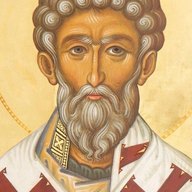
Blessed AugustineHarmony of the Gospels, Book 2 · on Mark 8:1–9
Matthew proceeds with his narrative in the following terms: "And when Jesus had departed from thence, He came nigh unto the sea of Galilee; and went up into a mountain, and sat down there. And great multitudes came unto Him, having with them those that were lame, blind, dumb, maimed, and many others, and cast them…
Blessed Theophylact of Ohridin the Catena Aurea · on Mark 8:1–9
After the Lord had performed the former miracle concerning the multiplication of the loaves, now again, a fitting occasion presents itself, and He takes the opportunity of working a similar miracle; wherefore it is said, In those days, the multitude being very great, and having nothing to eat, Jesus called his…
St. Bede the Venerablein the Catena Aurea · on Mark 8:2
Why they who came from afar hold out for three days, Matthew says more fully: And he went up into a mountain, and sat down there, and great multitudes came unto him, having with them many sick persons, and cast them down at Jesus feet, and he healed them. (v. Matt. 15:29)
St. Bede the Venerablein the Catena Aurea · on Mark 8:2
The typical difference between this feeding and the other of the five loaves and two fishes, is, that there the letter of the Old Testament, full of spiritual grace, is signified, but here the truth and grace of the New Testament, which is to be ministered to all the faithful, is pointed out. Now the multitude remains…
St. Ambrose of Milanin the Catena Aurea · on Mark 8:3
The good Lord indeed whilst He requires diligence, gives strength; nor will He dismiss them fasting, lest they faint by the way, that is, either in the course of this life, or before they have reached the fountainhead head of life, that is, the Father, and have learnt that Christ is of the Father, lest haply, after…
St. Gregory the Dialogistin the Catena Aurea · on Mark 8:3
He does not however wish to dismiss them fasting, lest they should faint by the way; for it is necessary that men should find in what is preached the word of consolation, lest hungering through want of the food of truth, they sink under the toil of this life.
St. Bede the Venerablein the Catena Aurea · on Mark 8:3
But they who return to repentance after the crimes of the flesh, after thefts, violence, and murders, come to the Lord from afar; for in proportion as a man has wandered farther in evil working, so he has wandered farther from Almighty God. The believers amongst the Gentiles came from afar to Christ, but the Jews from…
And he commanded the people to sit down on the ground: and he took the seven loaves, and gave thanks, and brake, and gave to his disciples to set before them; and they did set them before the people.
St. Bede the Venerablein the Catena Aurea · on Mark 8:6
For our Lord's breaking the bread means the opening of mysteries; His giving of thanks shows how great a joy He feels in the salvation of the human race; His giving the loaves to His disciples that they might set them before the people, signifies that He assigns the spiritual gifts of knowledge to the Apostles, and…
St. Bede the Venerablein the Catena Aurea · on Mark 8:8
In this passage then we should notice, in one and the same, our Redeemer, a distinct operation of Divinity and of Manhood; thus the error of Eutyches1, who presumes to lay down the doctrine of one only operation in Christ, is to be cast out far from the Christian pale. For who does not here see that the pity of our…
St. Bede the Venerablein the Catena Aurea · on Mark 8:8
Again, what was over and above, after the multitude was refreshed, the Apostles take up, because the higher precepts of perfection, to which the multitude cannot attain, belong to those whose life transcends that of the generality of the people of God; nevertheless, the multitude is said to have been satisfied,…
Blessed AugustineHarmony of the Gospels, Book 2 · on Mark 8:10–12
Matthew continues as follows: "And He sent away the multitude, and took ship, and came into the coasts of Magedan;" and so on, down to the words, "A wicked and adulterous generation seeketh after a sign; and there shall no sign be given unto it but the sign of the prophet Jonas." This has already been recorded in…
Blessed Augustinein the Catena Aurea · on Mark 8:10
Now in Matthew we read that He entered into the parts of Magdala. But we cannot doubt that it is the same place under another name; for several manuscripts even of St. Mark have only Magdala.
Blessed Theophylact of Ohridin the Catena Aurea · on Mark 8:10
After that our Lord had worked the miracle of the loaves, He immediately retires into another spot, lest on account of the miracle, the multitudes should take Him to make Him a king; wherefore it is said, And straightway he entered into a ship with his disciples, and came into the parts of Dalmanutha.
Blessed Augustinein the Catena Aurea · on Mark 8:11–12
Let no one, however, be perplexed that the answer which Mark says was given to them, when they sought a sign from heaven, is not the same as that which Matthew relates, namely, that concerning Jonah. He says that the Lord's answer was, that no sign should be given to it; by which we must understand such an one as they…
Blessed Theophylact of Ohridin the Catena Aurea · on Mark 8:11
Or they seek for a sign from heaven, that is, they wish Him to make the sun and moon stand still, to bring down hail, and change the atmosphere; for they thought that He could not perform miracles from heaven, but could only in Beelzebub perform a sign on earth.
St. Bede the Venerablein the Catena Aurea · on Mark 8:11
The Pharisees, then, seek a sign from heaven, that He, Who had for the second time fed many thousands of men with a few loaves of bread, should now, after the example of Moses, refresh the whole nation in the last time with manna sent down from heaven, and dispersed amongst them all.
And he sighed deeply in his spirit, and saith, Why doth this generation seek after a sign? verily I say unto you, There shall no sign be given unto this generation.
Blessed Theophylact of Ohridin the Catena Aurea · on Mark 8:12
Now the reason why the Lord did not listen to them was, that the time of signs from heaven had not arrived, that is, the time of the second Advent, when the powers of the heaven shall be shaken, and the moon shall not give her light. But in the time of the first Advent, all things are full of mercy, and such things do…
St. Bede the Venerablein the Catena Aurea · on Mark 8:12
When, as related above, He was about to refresh the believing multitude, He gave thanks, so now, on account of the foolish petition of the Pharisees, He groans; because, bearing about with Him the feelings of human nature, as He rejoices over the salvation of men, so He grieves over their errors. Wherefore it goes on,…
St. Bede the Venerablein the Catena Aurea · on Mark 8:12
For a sign from heaven was not to be given to a generation of men, who tempted the Lord; but to a generation of men seeking the Lord, He shows a sign from heaven, when in the sight of the Apostles He ascended into heaven. It goes on, And he left them, and entering into a ship again, he departed to the other side.
And he left them, and entering into the ship again departed to the other side.
καὶ ἀφεὶς αὐτοὺς εἰς τὸ πλοῖον ἀπῆλθε πάλιν.
TO
Blessed Theophylact of Ohridin the Catena Aurea · on Mark 8:13
The Lord indeed quits the Pharisees, as men uncorrected; for where there is a hope of correction, there it is right to remain; but where the evil is incorrigible, we should go away.
Blessed Theophylact of Ohridin the Catena Aurea · on Mark 8:14
Now they had forgotten to take bread, neither had they in the ship with them more than one loaf. By a special providence also the disciples forgot to take bread, that they might be blamed by Christ, and thus become better, and arrive at a knowledge of Christ's power.
St. Bede the Venerablein the Catena Aurea · on Mark 8:14
Some may ask, how they had no bread, when they had filled seven baskets just before they embarked in the ship. But Scripture relates that they had forgotten to take them with them, which is a proof how little care they had for the flesh in other things, since in their eagerness to follow the Lord, even the necessity…
Blessed Theophylact of Ohridin the Catena Aurea · on Mark 8:15
He means by leaven their hurtful and corrupt doctrine, full of the old malice, for the Herodians were the teachers, who said that Herod was the Christ.
St. Bede the Venerablein the Catena Aurea · on Mark 8:15
Or, the leaven of the Pharisees is making the decrees of the divine law inferior to the traditions of men, preaching the law in word, attacking it in deed, tempting the Lord, and disbelieving His doctrine and His works; but the leaven of Herod is adultery, murder, rash swearing, a pretence of religion, hatred to…
Blessed Theophylact of Ohridin the Catena Aurea · on Mark 8:16–17
But the disciples themselves thought that the Lord spoke of the leaven of bread. Wherefore it goes on, And they reasoned amongst themselves, saying, it is because we have no bread; and this they said, as not understanding the power of Christ, who could make bread out of nothing; wherefore the Lord reproves them; for…
And when Jesus knew it, he saith unto them, Why reason ye, because ye have no bread? perceive ye not yet, neither understand? have ye your heart yet hardened?
St. Bede the Venerablein the Catena Aurea · on Mark 8:19
Taking occasion then from the precept, which He had commanded, saying, Beware of the leaven of the Pharisees and of the leaven of Herod, our Saviour teaches them what was the meaning of the five and the seven loaves, concerning which He adds, And do ye not remember, when I brake the five loaves amongst five thousand,…
Blessed Theophylact of Ohridin the Catena Aurea · on Mark 8:22–23
For Bethsaida appears to have been infected with much infidelity, wherefore the Lord reproaches it, (Matt. 11:21) Woe to thee, Bethsaida, for if the mighty works which were done in you had been done in Tyre and Sidon, they would have repented long ago in sackcloth and ashes. He then takes out of the town the blind…
St. Bede the Venerablein the Catena Aurea · on Mark 8:22
Or else, He leaves an example to His disciples that they should not seek for popular favour by the miracles which they did. 1Mystically, however, Bethsaida is interpreted 'the house of the valley,' that is, the world, which is the vale of tears. Again, they bring to the Lord a blind man, that is, one who neither sees…
And he took the blind man by the hand, and led him out of the town; and when he had spit on his eyes, and put his hands upon him, he asked him if he saw ought.
St. Bede the Venerablein the Catena Aurea · on Mark 8:23
Knowing that the touch of the Lord could give sight to a blind man as well as cleanse a leper. It goes on, And he took the blind man by the hand, and led him out of the town.
St. Bede the Venerablein the Catena Aurea · on Mark 8:23
For the Lord touches us, when He enlightens our minds with the breath of His Spirit, and He stirs us up that we may recognise our own infirmity, and be diligent in good actions. He takes the hand of the blind man, that He may strengthen him to the practice of good works.
St. Bede the Venerablein the Catena Aurea · on Mark 8:23
Or else, putting spittle into the eyes of the blind man, he lays His hands upon him that he may see, because He has wiped away the blindness of the human race both by invisible gifts, and by the Sacrament of His assumed humanity; for the spittle, proceeding from the Head, points out the grace of the Holy Ghost. But…
St. Bede the Venerablein the Catena Aurea · on Mark 8:24
Seeing indeed the shapes of bodies amongst the shadows, but unable to distinguish the outlines of the limbs, from the continued darkness of his sight; just as trees standing thick together are wont to appear to men who see them from afar, or by the dim light of the night, so that it cannot easily be known whether they…
Blessed Theophylact of Ohridin the Catena Aurea · on Mark 8:26
These precepts He gave him, because they were unfaithful, as has been said, lest perchance he should receive hurt in his soul from them, and they by their unbelief should ran into a more grievous crime. Or else, after He has healed him He sends him to his home; for the home of every one of us is heaven, and the…
And Jesus went out, and his disciples, into the towns of Caesarea Philippi: and by the way he asked his disciples, saying unto them, Whom do men say that I am?
Blessed AugustineHarmony of the Gospels, Book 2 · on Mark 8:27
Matthew continues thus: "And Jesus came into the coasts of Cæsarea Philippi; and He asked His disciples, saying, Whom do men say that I, the Son of man, am? And they said, Some say that Thou art John the Baptist; some, Elias; and others, Jeremias, or one of the prophets;" and so on, down to the words," And whatsoever…
Blessed Theophylact of Ohridin the Catena Aurea · on Mark 8:27
After taking His disciples afar from the Jews, He then asks them concerning Himself, that they might speak the truth without fear of the Jews; wherefore it is said, And Jesus entered, and his disciples, into the towns of Caesarea Philippi.
St. Bede the Venerablein the Catena Aurea · on Mark 8:27
Philip was that brother of Herod, of whom we spoke above, who in honour of Tiberius Cæsar called that town, which is now called Paneas, Cæsarea Philippi. It goes on, And by the way he asked his disciples, saying unto them, Whom do men say that I am?
St. Bede the Venerablein the Catena Aurea · on Mark 8:27
Wherefore He first asks what is the opinion of men, in order to try the faith of the disciples, lest their confession should appear to be founded on the common opinion. It goes on, And they answered, saying, Some say John the Baptist, some Elias, and others, One of the prophets.
St. John Chrysostomin the Catena Aurea · on Mark 8:29
From the manner, however, itself of the question, He leads them to a higher feeling, and to higher thoughts, concerning Him, that they might not agree with the multitude. But the next words show what the head of the disciples, the mouth of the Apostles, answered; when all were asked, Peter answereth and saith unto…
Blessed Theophylact of Ohridin the Catena Aurea · on Mark 8:29
After however having enquired into the opinion of others, He asks them what was the belief of their own minds on this point; wherefore it continues, And he saith unto them, But whom say ye that I am? He confesses indeed that He is the Christ announced by the Prophets; but the Evangelist Mark passes over what the Lord…
St. John Chrysostomin the Catena Aurea · on Mark 8:30
Or else, that He might wait to fix the pure faith in their minds, till the Crucifixion, which was an offence to them, was over, for after it was once perfected, about the time of His ascension, He said unto the Apostles, Go ye and teach all nations.
St. John Chrysostomin the Catena Aurea · on Mark 8:30–32
The reason, however, why the Lord told them this, was to show, that after His cross and resurrection, Christ must be preached by His witnesses. Again, Peter alone, from the fervour of his disposition, had the boldness to dispute about these things. Wherefore it goes on, And Peter took him up, and began to rebuke hime.
And he began to teach them, that the Son of man must suffer many things, and be rejected of the elders, and of the chief priests, and scribes, and be killed, and after three days rise again.
Blessed Theophylact of Ohridin the Catena Aurea · on Mark 8:31
But after the Lord had accepted the confession of the disciples, who called Him the true God, He then reveals to them the mystery of the Cross. Wherefore it goes on, And he began to teach them that the Son of man must suffer many things, and be rejected of the elders and of the chief priests, and the scribes, and be…
Blessed AugustineHarmony of the Gospels, Book 2 · on Mark 8:32–33
Matthew proceeds in the following strain: "Then charged He His disciples that they should tell no man that He was Jesus the Christ. From that time forth began Jesus to show unto His disciples how that He must go into Jerusalem, and suffer many things of the elders, and chief priests, and scribes;" and so on, down to…
St. John Chrysostomin the Catena Aurea · on Mark 8:32–33
But how is this, that Peter, gifted with a revelation from the Father, has so soon fallen, and become unstable? Surely, however, it was not wonderful that one who had received no revelation concerning the Passion should be ignorant of this. For that He was the Christ, the Son of the living God, he had learnt by…
Blessed Theophylact of Ohridin the Catena Aurea · on Mark 8:32
But His disciples did not understand the order of the truth, neither could they comprehend His resurrection, but thought it better that He should not suffer.
St. Bede the Venerablein the Catena Aurea · on Mark 8:32
This, however, he speaks with the feelings of a man who loves and desires; as if he said, This cannot be, neither can mine ears receive that the Son of God is to be slain.
But when he had turned about and looked on his disciples, he rebuked Peter, saying, Get thee behind me, Satan: for thou savourest not the things that be of God, but the things that be of men.
Blessed Theophylact of Ohridin the Catena Aurea · on Mark 8:33
For the Lord, wishing to show that His Passion was to take place on account of the salvation of men, and that Satan alone was unwilling that Christ should suffer, and the race of man be saved, called Peter Satan, because he savoured the things that were of Satan, and, from unwillingness that Christ should suffer,…
And when he had called the people unto him with his disciples also, he said unto them, Whosoever will come after me, let him deny himself, and take up his cross, and follow me.
St. John Chrysostomin the Catena Aurea · on Mark 8:34
As if He would say to Peter, Thou indeed dost rebuke Me, who am willing to undergo My passion, but I tell thee, that not only is it wrong to prevent Me from suffering, but neither canst thou be saved unless thou thyself diest. Again He says, Whosoever wishes to come after me; as if He said, I call you to those good…
Blessed Theophylact of Ohridin the Catena Aurea · on Mark 8:34
For a man who denies another, be it brother or father, does not sympathize with him, nor grieve at his fate, though he be wounded and die; thus we ought to despise our body, so that if it should be wounded or hurt in any way, we should not mind its suffering. For at that time the cross appeared shameful, because…
St. Bede the Venerablein the Catena Aurea · on Mark 8:34
After showing to His disciples the mystery of His passion and resurrection, He exhorts them, as well as the multitude, to follow the example of His passion. Wherefore it goes on; And when he had called the people unto him with his disciples also, he said unto them, Whosoever wishes to come after me, let him deny…
St. Bede the Venerablein the Catena Aurea · on Mark 8:34
For we deny ourselves, when we avoid what we were of old, and strive to reach that point, whither we are newly called. And the cross is taken up by us, when either our body is pained by abstinence, or our soul afflicted by fellow-feeling for our neighbour.
St. John Chrysostomin the Catena Aurea · on Mark 8:35
And this He says, because it may happen that a man may suffer and yet not follow Christ, that is, when he does not suffer for Christ's sake; for he follows Christ, who walks after Him, and conforms himself to His death, despising those principalities and powers under whose power, before the coming of Christ, he…
St. Bede the Venerablein the Catena Aurea · on Mark 8:35
Or else He says this, because in time of persecution, our life is to be laid aside, but in time of peace, our earthly desires are to be broken, which He implies when He says, For what shall it profit a man, &c.
St. John Chrysostomin the Catena Aurea · on Mark 8:36–37
As therefore He had said, For who so ever will save his life shall lose it, lest any one should suppose this loss to be equivalent to that salvation, He adds, For what shall it profit a man, if he shall gain the whole world, and lose his own soul, &c. As if He said, Think not that he has saved his soul, who has…
Whosoever therefore shall be ashamed of me and of my words in this adulterous and sinful generation; of him also shall the Son of man be ashamed, when he cometh in the glory of his Father with the holy angels.
Blessed AugustineHarmony of the Gospels, Book 2 · on Mark 8:38
Matthew continues thus: "Then said Jesus unto His disciples, If any man will come after me, let him deny himself, and take up his cross, and follow me;" and so on, down to the words, "And then He shall reward every man according to his work." This is appended also by Mark, who keeps the same order. But he does not say…
Blessed Theophylact of Ohridin the Catena Aurea · on Mark 8:38
For that faith which only remains in the mind is not sufficient, but the Lord requires also the confession of the mouth; for when the soul is sanctified by faith, the body ought also to be sanctified by confession. Him then who shall have confessed that his God was crucified, Christ Himself also shall confess, not…
St. Gregory the Dialogistin the Catena Aurea · on Mark 8:38
There are however some, who confess Christ, because they see that all men are Christians; for if the name of Christ were not at this day in such great glory, the Holy Church would not have so many professors. The voice of profession therefore is not sufficient for a trial of faith whilst the profession of the…
St. Bede the Venerablein the Catena Aurea · on Mark 8:38
But we are often hindered by a habit of shamefacedness, from expressing with our voice the rectitude which we preserve in our hearts; and therefore it is added, For whosoever shall confess me and my words in this adulterous and sinful generation, him also shall the Son of man confess, when he cometh in the glory of…
Every note is a real passage, quoted word for word from a published English translation, with its source. Nothing here is summarised or written by us. Some verses have many notes and some have none, because the Fathers wrote more on some passages than others.
Blessed Augustine, The Harmony of the Gospels, tr. S. D. F. Salmond, Nicene and Post-Nicene Fathers, series 1, vol. 6 (1888).
Chrysostom, Augustine, Cyril, Theophylact, Ambrose, Gregory and Bede, as gathered in the Catena Aurea ("golden chain"), tr. J. H. Newman and others (Oxford, 1841–1845). In the 1260s Thomas Aquinas set the Fathers' comments on each verse of the Gospels side by side. He chose and arranged them, but every word is the Father's own.
Scripture: the King James Version (1611); the Greek (tap Ελ) is the 1904 Patriarchal text of the Ecumenical Patriarchate.
All of these translations are in the public domain. The passages were matched to their verses by the Historical Christian Commentaries project, which also hosts the full texts we link to. The Fathers are a treasury of the Church's mind, and they are best read alongside the life of the Church: if a passage raises a question, bring it to your priest.