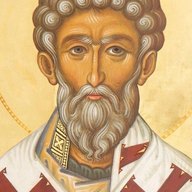
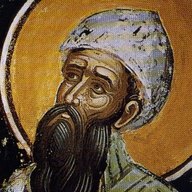
Blessed AugustineHarmony of the Gospels, Book 2 · on Mark 2:1
A difficulty, however, may certainly arise when we observe how Matthew tells the story of the paralytic after this fashion: "And He entered into a ship, and passed over, and came into His own city. And, behold, they brought to Him a man sick of the palsy, lying on a bed;" whereas Mark speaks of the incident as taking…
Blessed Augustinein the Catena Aurea · on Mark 2:1
But Matthew writes this miracle as if it were done in the city of the Lord, whilst Mark places it in Capernaum, which would be more difficult of solution, if Matthew had also named Nazareth. But seeing that Galilee itself might be called the city of the Lord, who can doubt but that the Lord did these things in His own…
Blessed Theophylact of Ohridin the Catena Aurea · on Mark 2:1–5
This is not however the paralytic, whose cure is related by John, (John 5) for he had no man with him, this one had four; he is cured in the pool of the sheep market, but this one in a house. It is the same man, however, whose cure is related by Matthew (Matt. 9) and Mark. But mystically, Christ is still in Capernaum,…
St. Bede the Venerablein the Catena Aurea · on Mark 2:1
Because the compassion of God deserts not even carnal persons, He accords to them the grace of His presence, by which even they may be made spiritual. After the desert, the Lord returns into the city; wherefore it is said, And again he entered into Capernaum, &c.
And straightway many were gathered together, insomuch that there was no room to receive them, no, not so much as about the door: and he preached the word unto them.
St. Bede the Venerablein the Catena Aurea · on Mark 2:2
Moreover, whilst the Lord is preaching in the house, there is not room for them, not even at the door, because whilst Christ is preaching in Judæa, the Gentiles are not yet able to enter to hear Him, to whom, however, though placed without, he directed the words of His doctrine by His preachers.
St. Bede the Venerablein the Catena Aurea · on Mark 2:3
Or else, because there are four virtues, by which a man is through an assured heart exalted so that he merits safety; which virtues some call prudence, fortitude, temperance, and justice. Again, they desire to bring the palsied man to Christ, but they are impeded on every side by the crowd which is between them,…
And when they could not come nigh unto him for the press, they uncovered the roof where he was: and when they had broken it up, they let down the bed wherein the sick of the palsy lay.
Blessed Theophylact of Ohridin the Catena Aurea · on Mark 2:4
But how should I be borne to Christ, if the roof be not opened. For the roof is the intellect, which is set above all those things which are within us; here it has much earth about it in the tiles which are made of clay, I mean, earthly things: but if these be taken away, the virtue of the intellect within us is freed…
Blessed AugustineHarmony of the Gospels, Book 2 · on Mark 2:5
Hereupon Matthew proceeds with his recital, still preserving the order of time, and connects his narrative in the following manner:—"And He entered into a ship, and passed over, and came into His own city. And, behold, they brought to Him a man sick of the palsy, lying on a bed;" and so on down to where it is said,…
Blessed Theophylact of Ohridin the Catena Aurea · on Mark 2:5
If therefore I, having the powers of my mind unstrung, remain, whenever I attempt any thing good without strength, as a palsied man, and if I be raised on high by the four Evangelists, and be brought to Christ, and there hear myself called son, then also are my sins quitted by me; for a man is called the son of God…
St. Bede the Venerablein the Catena Aurea · on Mark 2:5
It may indeed be seen, how much each person's own faith weighs with God, when that of another had such influence that the whole man at once rose up, healed body and soul, and by one man's merit, another should have his sins forgiven him.
St. Bede the Venerablein the Catena Aurea · on Mark 2:5
Moreover, the Lord being about to cure the man of the palsy, first loosed the chains of his sins, in order to show that he was condemned to the loosening of his joints, because of the bonds of his sins, and could not be healed to the recovery of his limbs, unless these were first loosened. But Christ's wonderful…
St. Cyril of Alexandriain the Catena Aurea · on Mark 2:7
CYRIL OF ALEXANDRIA.a; Now they accuse Him of blasphemy, anticipating the sentence of His death: for there was a command in the Law, that whosoever blasphemed should be put to death. And this charge they laid upon Him, because He claimed for Himself the divine power of remitting sins: wherefore it is added, Who can…
And immediately when Jesus perceived in his spirit that they so reasoned within themselves, he said unto them, Why reason ye these things in your hearts?
St. Bede the Venerablein the Catena Aurea · on Mark 2:8
Who remits sin by those also to whom He has assigned the power of remitting, and therefore Christ is proved to be very God, for He is able to remit sins as God. The Jews then are in error, who although they hold the Christ both to be God, and to be able to remit sins, do not however believe that Jesus is the Christ.…
Blessed Theophylact of Ohridin the Catena Aurea · on Mark 2:9–10
But though their thoughts were laid bare, still they remain insensible, refusing to believe that He who knew their hearts could forgive sins, wherefore the Lord proves to them the cure of the soul by that of the body, showing the invisible by the visible, that which is more difficult by that which is easier, although…
St. Bede the Venerablein the Catena Aurea · on Mark 2:10
A carnal sign therefore is given, that the spiritual sign may be proved, although it belongs to the same power to do away with the distempers of both soul and body; whence it follows: And immediately he arose, took up the bed, and went forth before them all.
Blessed Theophylact of Ohridin the Catena Aurea · on Mark 2:11–12
Again, He says, Take up thy bed, to prove the greater certainty of the miracle, showing that it is not a mere illusion; and at the same time to show that He not only healed, but gave strength; thus He not only turns away souls from sin, but gives them the power of working out the commandments.
Blessed Theophylact of Ohridin the Catena Aurea · on Mark 2:11–12
It is necessary to take up also one's bed, that is the body, to the working of good. For then shall we be able to arrive at contemplation, so that our thoughts should say within us, never have we seen in this way before, that is never understood as we have done since we have been cured of the palsy; for he who is…
St. Bede the Venerablein the Catena Aurea · on Mark 2:11
Or else, the sick man is let down after the roof is opened, because, when the Scriptures are laid open to us, we arrive at the knowledge of Christ, that is, we descend to His lowliness, by the dutifulness of faith. But by the sick man being let down with his bed, it is meant that Christ should be known by man, whilst…
And immediately he arose, took up the bed, and went forth before them all; insomuch that they were all amazed, and glorified God, saying, We never saw it on this fashion.
St. Bede the Venerablein the Catena Aurea · on Mark 2:12
We are also informed, that many sicknesses of body arise from sins, and therefore perhaps sins are first remitted, that the causes of sickness being taken away, health may be restored. For men are afflicted by fleshly troubles for five causes, in order to increase their merits, as Job and the Martyrs; or to preserve…
Blessed Theophylact of Ohridin the Catena Aurea · on Mark 2:13
Or else, after the miracle, He goes to the sea, as if wishing to be alone, but the crowd runs to Him again, that thou mightest learn, that the more thou fliest from glory, the more she herself pursues thee; but if thou followest her, she will fly from thee.
St. Bede the Venerablein the Catena Aurea · on Mark 2:13
After that the Lord taught at Capernaum, He went to the sea, that He might not only set in order the life of men in towns, but also might preach the Gospel of the kingdom to those who dwelt near the sea, and might teach them to despise the restless motions of those things which pass away like the waves of the sea, and…
Blessed AugustineHarmony of the Gospels, Book 2 · on Mark 2:14
Matthew next continues his narrative in the following terms:—" And as Jesus passed forth from thence, He saw a man named Matthew, sitting at the receipt of custom: and He saith unto him, Follow me. And he arose and followed Him." Mark gives this story also, and keeps the same order, bringing it in after the notice of…
Blessed Theophylact of Ohridin the Catena Aurea · on Mark 2:14–15
The Lord passing on from thence called Matthew; wherefore there follows, And as he passed by, he saw Levi the son of Alphæus sitting, &c. For he sat at the receipt of custom, either, as is often done, exacting from some, or making up accounts, (λογοπραγῶν apud Theo.) or doing some actions of that sort, which publicans…
St. Bede the Venerablein the Catena Aurea · on Mark 2:14
So also the same person is called Levi and Matthew; but Luke and Mark, on account of their reverence and the honour of the Evangelist, are unwilling to put the common name, while Matthew is a just accuser of himself, (Prov. 18. Vulg.) and calls himself Matthew and publican. He wishes to show to his hearers that no one…
St. Bede the Venerablein the Catena Aurea · on Mark 2:14
Now to follow is to imitate, and therefore in order to imitate the poverty of Christ, in the feeling of his soul even more than in outward condition, he who used to rob his neighbour's wealth, now leaves his own. And not only did he quit the gain of the customs, but he also despised the peril, which might come from…
And it came to pass, that, as Jesus sat at meat in his house, many publicans and sinners sat also together with Jesus and his disciples: for there were many, and they followed him.
Blessed AugustineHarmony of the Gospels, Book 2 · on Mark 2:15
Matthew, accordingly, goes on to say: "And it came to pass, as He sat at meat in the house, behold, many publicans and sinners came and sat down with Jesus and His disciples;" and so on, down to where we read, "But they put new wine into new bottles, and both are preserved." Here Matthew has not told us particularly…
St. Bede the Venerablein the Catena Aurea · on Mark 2:15
The persons here called publicans are those who exact the public customs, or men who farm the customs of the exchequer or of republics; moreover, those also, who follow after the gain of this world by business, are called by the same name. They who had seen that the publican, converted from his sins to better things,…
And when the scribes and Pharisees saw him eat with publicans and sinners, they said unto his disciples, How is it that he eateth and drinketh with publicans and sinners?
Blessed AugustineHarmony of the Gospels, Book 2 · on Mark 2:16–17
Let us next look into the words which these three evangelists have all brought in as having been addressed to the Lord, and also into the replies which were made by Him. Matthew says: "And when the Pharisees saw it, they said unto His disciples, Why eateth your Master with publicans and sinners?" This reappears very…
Blessed Theophylact of Ohridin the Catena Aurea · on Mark 2:16–17
But the Pharisees blame this, making themselves pure. Whence there follows: And when the Scribes and Pharisees saw him eat, &c. Not indeed that they should continue sinners, but be converted to that repentance.
St. Bede the Venerablein the Catena Aurea · on Mark 2:16
If by the election of Matthew and calling of the publicans, the faith of the Gentiles is expressed, who formerly were intent on the gains of this world; certainly the haughtiness of the Scribes and Pharisees intimates the envy of the Jewish people, who are vexed at the salvation of the Gentiles. It goes on: When Jesus…
When Jesus heard it, he saith unto them, They that are whole have no need of the physician, but they that are sick: I came not to call the righteous, but sinners to repentance.
And the disciples of John and of the Pharisees used to fast: and they come and say unto him, Why do the disciples of John and of the Pharisees fast, but thy disciples fast not?
Blessed AugustineHarmony of the Gospels, Book 2 · on Mark 2:18
In the same way, we may subject what is said about the disciples of John to examination. Matthew's words are these: "Then came to Him the disciples of John, saying, Why do we and the Pharisees fast oft?" The purport of Mark's version is similar: "And the disciples of John and the Pharisees used to fast. And they come…
Blessed Augustinein the Catena Aurea · on Mark 2:18–19
But it may be thought that He added Pharisees, because they joined with the disciples of John in saying this to the Lord, whilst Matthew relates that the disciples of John alone said it: but the words which follow rather show that those who said it spoke not of themselves, but of others. For it goes on, And they come…
St. Bede the Venerablein the Catena Aurea · on Mark 2:18
But John did not drink wine and strong drink, because he who has no power by nature, obtains more merit by abstinence. But why should the Lord, to whom it naturally belonged to forgive sins, shun those whom he could make more pure, than those who fast? But Christ also fasted, lest He should break the precept, He ate…
St. Bede the Venerablein the Catena Aurea · on Mark 2:18
But in a mystical sense, it may thus be expressed; that the disciples of John and the Pharisees fast, because every man who boasts of the works of the law without faith, who follows the traditions of men, and receives the preaching of Christ with his bodily ear, and not by the faith of the heart, keeps aloof from…
And Jesus said unto them, Can the children of the bridechamber fast, while the bridegroom is with them? as long as they have the bridegroom with them, they cannot fast.
Blessed AugustineHarmony of the Gospels, Book 2 · on Mark 2:19–22
Once more, we find that Matthew and Mark have given similar accounts of what was said about the children of the bridegroom not fasting as long as the bridegroom is with them, with this exception, that Mark has named them the children of the bridals, while Matthew has designated them the children of the bridegroom.…
Blessed Theophylact of Ohridin the Catena Aurea · on Mark 2:19–20
He also calls Himself a bridegroom, not only as betrothing to Himself virgin minds, but because the time of His first coming is not a time of sorrow, nor of sadness to believers, neither does it bring with it toil, but rest. For it is without any works of the law, giving rest by baptism, by which we easily obtain…
Blessed Theophylact of Ohridin the Catena Aurea · on Mark 2:21–22
Or else the disciples are likened to old garments on account of the infirmity of their minds, on which it was not fitting to impose the heavy command of fasting.
St. Bede the Venerablein the Catena Aurea · on Mark 2:21
Neither was it fitting to sew on a, new piece; that is, a portion of doctrine which teaches a general fast from all the joy of temporal delights; for if this be done, the teaching is rent, and agrees not with the old part. But by a new garment is intended good works, which are done externally, and by the new wine, is…
And no man putteth new wine into old bottles: else the new wine doth burst the bottles, and the wine is spilled, and the bottles will be marred: but new wine must be put into new bottles.
St. Bede the Venerablein the Catena Aurea · on Mark 2:22
For He compares His disciples to old bottles, who would burst at spiritual precepts, rather than be held in restraint by them. But they will be new bottles, when after the ascension of the Lord, they are renewed by desiring His consolation, and then new wine will come to the new bottles, that is, the fervour of the…
Blessed AugustineHarmony of the Gospels, Book 2 · on Mark 2:23
Matthew continues his history in the following terms: "At that time Jesus went on the Sabbath-day through the corn; and His disciples were an hungered, and began to pluck the ears of corn, and to eat;" and so forth, on to the words, "For the Son of man is Lord even of the Sabbath-day." This is also given both by Mark…
Blessed Augustinein the Catena Aurea · on Mark 2:23–24
For it was a precept in Israel, delivered by a written law, that no one should detain a thief found in his fields, unless he tried to take something away with him. For the man, who had touched nothing else but what he had eaten, they were commanded to allow to go away free and unpunished. Wherefore the Jews accused…
Blessed Theophylact of Ohridin the Catena Aurea · on Mark 2:23–26
For David, when flying from the face of Saul, went to the Chief Priest, and ate the show-bread, and took away the sword of Goliath, which things had been offered to the Lord. (1 Sam. 21.) But a question has been raised how the Evangelist called Abiathar at this time High Priest, when the Book of Kings calls him…
St. Bede the Venerablein the Catena Aurea · on Mark 2:23
We read also in the following part, that they who came and went away were many, and that they had not time enough to take their food, wherefore, according to man's nature, they were hungry.
St. Bede the Venerablein the Catena Aurea · on Mark 2:23
But in a mystical sense the disciples pass through the corn fields, when the holy doctors look with the care of a pious solicitude upon those whom they have initiated in the faith, and who, it is implied, are hungering for the best of all things, the salvation of men. But to pluck the ears of corn means to snatch men…
St. Bede the Venerablein the Catena Aurea · on Mark 2:23
Again, they walk through the corn fields with the Lord, who rejoice in meditating upon His sacred words. They hunger, when they desire to find in them the bread of life; and they hunger on sabbath days, as soon as their minds are in a soothing rest, and they rejoice in freedom from troubled thoughts; they pluck the…
How he went into the house of God in the days of Abiathar the high priest, and did eat the shewbread, which is not lawful to eat but for the priests, and gave also to them which were with him?
St. Bede the Venerablein the Catena Aurea · on Mark 2:26
There is, however, no discrepancy, for both were there, when David came to ask for bread, and received it: that is to say, Abimelech, the High Priest, and Abiathar his son; but Abimelech having been slain by Saul, Abiathar fled to David, and became the companion of all his exile afterwards. When he came to the throne,…
St. Bede the Venerablein the Catena Aurea · on Mark 2:27
It goes on: And he said to them, The sabbath was made for man, and not man for the sabbath. For greater is the care to be taken of the health and life of a man, than the keeping of the sabbath. Therefore the sabbath was ordered to be observed in such a way, that, if there were a necessity, he should not be guilty, who…
St. Bede the Venerablein the Catena Aurea · on Mark 2:28
It goes on: Therefore the Son of man is Lord, &c. As if he said, David the king is to be excused for feeding on the food of the Priests, how much more the Son of man, the true King and Priest, and Lord of the sabbath, is free from fault, for pulling ears of corn on the sabbath-day.
Every note is a real passage, quoted word for word from a published English translation, with its source. Nothing here is summarised or written by us. Some verses have many notes and some have none, because the Fathers wrote more on some passages than others.
Blessed Augustine, The Harmony of the Gospels, tr. S. D. F. Salmond, Nicene and Post-Nicene Fathers, series 1, vol. 6 (1888).
Chrysostom, Augustine, Cyril, Theophylact, Ambrose, Gregory and Bede, as gathered in the Catena Aurea ("golden chain"), tr. J. H. Newman and others (Oxford, 1841–1845). In the 1260s Thomas Aquinas set the Fathers' comments on each verse of the Gospels side by side. He chose and arranged them, but every word is the Father's own.
Scripture: the King James Version (1611); the Greek (tap Ελ) is the 1904 Patriarchal text of the Ecumenical Patriarchate.
All of these translations are in the public domain. The passages were matched to their verses by the Historical Christian Commentaries project, which also hosts the full texts we link to. The Fathers are a treasury of the Church's mind, and they are best read alongside the life of the Church: if a passage raises a question, bring it to your priest.